
Ratification of Mining Agreements in Kenya under Article 71. Signed for the People
1 November 2026
Article 71 gives Parliament the last word on the largest bargains over Kenyan minerals. The law answers 3 questions about when it applies. Is there a transaction that grants a right to exploit a resource? Does it fall within a class that Parliament has designated? Has the procedure been followed before it takes effect? This edition answers each of them from the law and the decided cases.
| KEY POINTS AT A GLANCE Article 71 of the Constitution makes a transaction subject to ratification by Parliament if it grants a right or concession for the exploitation of a natural resource of Kenya and was entered into on or after 27 August 2010. Parliament must enact legislation setting out the classes of transactions that are covered. That legislation is the Natural Resources (Classes of Transactions Subject to Ratification) Act 2016, in force since 4 October 2016. For minerals, its Schedule covers mineral agreements above a threshold of US$500,000,000, and the extraction of minerals within a wildlife protection area. Ordinary mining licences and permits issued under the Mining Act are generally outside the Act. Ratification is aimed at the large negotiated agreement, not at routine licensing. A transaction that needs ratification takes effect only once both Houses ratify it. If Parliament declines, it is void, and no public officer may give effect to it. In Mui Coal Basin (2015) the High Court held that Article 71 could not yet bar a coal concession, because the Constitution deferred its effect until the legislation was enacted. The first ratification under Article 71, of oil contracts in Turkana, began only in November 2025. In 2026 a petition argues that a preliminary agreement between Kenya and the United States on Mrima Hill required ratification. Every such question turns on 3 points. Is there a transaction that grants a right to exploit a resource? Does it fall within a class in the Schedule? Has the procedure been followed before the transaction takes effect? |
I. Introduction
Before 2010, the executive could grant rights over the most valuable natural resources of Kenya without any vote of Parliament. The Constitution of 2010 changed that. Article 71 provides that a transaction granting a right or concession to exploit a natural resource is subject to ratification by Parliament, and it directs Parliament to define the classes of transaction that are covered.1 The aim is plain. The people own the resources, and their elected representatives should approve the largest bargains over them.
For years the provision had little practical effect in mining. The legislation it required came only in 2016, and the first ratification under Article 71 of any kind came before Parliament in November 2025, concerning oil in Turkana.2 In 2026 the question has reached the mining sector directly. A petition filed in June 2026 argues that a preliminary agreement between Kenya and the United States on the rare earth deposit at Mrima Hill required the approval of Parliament.3 Nothing in this edition comments on the merits of that petition.
This edition of The BOLD explains Article 71 from the ground up. It defines the terms, sets out the Constitution, the Act of 2016 and the provisions of the Mining Act on mineral agreements, and examines Mui Coal Basin and the Turkana ratification. It then analyses the open questions, including what counts as a transaction, how the threshold works and how an agreement between States fits in. It closes with practical guidance for investors, the Ministry and Parliament.
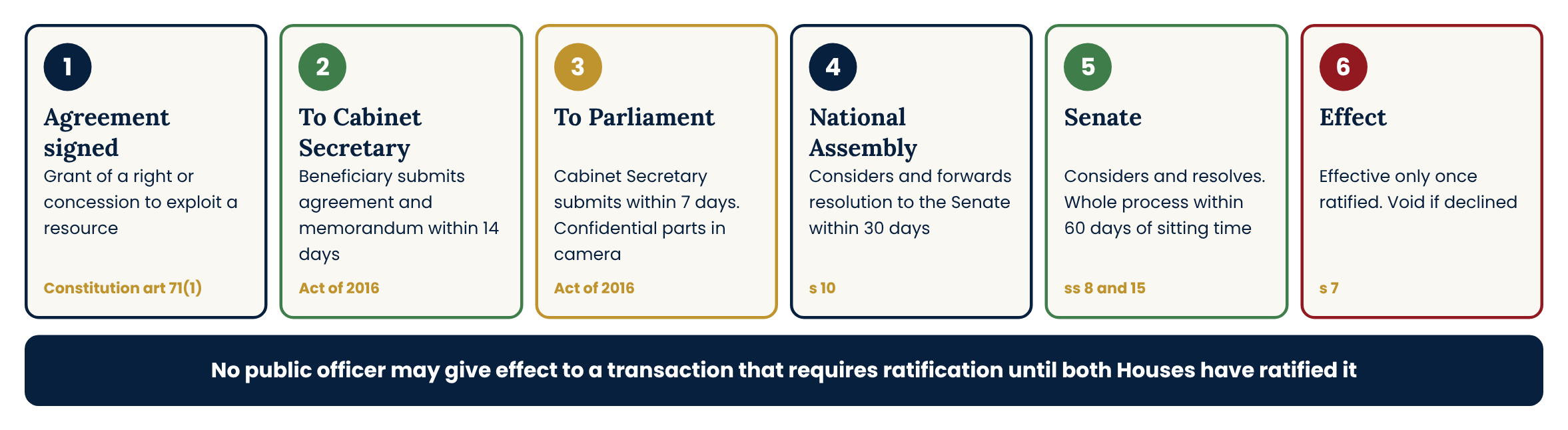
Figure 1. How a natural resource transaction moves from signature to ratification under the Act of 2016
II. Foundational concepts
2.1 Ratification
Ratification is the formal approval of a transaction by a body whose consent is required for it to take effect. Under Article 71 that body is Parliament, which means both the National Assembly and the Senate. Ratification is not a power to renegotiate. Parliament approves the transaction or declines to approve it.
2.2 Transaction, right and concession
A transaction, for the purposes of Article 71, is one that involves the grant of a right or concession by or on behalf of any person, including the national government, to another person for the exploitation of a natural resource of Kenya.4 The focus is on the grant of a right to exploit. A contract that only studies a deposit, or that sets out a framework for later negotiation, may not grant such a right. A contract that gives an investor the right to mine and sell the mineral will.
2.3 Mineral agreement
A mineral agreement is a contract between the Cabinet Secretary and the holder of a mining licence. The Mining Act allows the Cabinet Secretary, in consultation with the National Treasury, to enter into one where the proposed investment exceeds US$500,000,000.5 It sets out terms that a licence alone does not, such as the minimum work programme, fiscal terms, processing and the obligations of each party.6
III. Legal framework
3.1 Constitution
Article 71(1) contains 2 conditions. The transaction must involve the grant of a right or concession for the exploitation of a natural resource, and it must have been entered into on or after the effective date, which is 27 August 2010.7 Article 71(2) requires Parliament to enact legislation providing for the classes of transactions subject to ratification.8 The transitional provisions add that Article 71 shall not take effect until that legislation is enacted.9
Other provisions frame the process. Minerals are public land held by the national government in trust for the people.10 Every citizen has a right of access to information held by the State.11 Public participation is a national value.12
3.2 Act of 2016
The Natural Resources (Classes of Transactions Subject to Ratification) Act 2016 was assented to on 13 September 2016 and came into force on 4 October 2016.13 It applies to transactions entered into on or after the effective date which fall within a class designated by section 4, whether the grantor is the national government, a county government, a State organ or, where the Act requires it, a private person.14 The classes are listed in the Schedule.15 Those relevant to mining are shown in Table 1.
Table 1. Classes of transaction in the Schedule relevant to mining
| Resource | Transaction requiring ratification |
|---|---|
| Minerals | Mineral agreements with a threshold of US$500,000,000 |
| Wildlife | Extraction of oil, gas or minerals within a wildlife protection area |
| Forests | Excision or change of boundaries of gazetted public forests or nature reserves |
| Crude oil and natural gas | Authorisation to extract crude oil or natural gas |
| Any resource | Any other transaction made subject to ratification by an Act of Parliament |
Section 4(2) excludes certain transactions. They include a right granted through a permit, licence or other authorisation under national or county legislation, subject to any threshold set by the Cabinet Secretary, a right granted by a private person by agreement, exploitation for scientific, educational or other purposes that are not commercial unless the resource leaves Kenya, subsistence use where no permit is required, and exploitation below a threshold prescribed by the Cabinet Secretary.16
The procedure is set out in Table 2.
Table 2. Procedure for ratification under the Act of 2016
| Step | Rule |
|---|---|
| Submission by the beneficiary | The beneficiary of the transaction submits the agreement, with a memorandum, to the Cabinet Secretary responsible for the resource within 14 days |
| Submission to Parliament | The Cabinet Secretary submits the agreement and memorandum to Parliament within 7 days |
| Confidentiality | The Cabinet Secretary may agree to treat parts of the agreement as confidential. Those parts are then considered in camera, and any person may challenge the decision in the High Court |
| National Assembly | Considers the agreement and forwards its resolution to the Senate within 30 days. If it does not, the Senate proceeds |
| Time limit | Parliament must deal with the agreement within 60 days, excluding periods when it is not in session |
| Considerations | Parliament considers, among other things, the applicable government policy |
| Effect | The transaction takes effect only once ratified. If Parliament declines, it is void, and no public officer may give effect to it |
| Record | The Cabinet Secretary keeps a central register of ratified agreements |
The sources for each step are the Act and the guidance of the Speaker on its operation.17 Agreements made after the effective date but before the Act came into force are deemed valid by its transitional provisions.18
3.3 Mining Act
The Mining Act provides for mineral agreements, the power to negotiate them, their publication, the requirements for their conclusion and execution, and their consistency with legislation.19 An agreement must cover matters such as the work programme and the payment of royalties, taxes and other fiscal charges.20 Read with the Act of 2016, the effect is that a mineral agreement above the threshold must be ratified by Parliament before it can take effect.
3.4 Agreements between States
An agreement between Kenya and another State is governed by a different regime. Treaties ratified by Kenya form part of the law of Kenya, and the Treaty Making and Ratification Act 2012 sets out the procedure, including approval by Parliament where it is required.21 Whether a particular instrument is a treaty depends on whether the parties intended to create binding obligations under international law. A memorandum of understanding or framework that records intentions may not be a treaty at all.
IV. Decided cases and practice
4.1 Mui Coal Basin
In 2011 the government awarded the concession for coal blocks C and D in the Mui Basin of Kitui County to Fenxi Mining Industry Company Limited, and a benefit sharing agreement was signed on 23 December 2013.22 Members of the local community challenged the concession. One argument was that, under Article 71, the concession was void unless ratified by Parliament.23
On 18 September 2015 a bench of 3 judges of the High Court at Machakos dismissed the petitions. On Article 71, the court accepted that the spirit of the Constitution favoured transparency, but held that it could not empty the law of its text. The drafters had given Parliament 5 years to enact the legislation and had provided, in section 8(3) of the Sixth Schedule, that Article 71 would not take effect until it was enacted. Article 71 was therefore not a bar to the concession.24 The court also held that the national government must involve county governments in negotiations for contracts to exploit natural resources, and it ordered continuing public participation during the environmental assessment and resettlement.25
The judgment matters for 2 reasons. It confirms that the text of Article 71 and its transitional provision will be applied as written. It also shows that, for transactions made after 4 October 2016, the deferral no longer applies, because the legislation is in force. The Mui concession itself remains contested, and the concessionaire has reportedly threatened arbitration.26
4.2 Early practice in mining
Before the Act of 2016, the Ministry itself was uncertain how Article 71 applied. In 2014 it was reported to have told Base Titanium that all mining deals required the approval of Parliament before execution.27 The Act of 2016 resolved the question for most cases by confining ratification to the classes in its Schedule and excluding ordinary licences.
4.3 Turkana as first ratification
On 27 November 2025 the Speaker of the National Assembly informed the House that the Field Development Plan and Production Sharing Contracts for Blocks T6 and T7 in Turkana were the first instance in which the Houses of Parliament were required to ratify an agreement for the exploitation of natural resources under Article 71.28 The Speaker explained the procedure under the Act of 2016 and the Petroleum Act, including the 30 days within which the National Assembly must forward its resolution to the Senate, the 60 days overall, and the exclusion of periods of recess.29 A joint committee of both Houses invited public memoranda, and motions to ratify were moved in both Houses in February 2026.30
The Turkana process is the template for mining. A mineral agreement above the threshold will follow the same path, through submission, committee review, public participation and a resolution of each House.

Figure 2. Article 71 from the Constitution of 2010 to the Mrima Hill petition of 2026
V. Mrima Hill
In June 2026 the President disclosed that Kenya and the United States had finalised a preliminary agreement on the development of Mrima Hill, while a competitive tender for the deposit was under way.31 On 22 June 2026 the Centre for Litigation and Trust filed a petition in the High Court. It argues that the preliminary agreement is a transaction within Article 71(1) and needed the approval of Parliament before execution, and it seeks disclosure of the terms.32 A jurisdictional objection has been raised, and the court set the matter down for directions on it.33 Reports at the end of October 2026 indicated that the tender was continuing with 5 bidders.34
This edition takes no position on the petition. The framework in Part III shows the questions that a court would have to consider. The first is whether the preliminary agreement grants any right or concession to exploit the deposit, or only records an intention to cooperate. The second is whether it falls within a class in the Schedule, such as a mineral agreement above the threshold. The third is whether, as an agreement between States, it is governed instead by the law on treaties. A further question, separate from the preliminary agreement, will arise when a developer is chosen. If the development is carried out under a mineral agreement above the threshold, that agreement will itself need ratification.
Article 71 does not ask whether a deal is large or controversial. It asks whether a right to exploit a resource has been granted, and whether the grant falls within a class that Parliament has designated.
VI. Analysis
6.1 Threshold and licences
The Schedule ties ratification in mining to mineral agreements above US$500,000,000. A mining licence issued under the Mining Act is excluded by section 4(2), subject to any threshold set by the Cabinet Secretary.35 Because a mineral agreement is permissive rather than mandatory, a large project could in principle proceed on a licence alone and so avoid ratification. Whether that is consistent with the purpose of Article 71 has not been decided. The safer course for a large project is to assume that its principal agreement with the State will be scrutinised, and to structure it accordingly.
6.2 Timing and validity
The Act provides that a transaction subject to ratification takes effect only once ratified, and that no public officer may give effect to it before then.36 Investors should therefore treat ratification as a condition precedent. Any payment, transfer of rights or start of work before ratification is at risk. The State, for its part, should not allow an agreement to be implemented in advance of ratification, however preliminary its first steps.
6.3 Confidentiality and public participation
The Act allows parts of an agreement to be considered in camera, and allows any person to challenge that decision in the High Court.37 That provision must be read with the right of access to information and the Access to Information Act.38 The Turkana process shows that Parliament will invite public views. The Mui Coal Basin judgment shows that the courts expect continuing engagement with affected communities and the involvement of county governments.39
6.4 Agreements between States
Agreements on critical minerals between governments are becoming common. They may include commitments on processing, offtake and investment. Where such an agreement grants no right to exploit a deposit, Article 71 may not apply to it, although the law on treaties may. Where it does grant such a right, directly or through a designated company, it is difficult to see why Article 71 should not apply. The distinction will often turn on careful reading of the text, which is one reason why disclosure matters.
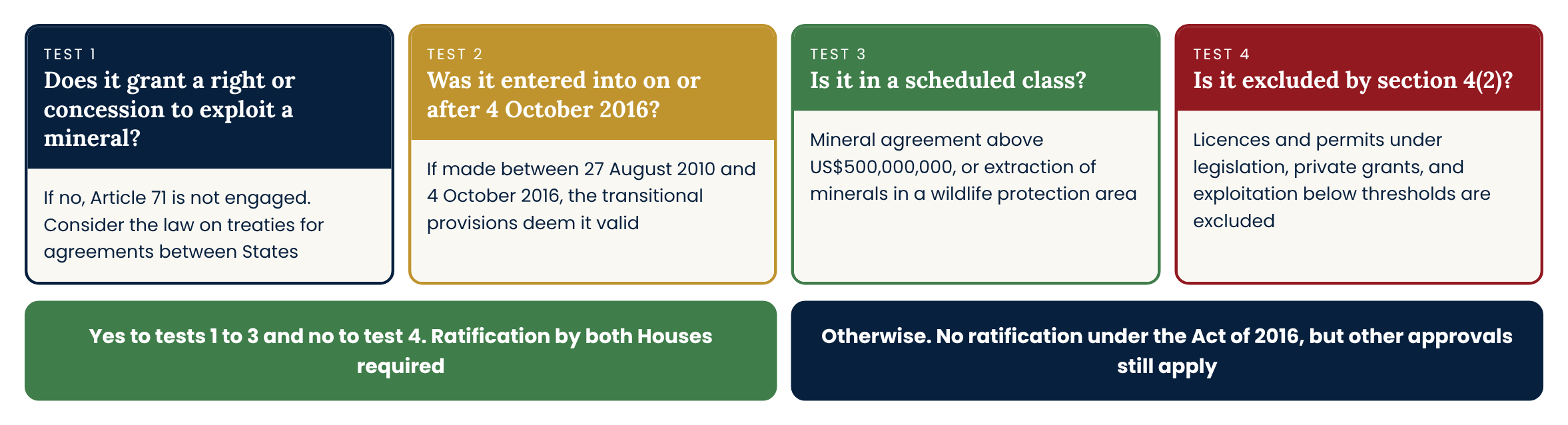
Figure 3. Does a mining transaction need ratification by Parliament?
Table 3. Open legal questions on ratification of mining agreements
| Question | Present position |
|---|---|
| Can a large project avoid ratification by proceeding on a licence alone? | Not decided. The Act excludes licences, subject to any threshold set by the Cabinet Secretary |
| Is a preliminary or framework agreement a transaction under Article 71? | Depends on whether it grants a right to exploit. Before the High Court in the Mrima Hill petition |
| How does Article 71 interact with the law on treaties? | Not decided. The answer depends on the nature of the instrument |
| What happens to steps taken before ratification? | The Act makes the transaction ineffective until ratified, and void if Parliament declines |
VII. Next round
7.1 Questions every party to a large mining transaction should answer
Table 4. Questions every party to a large mining transaction should be able to answer
| Question | Why it matters |
|---|---|
| Does the transaction grant a right or concession to exploit a mineral? | That is the trigger in Article 71(1) |
| Is it a mineral agreement above US$500,000,000, or within another class in the Schedule? | Only scheduled classes require ratification under the Act of 2016 |
| Has the agreement been submitted within 14 days, with the required memorandum? | Delay postpones effectiveness |
| Which parts, if any, are to be treated as confidential, and on what basis? | Confidentiality may be challenged in the High Court |
| Have the county government and affected communities been engaged? | Mui Coal Basin and the Turkana process show that both are expected |
7.2 What each party should do
Table 5. Practical guidance drawn from the law and the cases
| Party | What the law and the cases counsel |
|---|---|
| Investors and lenders | Treat ratification as a condition precedent. Do not fund or begin work before it. Prepare the memorandum and a public summary early, and limit confidentiality requests to what is truly sensitive |
| The Ministry | Classify each transaction against the Schedule at the outset. Submit on time. Involve the county government and communities during negotiation, not only after signature |
| Parliament | Apply the time limits strictly, publish the documents and committee reports, and give reasons for any refusal |
| Communities and civil society | Use the public participation window, request disclosure under Article 35, and bring any challenge promptly in the right court |
VIII. Conclusion
Article 71 gave Parliament a voice in the largest bargains over the natural resources of Kenya. For its first years that voice was silent, because the Constitution deferred it until legislation was passed. The Act of 2016 supplied the legislation and, for mining, focused ratification on the large mineral agreement and on extraction in wildlife protection areas, while leaving ordinary licensing to the Mining Act.
The first ratification under Article 71 came in petroleum, in the Turkana process of 2025 and 2026. Mining will follow as large projects such as Mrima Hill move from tender to agreement. When they do, the questions will be the same. Has a right to exploit been granted, does the grant fall within a scheduled class, and has the procedure been followed before anything is done under it? An investor who plans for those questions, and a State that answers them openly, will produce agreements that last.
Benson Odiwuor is an Advocate of the High Court of Kenya based in Nairobi, whose practice focuses on dispute resolution in the regulated industries, including mining, oil and gas, banking and project finance. He is the editor of The BOLD, Benson Odiwuor’s Legal Digests, a legal newsletter on dispute strategies and legal developments in the regulated industries of Kenya. Subscribe to The BOLD here.
For inquiries, contact the author at info@bensonodiwuor.com.
References
- Constitution of Kenya 2010 art 71. ↩
- National Assembly, Hansard and Order Paper, Communication from the Chair on the ratification of the Field Development Plan and Production Sharing Contracts for Blocks T6 and T7 (27 November 2025) <https://www.parliament.go.ke/sites/default/files/2025-12/Thursday,%20November%2027,%202025%20at%202.30pm.pdf>. ↩
- Benard Sanga, ‘Kenya-US Sh9.7 Trillion Kwale Mineral Deal Faces Legal Hurdles’ The Standard (Nairobi, 23 June 2026) <https://www.standardmedia.co.ke/business/amp/national/article/2001551075/kenya-us-sh97-trillion-kwale-mineral-deal-faces-legal-hurdles>; ‘Petition Filed to Stop Proposed Kenya-US Mrima Hill Mining Deal’ Citizen Digital (Nairobi, 24 June 2026) <https://citizen.digital/article/petition-filed-to-stop-proposed-kenya-us-mrima-hill-mining-deal>. ↩
- Constitution of Kenya 2010 art 71(1)(a). ↩
- Mining Act 2016 (No 12 of 2016), now Cap 306 of the Laws of Kenya s 117(1) <https://new.kenyalaw.org/akn/ke/act/2016/12/eng@2022-12-31>; ‘Exploring: A Detailed Look at Kenya’s Mining Act, 2016’ Chambers and Partners<https://chambers.com/articles/exploring-a-detailed-look-at-kenyas-mining-act>. ↩
- Mining Act 2016 s 117(2). ↩
- Constitution of Kenya 2010 art 71(1). ↩
- Constitution of Kenya 2010 art 71(2). ↩
- Constitution of Kenya 2010 sch 6 s 8(3); In the Matter of the Mui Coal Basin Local Community (Constitutional Petition 305 of 2012, consolidated with Petition 34 of 2013) [2015] eKLR <https://new.kenyalaw.org/akn/ke/judgment/kehc/2015/473/eng@2015-09-18>. ↩
- Constitution of Kenya 2010 art 62(1)(f) and (3). ↩
- Constitution of Kenya 2010 art 35. ↩
- Constitution of Kenya 2010 art 10. ↩
- Natural Resources (Classes of Transactions Subject to Ratification) Act 2016 (No 41 of 2016), now Cap 387B of the Laws of Kenya <https://new.kenyalaw.org/akn/ke/act/2016/41>. ↩
- Natural Resources (Ratification) Act 2016 s 3. ↩
- Natural Resources (Ratification) Act 2016 s 4(1). ↩
- Natural Resources (Ratification) Act 2016 s 4(2); Oraro, ‘New Ratification Requirements’ (n 13). ↩
- Natural Resources (Ratification) Act 2016 ss 7 to 10 and 15; Speaker, Communication of 27 November 2025 (n 2); Kenya Association of Manufacturers, ‘The Natural Resources (Classes of Transaction Subject to Ratification by Parliament) Act, 2016’ <https://kam.co.ke/natural-resources-classes-transaction-subject-ratification-parliament-act-2016/>. ↩
- Oraro, ‘New Ratification Requirements’ (n 13). ↩
- Mining Act 2016 ss 117 to 121. ↩
- Mining Act 2016 s 117(2). ↩
- Constitution of Kenya 2010 art 2(6); Treaty Making and Ratification Act 2012 (No 45 of 2012). ↩
- ‘Fresh Dispute over Coal Mining Agreement’ Daily Nation (Nairobi, 2014) <https://nation.africa/kenya/news/fresh-dispute-over-coal-mining-agreement-950482>; ‘Tycoon Munga, China Firm Row over Sh4trn Coal Mines’ Business Daily (Nairobi, 2025) <https://www.businessdailyafrica.com/bd/corporate/companies/tycoon-munga-china-firm-row-over-sh4trn-coal-mines-5268246>. ↩
- Mui Coal Basin (n 9). ↩
- Mui Coal Basin (n 9). ↩
- Mui Coal Basin (n 9). ↩
- ‘Tycoon Munga, China Firm Row’ (n 22). ↩
- ‘Questions Still Linger on Royalties Kenya Will Get in Titanium Export’ Daily Nation (Nairobi, 2014) <https://nation.africa/kenya/business/questions-still-linger-on-royalties-kenya-will-get-in-titanium-export--949966>. ↩
- Speaker, Communication of 27 November 2025 (n 2). ↩
- Speaker, Communication of 27 November 2025 (n 2); Petroleum Act 2019 (No 2 of 2019), now Cap 308 of the Laws of Kenya s 31. ↩
- ‘Kenya: Senate Seeks Views on Lokichar Oil Production Ambition’ allAfrica (29 December 2025) <https://allafrica.com/stories/202512290079.html>; National Assembly, Motion on the ratification of the Field Development Plan and Production Sharing Contracts for Blocks T6 and T7 (25 February 2026), as recorded by Mzalendo <https://mzalendo.com/legislative-trends/motions/246/>; Senate, Motion on the adoption and ratification of the Field Development Plan and Production Sharing Contracts for Blocks T6 and T7 (February 2026), as recorded by Mzalendo <https://mzalendo.com/legislative-trends/motions/603/>. ↩
- ‘Petition Filed to Stop Proposed Mrima Hill Mining Deal’ (n 3). ↩
- Sanga, ‘Kwale Mineral Deal Faces Legal Hurdles’ (n 3); ‘Petition Filed to Stop Proposed Mrima Hill Mining Deal’ (n 3); AFP, ‘Kenya-US Rare Earths Deal Challenged in Court over Secrecy’ France 24 (29 June 2026) <https://www.france24.com/en/live-news/20260629-kenya-us-rare-earths-deal-challenged-in-court-over-secrecy>. ↩
- ‘Mrima Hill Deal Pits Mining Ambitions over Heritage Protection’ The Coast (Mombasa, 30 July 2026) <https://www.thecoast.co.ke/2026/07/30/mrima-hill-deal-pits-mining-ambitions-over-heritage-protection/49/46/business-news/thecoast/17298/09/>. ↩
- Faith Mwangi, ‘US Intensifies Fight for Kenya’s Mrima Hill as China Quietly Withdraws’ The Kenya Times (Nairobi, 31 October 2026) <https://thekenyatimes.com/latest-kenya-times-news/mrima-hill-bid-china-us/>. ↩
- Natural Resources (Ratification) Act 2016 s 4(2). ↩
- Natural Resources (Ratification) Act 2016 s 7. ↩
- Natural Resources (Ratification) Act 2016; Oraro, ‘New Ratification Requirements’ (n 13). ↩
- Constitution of Kenya 2010 art 35; Access to Information Act 2016 (No 31 of 2016). ↩
- Mui Coal Basin (n 9). ↩