
Petrol Station Leases and Subleases in Kenya. Licence, Tenancy and the Rent Tribunal
2 November 2026
Behind most branded stations is a chain of land rights that the parties seldom document well. The law answers 3 questions about it. What interest does each party hold? Is any tenancy controlled? Which forum has jurisdiction? This edition answers each of them from the law and the decided cases.
| KEY POINTS AT A GLANCE Most branded stations that the oil company does not own outright sit on land leased from a private landowner. The company then puts a dealer into the station, usually under an agreement that calls the dealer a licensee. The result is a chain of at least 2 relationships, the head lease and the dealer arrangement. The retail regulations require a registered lease of at least 5 years before a construction permit is issued on land that the developer does not own, and a title or registered lease in the name of the applicant for the retail licence. Land arrangements therefore have regulatory as well as private consequences. Whether a dealer is a licensee or a tenant depends on substance, not label. Exclusive possession for a term at a rent points to a tenancy, while an arrangement that keeps control of the site with the company points to a licence. English authority applied in Kenya has treated filling station arrangements as licences on their facts. If the dealer is a tenant of a shop under a tenancy that is not in writing, or is for 5 years or less, it may hold a controlled tenancy under Cap 301 and enjoy the protection of the Business Premises Rent Tribunal. The Tribunal has no jurisdiction outside controlled tenancies. Disputes between landowners and oil companies are common. They concern rent, holding over, restoration on expiry, competing leases, and assignment or rebranding after a change of control. Every land dispute about a station turns on 3 questions. What interest does each party hold? Is any tenancy controlled? Which forum has jurisdiction? |
I. Introduction
A petrol station needs land on a busy road, and the best sites are often owned by people who have no wish to run a station. Oil marketing companies therefore lease land, build stations on it and put dealers in to operate them. The landowner wants rent and the return of a clean site at the end. The company wants a long and secure term. The dealer wants security for the investment it makes in running the business.
These interests are recorded in different documents that often do not fit together. A head lease may forbid subletting while the company grants the dealer something that looks very like a sublease. A dealer may be told it is a licensee while it pays a fixed monthly sum for exclusive use of the site. When the relationship breaks down, the parties discover that the label in their documents does not settle their rights.
This edition of The BOLD explains the land arrangements behind branded stations. It describes the head lease and the dealer arrangement, sets out the regulatory requirements for land, examines the distinction between a licence and a tenancy, and asks whether and when the Landlord and Tenant (Shops, Hotels and Catering Establishments) Act, known as Cap 301, applies. It closes with practical guidance. It takes no position on any matter pending before a court or tribunal.
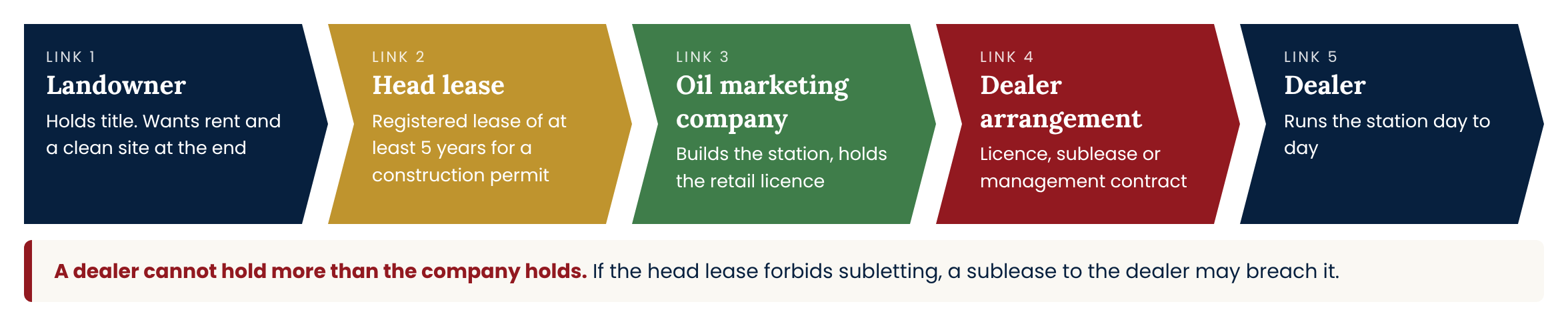
Figure 1. The chain of land interests at a leased station
II. Foundational concepts
2.1 Head lease
The head lease is the lease between the landowner and the oil marketing company. It usually runs for a long term, often with an option to renew, and contains covenants on rent, use, alienation, maintenance and reinstatement. In Mugwetwa the landowner leased the site to Gulf Energy Limited on 18 June 2009 for 17 years from 1 July 2009, with an option to renew.1 In the dispute between KenolKobil and Canarian Holdings, leases over sites at Changamwe, Mtwapa and Jomvu had expired, and the company was ordered to pay for restoration works and mesne profits.2
2.2 Dealer arrangement
The company then grants the dealer the right to operate the station. The arrangement may be a sublease, a licence or a management contract. Most oil companies prefer a licence, because a licence gives the dealer a personal right to use the site and confers no interest in the land. In Agip v Appollos the company granted the dealer the right and licence to run and operate the station.3 In Njane the dealer was appointed to operate the station as a licensee.4
2.3 Licence and tenancy
A tenancy is an interest in land. Its hallmark is exclusive possession for a term at a rent. A licence is a personal permission to do something on land that would otherwise be a trespass. In the leading English case the House of Lords held that where residential accommodation is granted for a term at a rent with exclusive possession, the grant is a tenancy unless special circumstances negative that intention, whatever label the parties use.5 In an earlier case concerning a filling station, the English Court of Appeal held that an agreement under which the operator was allowed to use the station for a year to sell the products of the oil company was a licence, because on its true construction it did not give exclusive possession and the company retained substantial control.6 That decision has been applied in Kenya, including by the High Court in the litigation that reached the Court of Appeal in Kileleshwa.7
III. Legal framework
3.1 Land law
Leases are created and registered under the Land Act and the Land Registration Act. A registered lease binds third parties, and an unregistered arrangement may bind only the parties to it.8 Covenants against assignment and subletting are common in head leases, and a sublease granted in breach of such a covenant may expose the head tenant to forfeiture even though it is effective between the head tenant and the subtenant.
3.2 Petroleum regulations
The retail regulations make land a regulatory matter. Where the title to the land is not in the name of the developer, an applicant for a construction permit must produce a registered lease of at least 5 years.9 An applicant for a retail licence must prove ownership of the land by a title deed or a registered long term lease, and the published checklist of the Authority asks for a title deed or registered lease in the name of the applicant.10 An oil company that holds only a short or unregistered lease may therefore be unable to obtain or renew the licence for the site, and a dealer who holds only a licence from the company cannot apply in its own name.
3.3 Cap 301
Cap 301 protects tenants of shops, hotels and catering establishments under controlled tenancies. A controlled tenancy is a tenancy of such premises that has not been reduced into writing, or that has been reduced into writing and is for a period not exceeding 5 years, or contains a provision for termination otherwise than for breach within 5 years of its commencement. Tenancies in which the landlord is the Government, a county government or certain public bodies are excluded.11 A shop includes premises occupied wholly or mainly for the purposes of a retail or wholesale trade or business, or for rendering services for money.12 If a tenancy meets any of the conditions, it is a controlled tenancy whatever the parties intended.13
A controlled tenancy can be terminated, or its terms altered to the detriment of the tenant, only by a notice in the prescribed form that takes effect not earlier than 2 months after service. The tenant may refer the notice to the Business Premises Rent Tribunal, and the notice then has no effect until the Tribunal decides.14 The Tribunal has power to determine whether a tenancy is controlled, to assess rent, to investigate complaints by either party and to make orders.15 It has no jurisdiction over tenancies that are not controlled.16
3.4 Limits of Cap 301
Cap 301 has 2 limits that matter for petrol stations. First, Cap 301 protects tenants, not licensees. A dealer who holds a genuine licence is outside it. Secondly, it applies only to shops, hotels and catering establishments. In Drumcon the Environment and Land Court held that the Tribunal had no jurisdiction over premises that Total Kenya had sublet for drum manufacturing, because they were industrial premises, and the proceedings before the Tribunal were a nullity.17 A petrol station sells fuel at retail and so is likely to fall within the definition of a shop, but a depot or a workshop may not.
IV. Dealer as tenant
4.1 Indicators of a licence
Several features of a typical dealer agreement point to a licence. The company keeps the right to enter at any time, inspect, test and take samples. It controls the layout, the equipment, the brand and the products. It may require the dealer to vacate on short notice. The dealer pays a fee that varies with throughput rather than a fixed rent. The agreement is expressed to confer no interest in the land. In Kileleshwa the company pleaded that the operator was a licensee whose licence could be terminated at short or no notice.18 In a ruling in the same litigation the Court of Appeal observed that the operator was only a licensee of the premises.19
4.2 Indicators of a tenancy
Other features point the other way. The dealer has the keys and excludes everyone else. It pays a fixed monthly sum that looks like rent, regardless of throughput. The agreement runs for a fixed term. The dealer makes structural improvements at its own cost. In Njane the dealer paid a royalty of KSh 950,000 a month in advance, a fixed sum that was not tied to volume.20 In 2025 the regulator found that some oil companies were overcharging CODO dealers on rent, which suggests that at least some agreements are framed in terms of rent.21 A court that finds exclusive possession for a term at a rent may conclude that the dealer is a tenant despite the label.22
4.3 Consequences of a tenancy
If the dealer is a tenant, and the tenancy is oral, or written for 5 years or less, or terminable otherwise than for breach within 5 years, it may be a controlled tenancy.23 The company could then terminate only by the prescribed notice of at least 2 months, and the dealer could refer the notice to the Tribunal, which would decide whether the company had a lawful ground.24 Many dealer agreements are for short terms or can be terminated on 30 days notice, which would meet the conditions if the arrangement were a tenancy.25
The company would also face a structural problem. If the head lease forbids subletting, the creation of a sublease in favour of the dealer could breach the head lease. And because the retail licence follows the title or registered lease, a dealer who is a tenant under an unregistered sublease still could not obtain a licence in its own name.26
4.4 Oral arrangements
Many dealer relationships began informally and were never fully documented. In Kileleshwa the trial judge found that the agreement was oral, despite the insistence of the company that a standard written licence had been signed.27 In Njane the formal licence was never signed.28 An oral tenancy is a controlled tenancy if the premises are a shop.29 An oil company that relies on an unsigned or missing agreement therefore runs a real risk that the court will find a tenancy, and a controlled one.
Table 1. Licence or tenancy indicators in dealer arrangements
| Feature | Points to licence | Points to tenancy |
|---|---|---|
| Possession | Company keeps keys and access, and may enter at will | Dealer has exclusive possession and keys |
| Payment | Fee per litre or share of revenue | Fixed monthly sum called rent |
| Term | Terminable at short notice | Fixed term |
| Control | Company controls layout, equipment and products | Dealer controls the premises |
| Improvements | Made by the company | Made by the dealer at its own cost |
| Documents | Signed agreement expressly conferring no interest in land | Oral arrangement or document described as a lease |
V. Disputes between landowners and oil companies
5.1 Holding over and restoration
When a head lease expires, the company must give up the site in the condition the lease requires. In the dispute with Canarian Holdings, the Environment and Land Court in Mombasa held that continued occupation of the Changamwe station after the lease ended amounted to trespass, found that leases for the Mtwapa and Jomvu stations had expired by effluxion of time, and ordered payment of mesne profits at the monthly rent and of restoration costs, together exceeding KSh 32,000,000. The court later stayed execution on condition that the decretal sum was deposited in a joint interest earning account.30
5.2 Early exit by an oil company
A company that leaves before the end of the term may be liable for the rent it would have paid. In a dispute over a station on Murang’a Road in Nairobi, a landowner obtained an award of about KSh 99,000,000 after the High Court found that KenolKobil had moved out only 3 years after signing the lease, and the company was ordered to deposit security of KSh 15,000,000 pending appeal.31
5.3 Competing leases
Sometimes 2 oil companies claim the same site. In the dispute over Maloba Petrol Station in Kakamega, Total said it had leased the station from the individual owner in 1987, while Vivo Energy said it had leased it from the company that became the registered owner and had moved in.32 The Court of Appeal heard an appeal against interlocutory orders in the matter.33 Such cases turn on registration, priority and the authority of the person who signed each lease.
5.4 Change of control and rebranding
Head leases often restrict assignment and change of control. In the Canarian dispute the court declared that KenolKobil had breached a clause of the lease when its shares were transferred to Rubis Energie, resulting in a change of control.34 In Mugwetwa the lease was assigned by a deed of assignment and variation of 13 January 2020 from Gulf Energy Limited to Gulf Energy Holdings Limited, and the landowner later contended that branding the station with the name Rubis amounted to unlawful occupation and trespass.35 The tenth edition in this series examines these issues.
5.5 Subleases and dealer disputes
Where the company has granted a sublease rather than a licence, the end of the dealer relationship may also involve the landowner. In Rubis v Seif Bin Salim the Environment and Land Court dealt with a dispute that involved a sublease and the termination of a dealership.36 The interaction of the head lease, the sublease and the dealer agreement is a frequent source of complexity, because the termination of any of them does not automatically end the others.
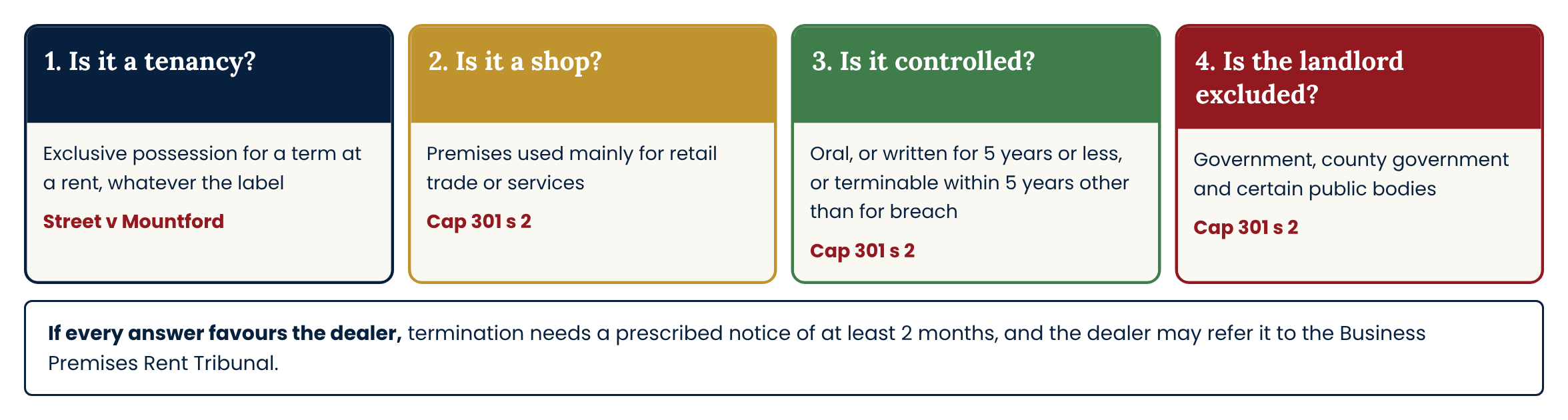
Figure 2. When Cap 301 can apply to a dealer
VI. Forum
The choice of forum follows the nature of the interest. The Business Premises Rent Tribunal has jurisdiction only over controlled tenancies.37 Disputes about title, leases that are not controlled, trespass and possession belong to the Environment and Land Court, which heard Mugwetwa, Drumcon and the Canarian dispute.38 Disputes about the dealer relationship as a commercial contract belong to the High Court or to arbitration if the agreement so provides, and the Energy and Petroleum Tribunal has jurisdiction over matters in the energy and petroleum sector.39 A party that chooses the wrong forum risks having its proceedings declared a nullity, as in Drumcon.40 The ninth edition in this series examines forum in detail.
VII. Open legal questions
7.1 Is a petrol station a shop?
Cap 301 applies to premises occupied wholly or mainly for retail trade or for rendering services for money.41 A station sells fuel at retail, and often runs a shop, a car wash and a service bay. It is likely to qualify. No reported Kenyan decision found in the research for this edition has squarely held that a dealer at a company station holds a controlled tenancy, and the point remains open.
7.2 Effect of regulatory requirements
The retail regulations require a registered lease of at least 5 years for construction on land not owned by the developer.42 That requirement concerns the head lease. Whether a court would treat the regulatory need for control by the licensee as a factor pointing to a licence at the dealer level is an open question.
7.3 Contracting out
Cap 301 applies to any tenancy that meets its conditions, regardless of what the parties intended.43 A clause that declares the arrangement to be a licence does not prevent a court from finding a tenancy. The only reliable way to avoid Cap 301 is to create a genuine licence, or a written tenancy of more than 5 years that cannot be terminated otherwise than for breach within the first 5 years.

Figure 3. Forum map for station land disputes
VIII. Questions every participant should answer
What interest does each party hold? The parties should identify the title, the head lease and its registration, the dealer document and its true character.44
Is any tenancy controlled? If the dealer is a tenant of a shop under an oral tenancy or a written tenancy of 5 years or less, Cap 301 may apply.45
Which forum has jurisdiction? Controlled tenancies go to the Business Premises Rent Tribunal, title and possession to the Environment and Land Court, and commercial disputes to the court or arbitral tribunal named in the contract, or to the Energy and Petroleum Tribunal.46
8.1 Practical guidance for landowners
Landowners should register the lease, define the permitted use and the rules on subletting and licensing to dealers, and include a change of control clause. They should specify the condition in which the site must be returned, including the removal of tanks and remediation of contamination, and secure the obligation with a deposit or guarantee.
8.2 Practical guidance for oil marketing companies
Companies should ensure that each head lease is registered, long enough to meet the regulatory requirement and compatible with the dealer model they intend to use. If they want a licence, the dealer document and their conduct should reflect a licence, including real control and access. They should avoid fixed sums described as rent unless they accept the risk of a tenancy.
8.3 Practical guidance for dealers
Dealers should read the head lease where they can, because their rights cannot be greater than those of the company. A dealer that has exclusive possession, pays a fixed sum and holds an oral or short written arrangement should take advice on whether it holds a controlled tenancy before it vacates in response to a notice.
IX. Conclusion
The land beneath a petrol station carries several layers of rights, and each layer has its own law and its own forum. The label in a dealer agreement does not decide whether the dealer is a licensee or a tenant, and a tenant of a shop may be protected by Cap 301 whatever the parties intended. Landowners, oil companies and dealers who understand the 3 questions in this edition, and who make their documents match their real relationship, will avoid many of the disputes described here.
Benson Odiwuor is an Advocate of the High Court of Kenya based in Nairobi, whose practice focuses on dispute resolution in the regulated industries, including mining, oil and gas, banking and project finance. He is the editor of The BOLD, Benson Odiwuor’s Legal Digests, a legal newsletter on dispute strategies and legal developments in the regulated industries of Kenya. Subscribe to The BOLD here.
For inquiries, contact the author at info@bensonodiwuor.com.
References
- Mugwetwa v Rubis Energy Kenya PLC & another (Environment and Land Case E003 of 2023) [2024] KEELC 5710 (KLR) <https://new.kenyalaw.org/akn/ke/judgment/keelc/2024/5710/eng@2024-07-25>. ↩
- ‘KenolKobil Respite in Sh32m Row with Ex Landlord’ Business Daily (Nairobi, 8 July 2024) <https://www.businessdailyafrica.com/bd/corporate/companies/kenolkobil-respite-in-sh32m-row-with-ex-landlord-4683124>. ↩
- Agip (Kenya) Ltd v Appollos Kennedy Mwangi t/a Appollos Service Station (Civil Appeal 166 of 1995) [1996] eKLR <https://www.judy.legal/case/agip-kenya-limited-v-appollos-kennedy-mwangi-ta-appollos-service-station>. ↩
- Njane t/a Argwings Twin Service Station & another v Total Kenya Limited & another (Civil Case 433 of 2010) [2025] KEHC 14898 (KLR) para 2 <https://new.kenyalaw.org/akn/ke/judgment/kehc/2025/14898/eng@2025-10-24>. ↩
- Street v Mountford [1985] AC 809 (HL). ↩
- Shell-Mex and BP Ltd v Manchester Garages Ltd [1971] 1 WLR 612 (CA). ↩
- Kileleshwa Service Station Ltd v Kenya Shell Ltd (Civil Appeals 205 and 239 of 2008) [2012] KECA 13 (KLR) <https://new.kenyalaw.org/akn/ke/judgment/keca/2012/13/eng@2012-04-20>. ↩
- Land Act 2012 (No 6 of 2012); Land Registration Act 2012 (No 3 of 2012). ↩
- Petroleum (Retail Dispensing Site Construction and Licensing) (No 2) Regulations 2025 (LN 188 of 2025) First Schedule, Part II <https://epra.go.ke/extras/legal/web/uploads/6a5f3964c4b13_The%20Petroleum%20(Retail%20Dispensing%20Site%20Construction%20and%20Licensing)(No%202)%20Regulations.pdf>. ↩
- Retail Regulations 2025 Third Schedule; Energy and Petroleum Regulatory Authority, ‘Requirements for Licence for Retail of Petroleum Products (Except LPG)’ (February 2025) <https://epra.go.ke/sites/default/files/2025-02/Licence%20for%20Retail%20of%20Petroleum%20Products%20%28Except%20LPG%29.pdf>. ↩
- Landlord and Tenant (Shops, Hotels and Catering Establishments) Act (Cap 301) s 2; Mohamed Nuur Abdullahi v Al-Sawaw Mohammed Abdulqader & A Hassan (Tribunal Case 909 of 2020) [2021] KEBPRT 642 (KLR) <https://new.kenyalaw.org/akn/ke/judgment/kebprt/2021/642/eng@2021-03-12>. ↩
- Cap 301 s 2. ↩
- Mohamed Nuur Abdullahi (n 11). ↩
- Cap 301 ss 4 and 6. ↩
- Cap 301 s 12; Samuel Kahururu & 5 others v Hydromasters Drilling Company Ltd & another [2022] KEBPRT 65 (KLR) <https://new.kenyalaw.org/akn/ke/judgment/kebprt/2022/65/eng@2022-01-28>. ↩
- Hydromasters (n 15). ↩
- Total Kenya Limited v Drumcon Kenya Limited [2022] KEELC 1874 (KLR) <https://new.kenyalaw.org/akn/ke/judgment/keelc/2022/1874/eng@2022-01-26>. ↩
- Kileleshwa (2012) (n 7). ↩
- Kileleshwa Service Station Ltd v Kenya Shell Ltd (Civil Application Nai 84 of 2008) [2008] eKLR <https://www.judy.legal/case/kileleshwa-service-station-limited-v-kenya-shell-limited>. ↩
- Njane (n 4) para 5. ↩
- ‘Oil Majors Overcharging Petrol Station Owners’ Business Daily (Nairobi, 22 May 2025) <https://www.businessdailyafrica.com/bd/corporate/industry/oil-majors-overcharging-petrol-station-owners-5053294>. ↩
- Street v Mountford (n 5). ↩
- Cap 301 s 2. ↩
- Cap 301 ss 4 and 6. ↩
- Agip v Appollos (n 3). ↩
- EPRA, ‘Requirements for Licence for Retail’ (n 10). ↩
- Kileleshwa (2012) (n 7). ↩
- Njane (n 4) paras 27 to 31. ↩
- Cap 301 s 2. ↩
- ‘KenolKobil Respite in Sh32m Row’ (n 2). ↩
- ‘Court Orders KenolKobil to Deposit Security’ Business Daily (Nairobi) <https://www.businessdailyafrica.com/bd/corporate/companies/court-orders-kenolkobil-to-deposit-security-1962174>. ↩
- ‘Judge Dropped from Total, Shell Station Suit’ Business Daily (Nairobi) <https://www.businessdailyafrica.com/bd/corporate/companies/judge-dropped-from-total-shell-station-suit-2075872>. ↩
- Vivo Energy Kenya Ltd v Maloba Petrol Station Ltd & 3 others (Civil Appeal 21 of 2014, Court of Appeal at Kisumu) [2015] eKLR. ↩
- ‘KenolKobil Respite in Sh32m Row’ (n 2). ↩
- Mugwetwa (n 1). ↩
- Rubis Energy Kenya PLC v Trustees of Seif Bin Salim [2024] KEELC 1496 (KLR). ↩
- Hydromasters (n 15). ↩
- Mugwetwa (n 1); Drumcon (n 17); ‘KenolKobil Respite in Sh32m Row’ (n 2). ↩
- Energy Act 2019 (No 1 of 2019), now Cap 314 of the Laws of Kenya s 36; Matu v Rubis Energy Kenya Plc (Tribunal Appeal E003 of 2025) [2025] KEET 29 (KLR) <https://new.kenyalaw.org/akn/ke/judgment/keet/2025/29/eng@2025-06-26>. ↩
- Drumcon (n 17). ↩
- Cap 301 s 2. ↩
- Retail Regulations 2025 First Schedule, Part II. ↩
- Mohamed Nuur Abdullahi (n 11). ↩
- Land Registration Act; Street v Mountford (n 5). ↩
- Cap 301 s 2. ↩
- Hydromasters (n 15); Drumcon (n 17); Energy Act s 36. ↩