
Mining in Protected Areas in Kenya. Beneath the Forest Floor
1 November 2026
Some of the richest mineral ground in Kenya lies under forests, parks and sacred sites. The law answers 3 questions before a single pit is dug. What is the legal status of the land? Which approvals does that status require, and can they lawfully be given? In what order must they be obtained? This edition answers each of them from the law and the decided cases.
| KEY POINTS AT A GLANCE Some land in Kenya cannot be mined at all, and some land can be mined only with the written approval of the body that protects it. The Mining Act calls these excluded and restricted areas. Before the Mineral Rights Board recommends the grant of a mineral right, the applicant must obtain the approvals that the Act lists. They include the Cabinet Secretary for wildlife for a national park, the Cabinet Secretary for the environment for a protected area under environmental law, and the Director of the Kenya Forest Service for a forest. National parks and public forests are public land under Article 62 of the Constitution. Their boundaries can be changed only through procedures that end in the National Assembly. A mining licence does not change them. In Cortec the courts held that a licence over Mrima Hill, a gazetted forest, nature reserve and national monument, was void because the consents of the Kenya Forest Service and the National Museums of Kenya had not been obtained. An international tribunal later dismissed the claims of the investors on similar grounds. In 2026 Mrima Hill is again before the courts, this time over a proposed agreement between Kenya and the United States, and the national government is preparing a framework for artisanal miners to work inside Tsavo. Both questions remain open. Every project near protected land turns on 3 questions. What is the legal status of the land? Which approvals does that status require, and can they lawfully be given? In what order must they be obtained? |
I. Introduction
Kenya has some of the richest mineral ground in Africa, and much of it lies under land that the law protects for other reasons. The gemstone belt of Taita Taveta runs beneath the Tsavo parks. The niobium and rare earth deposit at Mrima Hill in Kwale County lies under an indigenous forest that has been legally protected since 1961 and that contains sacred Kaya sites.1 Other deposits sit under water catchments, coastal zones and community forests. Every operator who looks at such ground meets the same question. Can it be mined at all, and if so, on whose approval?
The question is pressing in 2026. The national government has invited bids to develop Mrima Hill, and a petition filed in June 2026 challenges a preliminary agreement with the United States on that deposit.2 At the same time, the State Department for Mining is finalising a framework under which artisanal miners would be given controlled access to national parks, beginning with Tsavo.3 Nothing in this edition comments on the merits of those matters. They do, however, make it timely to set out what the law requires.
This edition of The BOLD builds the answer from the ground up. It explains the categories of protected land and the idea of an excluded or restricted area. It then sets out the constitutional and statutory framework, including the approvals that the Mining Act requires and the rules of forest, wildlife, heritage and environmental law. It examines the decided cases, from Cortec to the Lamu coal judgment of 2025. It closes with an analysis of the open questions and practical guidance for operators, investors, communities and the State.
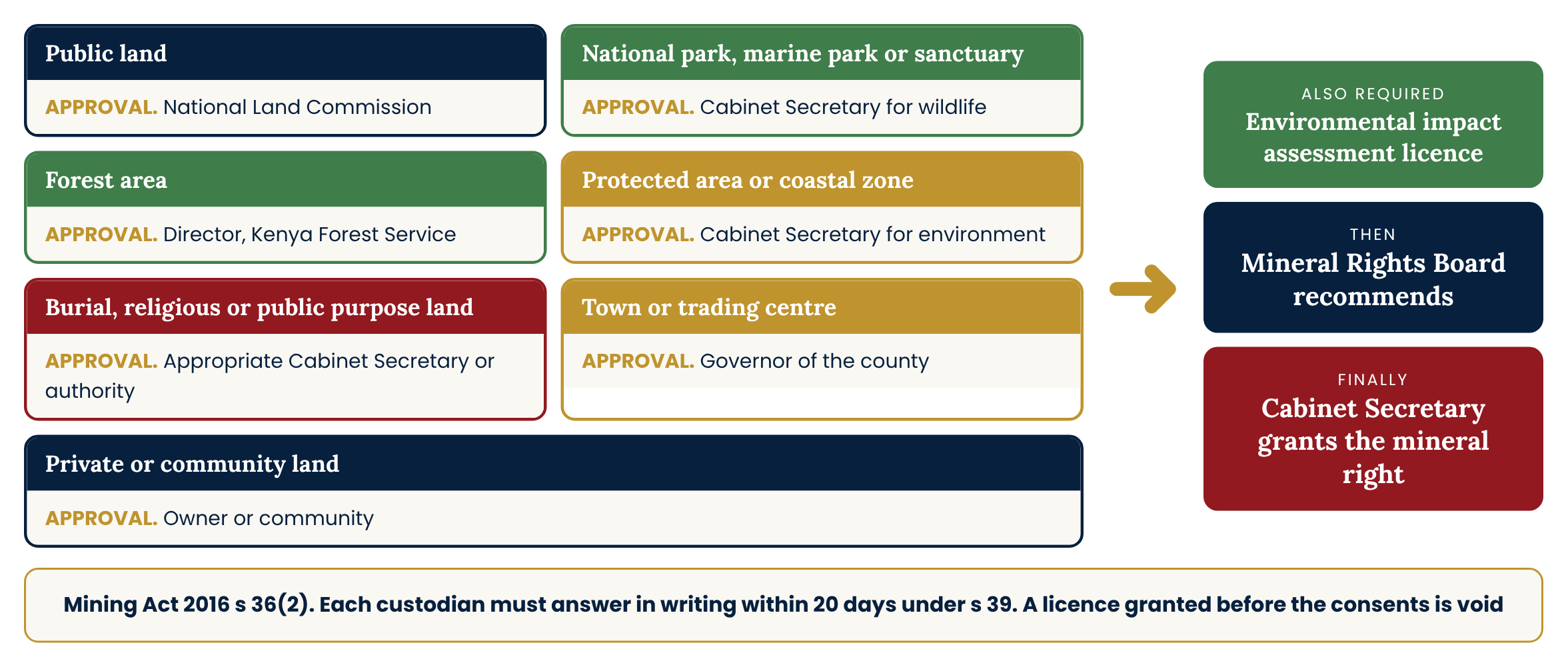
Figure 1. Approvals that must be obtained before a mineral right is recommended over protected or special land
II. Foundational concepts
2.1 Protected land
Protected land, in this edition, means land that a law other than the Mining Act sets aside for conservation, heritage or another public purpose. The main categories are public forests managed by the Kenya Forest Service, national parks and reserves and other wildlife protected areas, national monuments and heritage sites, protected areas and protected coastal zones declared under environmental law, and land set apart for burial or religious purposes. Each category is governed by its own statute and its own custodian. A single piece of land can belong to several categories at once. Mrima Hill, for example, is at once a forest, a nature reserve and a national monument.4
2.2 Excluded and restricted areas
The Mining Act uses two related ideas. An excluded area is land on which mining operations are not permitted. A restricted area is land on which they are permitted only subject to conditions, usually the consent of a named authority. The Cabinet Secretary may declare either kind of area by notice in the Gazette on the recommendation of the Mineral Rights Board.5 The Act also forbids the Cabinet Secretary to grant a mineral right over land that has been declared excluded or restricted, or over an area already subject to a licence or permit.6
The practical effect is that protection comes from 2 directions. The mining law itself may close land to mining. The conservation and heritage laws may also protect the land, and the Mining Act respects them by requiring the consent of their custodians before a right is granted.
2.3 Public land and the people of Kenya
Most protected land is public land. The Constitution lists, among the categories of public land, government forests, government game reserves, water catchment areas, national parks, government animal sanctuaries and specially protected areas.7 It also provides that public land shall not be disposed of or otherwise used except in terms of an Act of Parliament.8 Minerals are themselves public land and are held by the national government in trust for the people of Kenya.9 When a mineral lies under a national park, therefore, 2 public interests meet. The law does not rank one above the other. It requires each custodian to act under its own statute.
III. Legal framework
3.1 Constitution
Article 69 obliges the State to ensure sustainable exploitation, utilisation, management and conservation of the environment and natural resources, to work to achieve and maintain a tree cover of at least 10 per cent of the land area of Kenya, to protect genetic resources and biological diversity, and to establish systems of environmental impact assessment, environmental audit and monitoring.10 Article 42 gives every person the right to a clean and healthy environment, and Article 70 allows any person to go to court to enforce it without showing personal loss.11 Article 11 recognises culture as the foundation of the nation, which is relevant where sacred sites are involved.12 These provisions are the background against which every statute in this Part must be read.
3.2 Mining Act
Section 36(2) is the centre of the framework. Before recommending the grant of a mineral right to the Cabinet Secretary, the Mineral Rights Board must require the applicant to obtain the approvals that the section lists.13 They are set out in Table 1.
Table 1. Approvals required by section 36(2) of the Mining Act 2016
| Where the land is | Approval required |
|---|---|
| Public land | National Land Commission |
| Public land held by a State agency under Article 62(1)(b) | The relevant State agency |
| Land set apart for burial, religious significance, a public building or another public purpose | The appropriate Cabinet Secretary or authority |
| Within a town, municipality or trading centre | The Governor of the county |
| Within a marine park, national park or local sanctuary | The Cabinet Secretary responsible for wildlife |
| Within a protected area, protected natural environment or protected coastal zone under environmental law | The Cabinet Secretary responsible for the environment |
| Within a forest area | The Director of the Kenya Forest Service |
| Land of any other person who would be affected | That person, who may be a private owner or a community |
3 further rules complete the scheme. A person whose consent is required must give written consent or notice of refusal within 20 days.14 Where consent is unreasonably withheld, or where the Cabinet Secretary considers that withholding it is contrary to the national interest, the Cabinet Secretary may take steps under the law on compulsory acquisition, after which the land ceases to be excluded from mining.15 Separately, prospecting and mining rights may not be granted over private land without the express consent of the registered owner, and community land is subject to rules of its own.16
Section 36(2) refers to the forests and wildlife statutes by their older names. The Forests Act 2005 has been replaced by the Forest Conservation and Management Act 2016, and the earlier wildlife statute by the Wildlife Conservation and Management Act 2013. The references are best read as references to the statutes now in force.
3.3 Forest law
Public forests are vested in the Kenya Forest Service.17 The Forests Act 2005 provided that the Board of the Service could consent to mining and quarrying in a forest area only where the area did not contain rare, threatened or endangered species, the forest had no cultural importance and contained no sacred trees or groves, an independent environmental impact assessment had been carried out, and the forest was not an important catchment area or source of springs.18 It was under that provision that the consent of the Service was examined in Cortec.
The Act of 2016 keeps the same conditions, but section 46 speaks only of consent for quarrying operations. It adds that a licence may not be issued unless the applicant has put in place measures to prevent injury to people, livestock and wildlife.19 The omission of the word mining has not, so far as this edition has found, been considered by a court. It does not open forests to mining. The Mining Act still requires the approval of the Director of the Service, and the Service still has the duty to conserve, protect and manage all public forests. The better view is that the conditions in section 46 inform how the Director should exercise that approval, and that a forest with sacred groves, endangered species or important springs is unlikely to qualify.
The boundaries of a public forest may be varied only on a petition to the National Assembly or the Senate. Since 2018 such a petition may be forwarded to the National Assembly only on the recommendation of the Kenya Forest Service.20 That route was used in 2026, when the National Assembly approved the excision of parts of 3 forests to settle squatters on the petition of the Cabinet Secretary for the environment.21 The process is slow and public, and that is its purpose.
3.4 Wildlife law
A national park is declared by the Cabinet Secretary by notice in the Gazette, with the approval of the National Assembly. A notice that varies the boundaries of a national park, or changes its status, may be published only on the recommendation of the Kenya Wildlife Service after consultation with the National Land Commission and with the approval of the National Assembly. Similar rules apply to national reserves and to an exchange of part of a park for private land.22
The Act of 2013 does not contain a general code for mining inside protected areas. Draft regulations circulated for consultation would have filled that gap. They would apply to national parks, national reserves, conservancies, sanctuaries and areas of critical conservation concern. They provide that no person shall explore for minerals, mine or quarry in a protected area without the consent and approval of the Kenya Wildlife Service, that an application must be made at least 60 days before the activity, and that consent may be given only where conditions are met, including that the area is not a habitat for endangered or threatened species.23 This edition has not been able to confirm that the regulations were brought into force, and they should be treated as a statement of policy rather than binding law until that is established.
3.5 Heritage and environmental law
National monuments and heritage sites are under the custody of the National Museums of Kenya, and the courts in Cortec treated its consent as a precondition to a lawful licence over a gazetted monument.24 The repealed Mining Act also listed national monuments among the lands excluded from prospecting and mining.25
Every mining project also requires an environmental impact assessment licence from the National Environment Management Authority before work begins.26 Where land is a protected area, protected natural environment or protected coastal zone under environmental law, the Mining Act adds the approval of the Cabinet Secretary for the environment.27 The environmental licence is separate from the mineral right. One does not stand in for the other.
IV. Decided cases
4.1 Cortec in the Kenyan courts
In January 2012 Cortec Mining Kenya Limited applied for a special mining licence over Mrima Hill. The application was rejected later that month, and no appeal was filed. The company had held a prospecting licence over an area of 1,180 square kilometres that expressly excluded the Mrima Hill Nature Reserve. On 7 March 2013 the Commissioner of Mines and Geology nonetheless issued a special mining licence over 142.149 hectares in the Mrima Hill Forest Reserve for 21 years. The licence was revoked in August 2013 by the new Cabinet Secretary, and the company sought judicial review.28
The Kenya Forest Service told the court that it had issued no clearance for mining on Mrima Hill before the licence was granted, and the National Museums of Kenya said that it had only made recommendations that were never followed up. The Service also explained that Mrima Hill had been protected since 1961 and was gazetted as a natural heritage site and national monument.29 On 20 March 2015 the Environment and Land Court dismissed the application. It held that the Commissioner could not issue a proper licence because the area was protected by the Kenya Forest Service and the National Museums had given no consent, and that those consents had to be obtained before any licence was issued. A licence issued without them was void from the beginning.30 The Court of Appeal dismissed the appeal in June 2017.31
A licence over protected land that is granted before the consents the law requires is not a defective licence. It is no licence at all.
4.2 Cortec before an international tribunal
The investors then brought a claim against Kenya under the bilateral investment treaty between Kenya and the United Kingdom. In October 2018 the tribunal dismissed the claims. It found that the claimants had failed to comply with mandatory preconditions, including an environmental impact assessment and the degazettement of Mrima Hill as a forest and nature reserve.32 The lesson for investors is plain. Treaty protection follows lawful investment. Where the licence itself was unlawful for want of consents, the investment it supported attracted no protection.
4.3 Kasigau Ranching
The Kasigau area of Taita Taveta lies next to Tsavo West and is rich in gemstones. In Kasigau Ranching the Environment and Land Court considered a mining permit issued over part of a private ranch without the consent of the registered owner. The court found that the permit had been issued unlawfully and that mining without the consent of the owner amounted to trespass. It ordered the Cabinet Secretary, the Commissioner of Mines and Geology, the Attorney General and the miner to pay KSh 15,000,000 jointly in compensation, and the miner alone to pay KSh 13,000,000 for rehabilitation and restoration of the site under the supervision of the National Environment Management Authority.33
The case concerns private land, not a park. It is included because it shows what happens when a statutory consent is bypassed. The court noted that the ranch had written to the Cabinet Secretary asking that the permit be revoked for want of consent, and that the permit was neither revoked nor suspended.34 Liability then fell on the State as well as on the miner.
4.4 Lamu coal
The Lamu coal plant was an energy project, not a mine, but the judgment is the most recent statement by the Environment and Land Court on licensing in an ecologically and culturally sensitive place. The National Environment Management Authority issued an environmental licence for the 1,050 megawatt plant in September 2016, and the National Environment Tribunal revoked it in June 2019.35 On 16 October 2025 the Environment and Land Court at Malindi dismissed the appeal of Amu Power Company Limited and upheld the revocation.36 The court upheld the finding that the analysis of the location of the project had rested solely on the choice of the government, and found that the approval process had violated Articles 42 and 69 of the Constitution.37
For mining, the point is that the site of a project in sensitive land must be justified on the evidence. An assessment that treats the location as fixed and studies only the consequences is open to challenge.

Figure 2. Mrima Hill from protection in 1961 to the petition of 2026
V. Current questions
5.1 Mrima Hill in 2026
The national government invited expressions of interest for the Mrima Hill Niobium, Rare Earth Elements and Other Minerals Development Project, with a closing date of 21 April 2026.38 On 22 June 2026 the Centre for Litigation and Trust filed a petition in the High Court seeking to stop a proposed agreement between Kenya and the United States on the deposit. It named the Cabinet Secretary for Mining and the Attorney General as respondents, and the county government of Kwale, the Kenya Forest Service and the National Museums of Kenya as interested parties.39 The petitioners argue that the process lacked public participation and the approval of Parliament, and that Mrima Hill is a protected national monument and a sacred Kaya forest.40 A jurisdictional objection has been raised, and the court set the matter down for directions on that objection.41 Reports at the end of October 2026 indicated that 5 bidders remained in the tender.42
This edition takes no position on the petition. The framework set out in Part III shows, however, which approvals any developer would need. They include the approval of the Director of the Kenya Forest Service under section 36(2), the consent of the National Museums of Kenya as custodian of the monument, the approval of the appropriate authority for land of religious significance, an environmental licence, and the consent of any affected community. If the forest status of the hill is to be changed, the route is a petition under section 34 of the Forest Conservation and Management Act, which ends in the National Assembly. The question whether the agreement with the United States itself requires ratification by Parliament is the subject of a later edition in this series.
5.2 Tsavo and the artisanal miners
Gemstone mining in the Tsavo area is not new. One company has been reported to have extracted gemstones inside Tsavo West National Park, in Kasigau Location, since 1971.43 Records of the Kenya Wildlife Service, as reported, show that 21 large scale miners were licensed to operate in parks in the 1970s and that only 6 remain active.44 Artisanal miners in Taita Taveta have long sought access to the parks.
On 23 July 2023 the President directed that residents of Taita Taveta be allowed to mine in Tsavo and said that there would be a sharing of revenue of 50 per cent each between the county government and the Kenya Wildlife Service.45 Gemologists opposed the proposal in July 2024, citing the effects on wildlife and tourism, and in August 2024 the Kenya Wildlife Service denied reports that mining was taking place in Tsavo East.46 The State Department for Mining has since reported that it is finalising a joint framework with experts from the mining, wildlife and forestry departments. It is to cover the delineation of mining zones, access arrangements and rehabilitation, it is to be offered through registered cooperatives of artisanal miners, and it is to undergo public participation before it is implemented.47
A framework of that kind is a policy instrument. It cannot by itself change the status of a national park or dispense with the approvals that statute requires. Any access it grants will still need the approval of the Cabinet Secretary for wildlife under section 36(2), the consent of the Kenya Wildlife Service under any regulations in force, environmental licensing, and a mineral right of the appropriate class for each cooperative. A sharing of revenue between the county government and the Kenya Wildlife Service would also need a basis in law, because royalties and fees are set by statute.
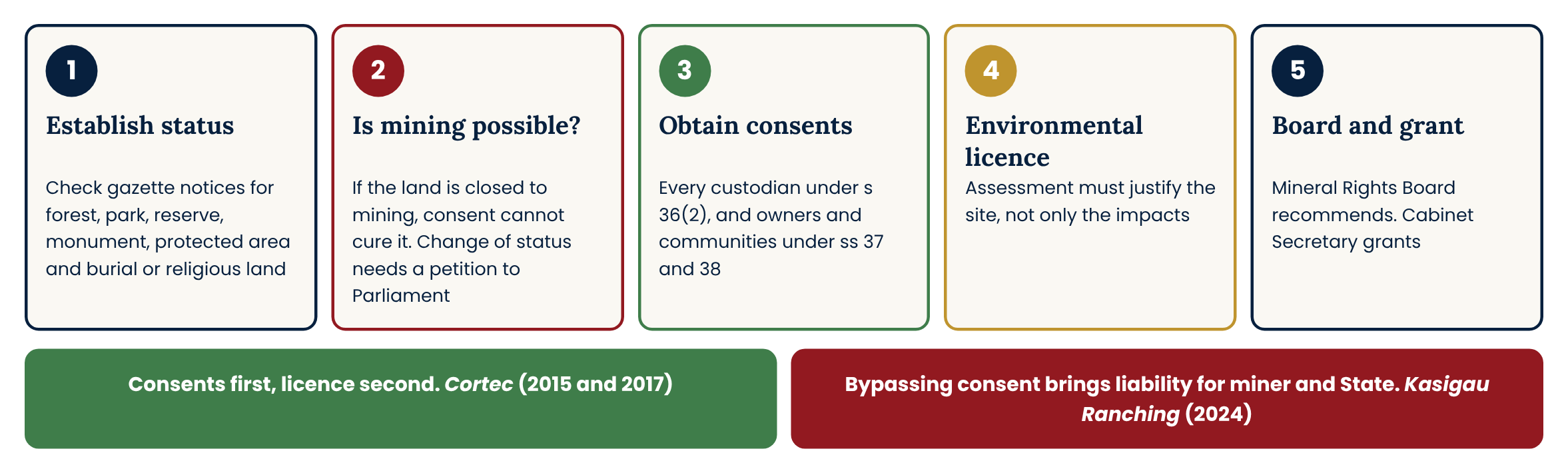
Figure 3. A lawful path for a mining project on or near protected land
VI. Analysis
6.1 Can consent be compelled?
Section 40 allows the Cabinet Secretary to use compulsory acquisition where consent is unreasonably withheld or where withholding it is contrary to the national interest.48 Read literally, it might seem to allow the Ministry to override a refusal by the Kenya Forest Service or the Kenya Wildlife Service. The better view is that it does not.
3 reasons support that view. First, compulsory acquisition is a means of acquiring private or community rights in land for a public purpose. Forests and parks are already public land, so there is nothing to acquire from the State. Second, the Constitution allows public land to be used only in terms of an Act of Parliament, and the Acts that govern forests and parks place the decision to change their status with the National Assembly.49 A general power in the Mining Act should not be read as overriding those specific procedures. Third, Article 69 requires the State to conserve biological diversity and maintain tree cover, and an interpretation that allowed a mining official to remove that protection by declaration would sit poorly with it. The power in section 40 is best confined to private land, community land and other interests that can lawfully be acquired.
6.2 Order of approvals
Cortec establishes that the consents of the custodians come first and the mineral right second. A licence granted before them is void. In practice, the order for protected land is to establish the legal status of the land, obtain the consents of every custodian whose land is affected, secure the environmental licence, and only then seek the recommendation of the Mineral Rights Board. Where a custodian cannot lawfully consent because the land is closed to mining, the only lawful route is to change the status of the land through Parliament. That route is open, but it is public and contestable, and it should be planned for at the start rather than discovered at the end.
6.3 Communities and sacred sites
Many protected places are also community places. Mrima Hill contains Kaya shrines of the Mijikenda and Digo communities, and section 36(2) expressly requires the approval of the appropriate authority for land of religious significance and of any affected community.50 Article 11 adds constitutional weight to that protection. Consent obtained from a State agency does not replace the participation of the community, and the Lamu judgment shows how a project can fall for failing to involve affected people in a meaningful way.51
Table 2. Open legal questions on mining in protected areas
| Question | Present position |
|---|---|
| Does section 46 of the Forest Conservation and Management Act govern mining as well as quarrying? | Not decided. The approval of the Director of the Kenya Forest Service under the Mining Act is still required |
| Can section 40 of the Mining Act override a refusal by a conservation custodian? | Not decided. The better view is that it cannot reach forests or parks |
| Are the draft regulations on mining in wildlife protected areas in force? | Not confirmed. Treat them as policy until gazettement is established |
| Can a policy framework open national parks to artisanal mining? | Only within existing law. Status and consents are governed by statute |
| Does an agreement with a foreign State on a deposit require ratification by Parliament? | Before the High Court in the Mrima Hill petition |
VII. Next round
7.1 Questions every project should answer
Table 3. Questions every project on or near protected land should be able to answer
| Question | Why it matters |
|---|---|
| What is the legal status of every part of the licence area, and where is it gazetted? | Status decides which custodians must consent and whether mining is possible at all |
| Has each consent required by section 36(2) been obtained in writing, before the licence? | Cortec shows that a licence granted first is void |
| Are there sacred sites, endangered species, springs or catchments in the area? | These are the conditions on which forest consent turns |
| Does the environmental assessment justify the choice of site? | The Lamu judgment shows that location must be justified on the evidence |
| Who are the affected owners and communities, and have they consented? | Sections 36(2), 37 and 38 require it, and Kasigau Ranching shows the cost of failure |
7.2 What each party should do
Table 4. Practical guidance drawn from the law and the decided cases
| Party | What the law and the cases counsel |
|---|---|
| Operators and investors | Map the legal status of the ground before acquiring an interest. Obtain written consents from every custodian before the licence. Treat a licence granted over protected land without consents as worthless, however it was obtained |
| Lenders | Make the consents a condition precedent to drawdown, and verify them with the custodians directly |
| The Ministry and the Mineral Rights Board | Require proof of every section 36(2) approval before a recommendation. Record the status of protected land on the cadastre. Act promptly on objections from owners and custodians |
| Custodians | Respond within the 20 days the Act allows, give reasons, and apply the statutory conditions consistently |
| Communities | Record sacred sites and customary uses. Engage early, and use Article 70 and the Environment and Land Court where approvals are bypassed |
VIII. Conclusion
The law on mining in protected areas rests on a simple idea. A mineral right is granted by one public body, but the land beneath it may be held by others for other public purposes. The Mining Act does not let the first override the second. It requires the consent of each custodian before the right is granted, and the forest and wildlife statutes require any change in the status of protected land to pass through Parliament.
The cases show the courts applying that idea firmly. A licence over a gazetted forest and monument without the consents of its custodians was void, and an international tribunal declined to protect the investment it supported. A permit over private land without the consent of its owner led to liability for the miner and the State. The questions that 2026 has raised, at Mrima Hill and in Tsavo, will be answered within that framework. For operators, the lesson is to establish the status of the land and obtain the consents first. For the State, it is that protected land can be opened to mining only by the routes that the law provides.
Benson Odiwuor is an Advocate of the High Court of Kenya based in Nairobi, whose practice focuses on dispute resolution in the regulated industries, including mining, oil and gas, banking and project finance. He is the editor of The BOLD, Benson Odiwuor’s Legal Digests, a legal newsletter on dispute strategies and legal developments in the regulated industries of Kenya. Subscribe to The BOLD here.
For inquiries, contact the author at info@bensonodiwuor.com.
References
- Cortec Mining Kenya Limited v Cabinet Secretary Ministry of Mining & 9 others (Civil Appeal 105 of 2015) [2017] KECA 515 (KLR) <https://new.kenyalaw.org/akn/ke/judgment/keca/2017/515/eng@2017-06-09>; ‘Kwale Residents Challenge Kenya-US Rare Earth Mining Deal in Court’ Daily Nation (Nairobi, 2026) <https://nation.africa/kenya/news/kwale-residents-challenge-kenya-us-rare-earth-mining-deal-in-court-5544132>. ↩
- ‘Petition Filed to Stop Proposed Ksh.9.7 Trillion Kenya-US Mrima Hill Mining Deal’ Citizen Digital (Nairobi, 24 June 2026) <https://citizen.digital/article/petition-filed-to-stop-proposed-kenya-us-mrima-hill-mining-deal-n385178>; Faith Mwangi, ‘US Intensifies Fight for Kenya’s Mrima Hill as China Quietly Withdraws’ The Kenya Times (Nairobi, 31 October 2026) <https://thekenyatimes.com/latest-kenya-times-news/mrima-hill-bid-china-us/>. ↩
- Wagema Mwangi, ‘State Finalizing Historic Framework to Grant Kenya’s Artisanal Miners Access to Mine in National Parks’ (Kenya News Agency) <https://www.kenyanews.go.ke/state-finalizing-historic-framework-to-grant-kenyas-artisanal-miners-access-to-mine-in-national-parks/>. ↩
- Cortec (CA) (n 1). ↩
- Mining Act 2016 (No 12 of 2016), now Cap 306 of the Laws of Kenya s 15 <https://new.kenyalaw.org/akn/ke/act/2016/12/eng@2022-12-31>. ↩
- Mining Act 2016 s 36(1). ↩
- Constitution of Kenya 2010 art 62(1)(g). ↩
- Constitution of Kenya 2010 art 62(4). ↩
- Constitution of Kenya 2010 art 62(1)(f) and (3). ↩
- Constitution of Kenya 2010 art 69(1). ↩
- Constitution of Kenya 2010 arts 42 and 70. ↩
- Constitution of Kenya 2010 art 11. ↩
- Mining Act 2016 s 36(2). ↩
- Mining Act 2016 s 39. ↩
- Mining Act 2016 s 40. ↩
- Mining Act 2016 ss 37 and 38. ↩
- Forest Conservation and Management Act 2016 (No 34 of 2016), now Cap 385 of the Laws of Kenya <https://new.kenyalaw.org/akn/ke/act/2016/34>. ↩
- Forests Act 2005 (No 7 of 2005, repealed) s 42(1) <https://faolex.fao.org/docs/pdf/ken64065.pdf>. ↩
- Forest Conservation and Management Act 2016 s 46(1) to (3). ↩
- Forest Conservation and Management Act 2016 s 34; Natural Justice, ‘The Proposed Repealing of Section 34(2A) of the Forest Conservation and Management Act 2016’ (Factsheet, 25 January 2022) <https://naturaljustice.org/wp-content/uploads/2022/01/Factsheet-on-the-Amendments-to-the-FCM-Act-2016.pdf>. ↩
- ‘MPs Approve Excision of Land from Three Forests to Settle Squatters’ Daily Nation (Nairobi, 2026) <https://nation.africa/kenya/news/mps-approves-excision-of-land-from-three-forests-to-settle-squatters-5535594>. ↩
- Wildlife Conservation and Management Act 2013 (No 47 of 2013) ss 32, 34, 37 and 38 <https://faolex.fao.org/docs/pdf/ken134375.pdf>; ‘House Team Looks into Wildlife Laws Following Ruto Directive’ The Star (Nairobi, 25 August 2023) <https://www.the-star.co.ke/sasa/lifestyle/2023-08-25-house-team-looks-into-wildlife-laws-following-rutos-directive>. ↩
- Draft Wildlife Conservation and Management (Mining Operations in Protected Areas) Regulations 2015, as circulated for consultation regs 3 and 4 <https://laikipia.org/wp-content/uploads/2019/11/KWS_-MINING-REGULATIONS-May.pdf>. ↩
- ‘Cortec Loses Mining Licence in Court Suit’ The Star (Nairobi, 21 March 2015) <https://www.the-star.co.ke/news/2015-03-21-cortec-loses-mining-licence-in-court-suit/>. ↩
- Cortec (CA) (n 1); Mining Act (Cap 306, repealed by the Mining Act 2016) s 7. ↩
- Environmental Management and Co-ordination Act 1999 (No 8 of 1999) s 58. ↩
- Mining Act 2016 s 36(2). ↩
- Cortec (CA) (n 1). ↩
- Cortec (CA) (n 1). ↩
- Cortec Mining Kenya Limited v Cabinet Secretary Ministry of Mining & 9 others (ELC 195 of 2014) [2015] eKLR <http://kenyalaw.org/caselaw/cases/view/109485>; ‘Cortec Loses Mining Licence’ (n 24). ↩
- Cortec (CA) (n 1). ↩
- Cortec Mining Kenya Limited, Cortec (Pty) Limited and Stirling Capital Limited v Republic of Kenya, ICSID Case No ARB/15/29, Award (22 October 2018); ‘UK Mining Firm to Pay Kenya Sh300 Million after Losing Licence Row’ Daily Nation (Nairobi, 2021) <https://nation.africa/kenya/business/uk-mining-firm-to-pay-kenya-sh300-million-after-losing-licence-row-3334138>. ↩
- Kasigau Ranching (DA) Company Limited v Cabinet Secretary, Ministry of Petroleum & Mining & 3 others; Ngilorit (Interested Party) (ELC 159 of 2019) [2024] KEELC 6336 (KLR) <https://new.kenyalaw.org/akn/ke/judgment/keelc/2024/6336/eng@2024-10-02>; ‘State, Miner to Pay a Rancher Sh28m for Damages from Illegal Mining’ Business Daily (Nairobi, 2024) <https://www.businessdailyafrica.com/bd/corporate/companies/state-miner-to-pay-rancher-sh28m-damages-from-illegal-mining-4789612>. ↩
- ‘State, Miner to Pay a Rancher Sh28m’ (n 33). ↩
- Power Shift Africa, ‘Timeline of Events: Lamu Coal Project’ <https://www.powershiftafrica.org/blogs/timeline-of-events-lamu-coal-project>. ↩
- Natural Justice, ‘Historic Victory for Lamu Community and Environmental Justice’ (16 October 2025) <https://naturaljustice.org/historic-victory-for-lamu-community-and-environmental-justice/>. ↩
- Joackim Bwana, ‘Why Courts Have Stopped Sh200 Billion Lamu Coal Power Project’ The Standard (Nairobi, 21 October 2025) <https://standardmedia.co.ke/business/amp/courts/article/2001532335/why-courts-have-stopped-sh200-billion-lamu-coal-power-project>; Kalume Kazungu, ‘Lamu Celebrates Historic Victory as Court Blocks Sh200 Billion Coal Plant’ Daily Nation (Nairobi, October 2025) <https://nation.africa/kenya/climate/lamu-celebrates-historic-victory-coal-plant-5239020>. ↩
- ‘Kenya’s Rare Earth Story: Real Geology, Not Yet a Rare Earth Powerhouse’ Rare Earth Exchanges (2026) <https://rareearthexchanges.com/news/kenyas-rare-earth-story-real-geology-not-yet-a-rare-earth-powerhouse/>. ↩
- ‘Petition Filed to Stop Proposed Mrima Hill Mining Deal’ (n 2). ↩
- AFP, ‘Kenya-US Rare Earths Deal Challenged in Court over Secrecy’ France 24 (29 June 2026) <https://www.france24.com/en/live-news/20260629-kenya-us-rare-earths-deal-challenged-in-court-over-secrecy>; ‘Kwale Residents Challenge’ (n 1). ↩
- ‘Mrima Hill Deal Pits Mining Ambitions over Heritage Protection’ The Coast (Mombasa, 30 July 2026) <https://www.thecoast.co.ke/2026/07/30/mrima-hill-deal-pits-mining-ambitions-over-heritage-protection/49/46/business-news/thecoast/17298/09/>. ↩
- Mwangi, ‘US Intensifies Fight’ (n 2). ↩
- ‘Gemstone Dealers under Fire as State Moves to Enforce Mining Royalties’ The Standard (Nairobi) <https://www.standardmedia.co.ke/sports/amp/business/article/2001540073/gemstone-dealers-under-fire-as-state-moves-to-enforce-mining-royalties>. ↩
- ‘New Mining Rules Could Open Game Parks’ Business Daily (Nairobi) <https://www.businessdailyafrica.com/bd/news/new-mining-rules-could-open-game-parks-2163914>. ↩
- Renson Mnyamwezi, ‘Gemologists Oppose Bid to Allow Mining in Tsavo National Park’ The Standard (Nairobi, 15 July 2024) <https://standardmedia.co.ke/sports/amp/environment-climate/article/2001499052/gemologists-oppose-bid-to-allow-mining-in-tsavo-national-park>. ↩
- Mnyamwezi, ‘Gemologists Oppose Bid’ (n 45); ‘Claims of Mining Activities in Tsavo Park False, Says KWS’ The Star (Nairobi, 13 August 2024) <https://www.the-star.co.ke/news/2024-08-13-claims-of-mining-activities-in-tsavo-park-false-says-kws>. ↩
- Mwangi, ‘State Finalizing Historic Framework’ (n 3); Wagema Mwangi, ‘Tsavo National Park to Become a Mainstay for Thousands of Artisanal Gemstone Miners’ (Kenya News Agency) <https://www.kenyanews.go.ke/tsavo-national-park-to-become-a-mainstay-for-thousands-of-artisanal-gemstone-miners/>. ↩
- Mining Act 2016 s 40. ↩
- Constitution of Kenya 2010 art 62(4); Forest Conservation and Management Act 2016 s 34; Wildlife Conservation and Management Act 2013 s 34. ↩
- ‘Kwale Residents Challenge’ (n 1); Mining Act 2016 s 36(2). ↩
- Kazungu, ‘Lamu Celebrates’ (n 37). ↩