
LPG Cylinder Ownership and Cross Brand Refilling in Kenya. Whose Cylinder Is It?
3 November 2026
A gas cylinder belongs to its brand, not to the household that holds it. The law answers 3 questions about it. Who owns the cylinder? Who may fill and sell it? Who is liable when something goes wrong? This edition answers each of them from the law and the decided cases.
| KEY POINTS AT A GLANCE Liquefied petroleum gas, or LPG, is sold in Kenya in branded cylinders. The law treats the cylinder as the property of the brand owner, whose permanent mark on it creates a presumption of ownership whoever holds it. The consumer pays a deposit, not a price, for the cylinder. The rules are now in the Petroleum (Liquefied Petroleum Gas) (No 2) Regulations 2025, which came into force on 14 November 2025. They replaced the 2019 regulations and a short lived set of regulations from earlier in 2025. Refilling, wholesaling, retailing or exporting the cylinder of another brand owner without its prior written consent is prohibited. The Petroleum Act makes refilling, rebranding or trading the cylinders of another licensee for gain without consent an offence carrying a fine of not less than KSh 10,000,000, imprisonment of not less than 5 years, or both. Brands may exchange cylinders only through a mutual exchange arrangement approved by the Competition Authority of Kenya and the Energy and Petroleum Regulatory Authority. A consumer who wishes to leave a brand is entitled to a refund of the deposit on returning the cylinder. The brand owner must insure against injury and damage from defective cylinders, keep them inspected and requalified, and scrap those that fail. Petrol stations and shops that sell LPG must hold a licence and the consent of each brand they sell. Every LPG dispute turns on 3 questions. Who owns the cylinder? Who may fill and sell it? Who is liable when something goes wrong? |
I. Introduction
A cooking gas cylinder looks like a simple consumer product. A household buys it, uses it and swaps it for a full cylinder. In law it is something different. The cylinder belongs to the brand that put its mark on it, the household holds it against a deposit, and only that brand, or a person it authorises, may fill it. The rules exist for safety. A cylinder that is filled by an unlicensed person, overfilled or left in service beyond its safe life can explode.
The rules also have commercial effects. They protect the investment of brand owners in their cylinder fleets and make it harder for small operators to compete by refilling cylinders they did not buy. Independent dealers have complained that large marketers use the rules to drive them out of the market, and in 2025 a group of independent dealers obtained a court order stopping enforcement raids by an industry body pending the hearing of their case.1
Petrol stations are central to the trade. Many sell branded cylinders and some host refilling or autogas facilities. This edition of The BOLD explains the law on cylinder ownership, refilling and exchange, the obligations of brand owners and retailers, and liability for accidents. It closes with practical guidance. It takes no position on any matter pending before a court or tribunal.
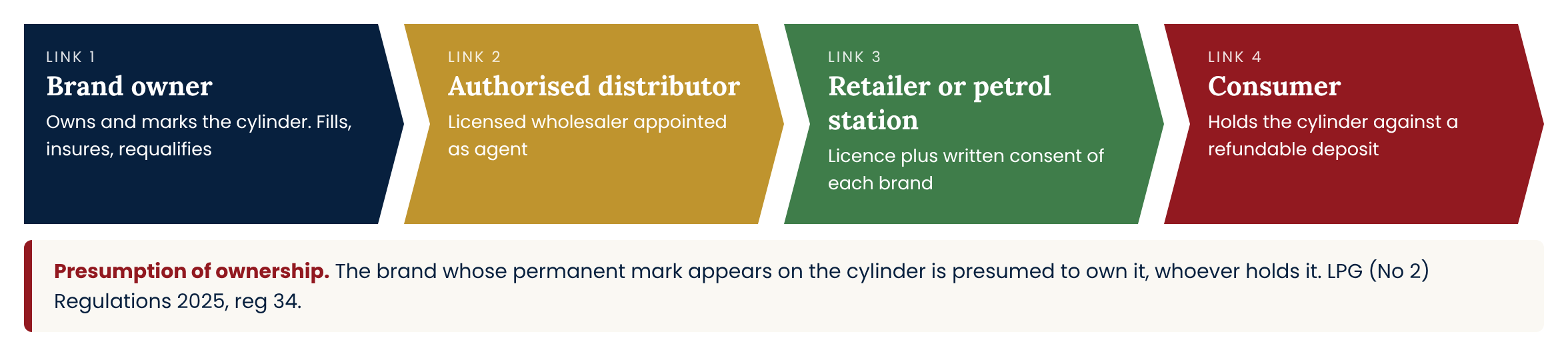
Figure 1. Who does what in the LPG cylinder chain
II. Foundational concepts
2.1 Brand owner
A brand owner is the person who is the registered owner of a cylinder.2 Brand owners are usually oil marketing companies or specialist gas companies that import or buy bulk LPG, fill it into their own cylinders and distribute it. A brand owner must own a minimum of 30,000 cylinders of standard capacity, and existing licensees must reach that number by the third year after the regulations take effect.3
2.2 Distributors and retailers
An authorised distributor is a person licensed to sell LPG in cylinders at wholesale who has been appointed by a brand owner as its agent.4 Retailers, including petrol stations and shops, sell filled cylinders to consumers and take empty cylinders in exchange. They must hold a licence from the Authority and the written consent of the brand owner for each brand they sell.5
2.3 Deposit
The consumer does not buy the cylinder. It pays a cylinder deposit, which is money collected at the point of sale as security for the cylinder.6 The deposit is refundable when the cylinder is returned.
2.4 Mutual exchange
A mutual cylinder exchange arrangement is a contract between brand owners under which they agree to exchange cylinders of different brands, so that a consumer may return a cylinder of a given brand and take a cylinder of another.7 The 2019 regulations replaced an earlier mandatory exchange model with voluntary arrangements requiring approval by the Competition Authority of Kenya and the Energy and Petroleum Regulatory Authority.8
III. Legal framework
3.1 Petroleum Act
The Petroleum Act requires a licence for petroleum business and makes it an offence to refill, rebrand or trade the cylinders of another licensee for gain without consent.9 That offence carries a fine of not less than KSh 10,000,000, imprisonment of not less than 5 years, or both.10 The Act also allows the Authority to suspend or revoke a licence after giving notice to show cause.11
3.2 Succession of regulations
The Petroleum (Liquefied Petroleum Gas) Regulations 2019 were gazetted on 25 June 2019.12 They established that the cylinder belongs to the brand owner, required written authority for refilling, and introduced voluntary exchange pools.13 In 2025 they were replaced by the Petroleum (Liquefied Petroleum Gas) Regulations 2025, which were in turn replaced by the Petroleum (Liquefied Petroleum Gas) (No 2) Regulations 2025, published and in force from 14 November 2025.14 The No 2 regulations are now the governing text, and the Authority issued guidelines on the retail of LPG in cylinders under them in July 2026.15
3.3 Ownership
The brand owner whose permanent mark appears on the cylinder is the presumed owner, and must ensure that refilled cylinders meet quality and safety standards before release.16 A cylinder must at all times carry the distinguishing colour and mark of the brand owner, and the presumption of ownership applies irrespective of who has custody or possession.17 No person may use a mark on a cylinder as a trade mark without approval, and trading without a brand registration certificate attracts a fine for every cylinder sold.18
3.4 Consent to fill and trade
A person may not wholesale or retail cylinders belonging to another brand owner without the prior written consent of that brand owner or its authorised agent, and the consent must be submitted to the Authority.19 An exporter of cylinders needs the written consent of the brand owner and the approval of the Authority.20 Regulation 46 lists unauthorised refilling practices, beginning with refilling of a cylinder by a person other than the brand owner, and including refilling from an unlicensed facility, refilling with non conforming gas and selling a filled cylinder without a seal of the Authority.21 A person who commits them is liable to the general penalty under the Act.22 No person may fill a cylinder unless it is the brand owner or has its prior written consent.23
3.5 Deposits and exit
A brand owner or authorised distributor may require a deposit for a portable cylinder, not exceeding the amount set in the regulations.24 A final consumer who returns a cylinder is entitled to a refund of the deposit whether or not it has a receipt, and may not suffer a deduction for normal degradation of the cylinder.25 The regulator explained under the 2019 rules that a consumer who did not wish to continue with a brand could return the cylinder and recover the deposit.26
3.6 Mutual exchange approval
A brand owner that wishes to join a mutual exchange arrangement must sign an agreement with the other parties and apply to the Authority, attaching the agreement and an approval from the Competition Authority of Kenya. The Authority must be satisfied that the arrangement is not discriminatory and does not distort competition, and approval must be renewed when a new party joins or every 2 years.27
3.7 Safety obligations of brand owners
Every brand owner must take out public liability insurance against damage or injury caused by defective cylinders.28 Cylinders must be inspected for conformity with the Kenya Standard before use and periodically, and must be requalified within 8 years after manufacture. A brand owner that fails to remove and scrap non conforming cylinders commits an offence.29 Brand owners must also keep records, use the tracking system of the Authority and train and supervise their agents.30
3.8 Retailers and petrol stations
A retailer must keep a working fire extinguisher and display emergency contacts.31 A fuel station may host LPG storage and sales if it meets the Kenya Standard, and adding an autogas dispensing site to an existing station requires a construction permit and a licence.32 In February 2026 the Authority reminded traders that they must operate with a valid licence and the written consent of the registered brand owner for each cylinder sold.33
Table 1. Key rules in the LPG (No 2) Regulations 2025
| Subject | Rule | Regulation |
|---|---|---|
| Ownership | Brand owner whose mark appears is presumed owner | 34 |
| Wholesale and retail | Prior written consent of the brand owner, filed with the Authority | 17 and 18 |
| Refilling | Only the brand owner or a person with its prior written consent | 46 and 60 |
| Export | Written consent of the brand owner and approval of the Authority | 21 and 39 |
| Deposit | Refundable to the consumer on return, with or without receipt | 36 and 37 |
| Exchange | Mutual arrangement approved by both competition and petroleum regulators | 49 |
| Fleet size | Minimum of 30,000 cylinders per brand owner | 38 |
| Safety | Insurance, inspection and requalification within 8 years | 35, 42 and 43 |
IV. Cross brand refilling and exchange
4.1 Purpose of the rules
Brand owners invest in cylinders and are responsible for their safety. If any filler could refill any cylinder, the brand owner would bear liability for cylinders it could not control, and would lose the return on its investment. The regulator gave these reasons when the 2019 regulations were introduced, stating that the cylinder belongs to the brand owner and that liability for an accident would lie with the brand owner.34
4.2 The commercial effect
The same rules restrict competition. A consumer who holds a cylinder of a given brand can switch only by returning it and paying a new deposit, or through an approved exchange arrangement. Small operators cannot enter the market without a fleet of their own cylinders, and the minimum of 30,000 cylinders raises the cost of entry further.35 The requirement that exchange arrangements be approved by the Competition Authority of Kenya reflects the risk that such arrangements could be used to exclude rivals.36
4.3 Enforcement by industry bodies
Enforcement has become contentious. In July 2025 independent gas dealers obtained a court order stopping large oil marketers from carrying out enforcement actions until their case was heard. The dealers claimed that the Petroleum Institute of East Africa, a lobby for large marketers, had conducted raids at their premises and confiscated equipment, including cylinders, and asked the court to stop the institute and the police from conducting inspections, arrests and closures.37 The case raised the question of who may enforce the regulations. The Act gives enforcement powers to the Authority and to the police, not to private associations.38
4.4 The Tribunal
The Energy and Petroleum Tribunal has also dealt with these questions. In Odongo it noted that regulation 46(1)(a) of the regulations then in force makes filling without prior written authority from the brand owner a criminal offence, that a cylinder remains the property of the brand owner, and that the brand owner whose permanent mark appears is the presumed owner irrespective of who has custody.39 In an earlier ruling in the same matter, it held that a party could bring an appeal to the Tribunal where the Authority had not determined a complaint received on 28 May 2024.40
4.5 Safety enforcement after Embakasi
After the explosion at Embakasi in February 2024, the Authority issued a notice to show cause to the firms concerned alleging that they had been filling cylinders belonging to other companies, and later suspended a licence. The firms challenged the suspension in the High Court, contending that they had not been heard.41 The case illustrates how cross brand refilling can lead to regulatory action that threatens the whole business of a licensee.
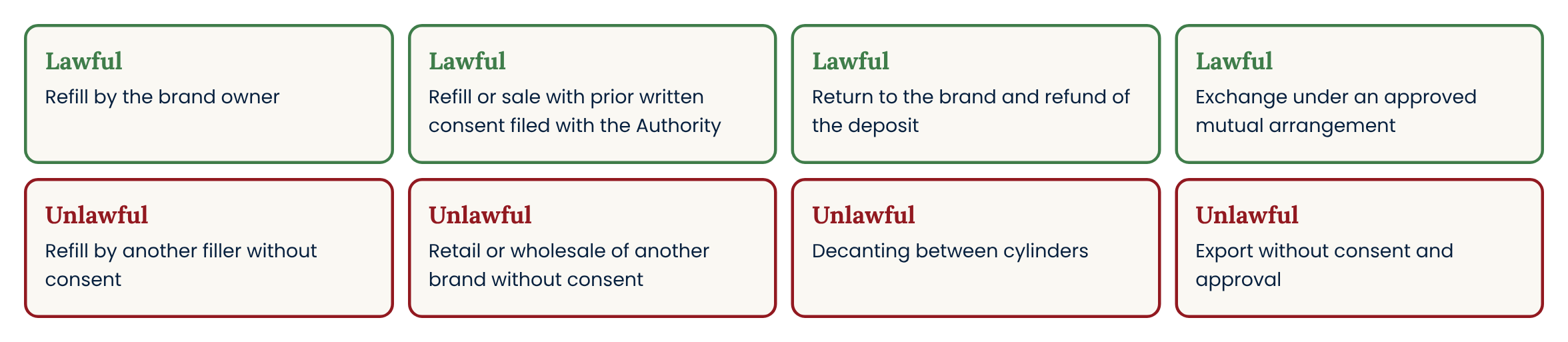
Figure 2. Lawful and unlawful routes for a cylinder
V. Liability for accidents
5.1 Brand owner
The brand owner owns the cylinder, must keep it safe, and must insure against damage or injury caused by defects.42 A person injured by a defective cylinder will usually sue the brand owner in negligence, and may rely on its statutory duties and its insurance.
5.2 Unauthorised filler
Where a cylinder was refilled without consent, the filler will usually be primarily liable for an accident caused by the filling. It will also have committed an offence.43 The brand owner may argue that the unauthorised filling broke the chain of causation. Whether it succeeds will depend on whether the defect lay in the cylinder, which it was bound to keep safe, or in the filling, which it did not control.
5.3 Retailer and petrol station
A retailer that sells a cylinder it has no consent to sell, or stores cylinders unsafely, may be liable to injured persons and is exposed to licence action.44 A petrol station that sells LPG also carries the duties of the occupier of premises where flammable products are stored, and its insurance and its agreement with the brand owner should address that risk.
5.4 Consumer
The consumer remains responsible for safe use and installation. Regulators require brand owners to inform consumers of safe handling and use through notices affixed to the cylinder.45 A consumer who uses an unauthorised refill may find that its claim is reduced for contributory fault.
VI. Disputes between brand owners and retailers
6.1 Retail agreements
A petrol station or shop that sells branded cylinders does so under an agreement with the brand owner or its distributor. The agreement should record the consent required by the regulations, the treatment of deposits, the right to return empty cylinders and the allocation of liability. Where the station is a branded fuel station, the gas brand may differ from the fuel brand, and the fuel agreement may restrict which gas brands the station may sell. The fourth edition in this series examines such ties.
6.2 Deposits held by retailers
A retailer that takes a deposit from a consumer and passes the cylinder back to the brand owner must account for the deposit. Disputes arise where the brand owner refuses to credit a retailer for cylinders it says are not its own, damaged or overdue for requalification. A careful retailer records the brand, serial number and condition of each cylinder it receives.
6.3 Confiscated cylinders
Where cylinders are seized in an enforcement action, the question of who owns them, and who may recover them, turns on the presumption of ownership in regulation 34 and on the lawfulness of the seizure. A seizure by a person without statutory power may be a trespass to goods, even where the cylinders belong to the person on whose behalf it was carried out.46
VII. Open legal questions
7.1 Private enforcement
Whether an industry body may lawfully inspect premises or seize cylinders on behalf of brand owners, with or without police support, has been challenged and not yet finally decided.47
7.2 Competition limits on exchange
How the Competition Authority of Kenya will assess mutual exchange arrangements, and whether refusal by a large brand to join an arrangement could be an abuse of dominance, have not been tested in a published decision.48
7.3 Transition to new rules
Existing brand owners have until the third year after the regulations take effect to reach 30,000 cylinders.49 Disputes may arise over whether a brand that falls short loses its licence or is placed under a brand caretaker as a distressed brand owner.50

Figure 3. Liability when a cylinder fails
VIII. Questions every participant should answer
Who owns the cylinder? The brand owner whose permanent mark appears on it, regardless of who holds it.51
Who may fill and sell it? The brand owner, or a person with its prior written consent, filed with the Authority.52
Who is liable when something goes wrong? Primarily the person whose act or defect caused the harm, with the brand owner bound to insure against defective cylinders.53
8.1 Practical guidance for petrol stations and retailers
Retailers should hold a valid licence and written consent from each brand they sell, file the consents with the Authority, keep records of each cylinder received and issued, and refuse to sell cylinders of brands for which they have no consent. They should not refill or decant gas.54
8.2 Practical guidance for brand owners
Brand owners should keep their fleets inspected and requalified, maintain insurance, train and supervise their agents, and use the tracking system of the Authority. They should rely on the Authority and the police for enforcement rather than on private action.55
8.3 Practical guidance for consumers
Consumers should buy from licensed outlets, check for the seal and the brand mark, and return an unwanted cylinder to the brand owner for a refund of the deposit rather than having it refilled elsewhere.56
IX. Conclusion
The law treats an LPG cylinder as the property of its brand owner and channels filling and trade through that owner. The rules serve safety, but they also shape competition and have become a source of conflict between large and small operators. The 2025 regulations have tightened the regime further. Petrol stations, brand owners and independent dealers who can answer the 3 questions in this edition will be better placed to trade lawfully and to resolve disputes when they arise.
Benson Odiwuor is an Advocate of the High Court of Kenya based in Nairobi, whose practice focuses on dispute resolution in the regulated industries, including mining, oil and gas, banking and project finance. He is the editor of The BOLD, Benson Odiwuor’s Legal Digests, a legal newsletter on dispute strategies and legal developments in the regulated industries of Kenya. Subscribe to The BOLD here.
For inquiries, contact the author at info@bensonodiwuor.com.
References
- Macharia Kamau, ‘Epra on the Spot for Siding with Big Oil Firms in Cooking Gas Row’ The Standard (Nairobi, 31 July 2025) <https://www.standardmedia.co.ke/sports/amp/business/2001525703/epra-on-the-spot-for-siding-with-big-oil-firms-in-cooking-gas-row>. ↩
- Petroleum (Liquefied Petroleum Gas) (No 2) Regulations 2025 (LN 189 of 2025) reg 2 <https://www.epra.go.ke/extras/legal/web/uploads/6a5f39a2750c5_The%20Petroleum%20(Liquefied%20Petroleum%20Gas)(No%202)%20Regulations.pdf>. ↩
- LPG Regulations 2025 reg 38; ‘EPRA Raises LPG Entry Bar to 30,000 Cylinders for Dealers to Curb Cartels’ Eastleigh Voice (Nairobi) <https://eastleighvoice.co.ke/energy%20and%20petroleum%20regulatory%20authority-liquefied%20petroleum%20gas/140842/epra-raises-lpg-entry-bar-to-30-000-cylinders-for-dealers-to-curb-cartels?amp=1>. ↩
- LPG Regulations 2025 reg 2. ↩
- LPG Regulations 2025 regs 17 and 18; ‘EPRA Issues Strict Safety Rules for LPG Cylinder Traders, Warns of Tough Action on Non Compliance’ The Star (Nairobi, 23 February 2026) <https://www.the-star.co.ke/news/2026-02-23-epra-issues-strict-safety-rules-for-lpg-cylinder-traders-warns-of-tough-action-on-non-compliance>. ↩
- LPG Regulations 2025 reg 2. ↩
- LPG Regulations 2025 reg 2. ↩
- Petroleum (Liquefied Petroleum Gas) Regulations 2019 (LN 100 of 2019) <https://epra.go.ke/legal/web/uploads/686e65fe24c36_THE%20PETROLEUM%20(LIQUEFIED%20PETROLEUM%20GAS)%20REGULATIONS,%202019.pdf>; ‘New LPG Rules Will Ensure Safety for All Consumers’ Business Daily (Nairobi, 2019) <https://www.businessdailyafrica.com/bd/opinion-analysis/ideas-debate/new-lpg-rules-will-ensure-safety-for-all-consumers-2278368>. ↩
- Petroleum Act 2019 (No 2 of 2019), now Cap 308 of the Laws of Kenya ss 74 and 99(1)(m) <https://new.kenyalaw.org/akn/ke/act/2019/2>. ↩
- Petroleum Act s 99(1). ↩
- Petroleum Act s 81. ↩
- ‘New LPG Rules Will Ensure Safety’ (n 8). ↩
- LPG Regulations 2019; ‘What Awaits Consumers in Looming Cooking Gas Regulations’ The Standard (Nairobi, 2019) <https://www.standardmedia.co.ke/amp/business/article/2001310959/what-awaits-consumers-in-looming-cooking-gas-regulations>. ↩
- Petroleum (Liquefied Petroleum Gas) Regulations 2025 (LN 101 of 2025) <https://epra.go.ke/legal/web/uploads/686e5e6cd9f91_PETROLEUM%20(LIQUEFIED%20PETROLEUM%20GAS%20REGULATIONS),%202025.pdf>; LPG Regulations 2025. ↩
- Energy and Petroleum Regulatory Authority, ‘Guidelines on Retail of LPG in Cylinders’ (July 2026) <https://epra.go.ke/sites/default/files/2026-07/Guidelines%20on%20Retail%20of%20LPG%20in%20Cylinders.pdf>. ↩
- LPG Regulations 2025 reg 34. ↩
- Odongo v Petroleum Institute of East Africa & another (Tribunal Case E007 of 2025) [2025] KEET 4 (KLR) paras 12 and 13 <https://new.kenyalaw.org/akn/ke/judgment/keet/2025/4/eng@2025-09-04>. ↩
- LPG Regulations 2025 reg 32. ↩
- LPG Regulations 2025 regs 17 and 18. ↩
- LPG Regulations 2025 regs 21 and 39. ↩
- LPG Regulations 2025 reg 46(1). ↩
- LPG Regulations 2025 reg 46(2). ↩
- LPG Regulations 2025 reg 60(1). ↩
- LPG Regulations 2025 reg 36. ↩
- LPG Regulations 2025 reg 37(3) and (6). ↩
- ‘What Awaits Consumers in Looming Cooking Gas Regulations’ (n 13). ↩
- LPG Regulations 2025 reg 49. ↩
- LPG Regulations 2025 reg 42. ↩
- LPG Regulations 2025 regs 35 and 43. ↩
- LPG Regulations 2025 reg 41. ↩
- LPG Regulations 2025 reg 18(4). ↩
- LPG Regulations 2025 reg 28. ↩
- ‘EPRA Issues Strict Safety Rules for LPG Cylinder Traders’ (n 5). ↩
- ‘What Awaits Consumers in Looming Cooking Gas Regulations’ (n 13). ↩
- LPG Regulations 2025 reg 38; ‘EPRA Raises LPG Entry Bar’ (n 3). ↩
- LPG Regulations 2025 reg 49. ↩
- Kamau, ‘Epra on the Spot’ (n 1). ↩
- Petroleum Act s 81. ↩
- Odongo (n 17) paras 11 to 13. ↩
- Odongo v Petroleum Institute of East Africa & another (Tribunal Case E007 of 2025) [2025] KEET 5 (KLR) (ruling of 15 May 2025) <https://new.kenyalaw.org/akn/ke/judgment/keet/2025/5/eng@2025-05-15>; Energy Act 2019 (No 1 of 2019), now Cap 314 of the Laws of Kenya s 23(5). ↩
- Kamau Muthoni, ‘Firm Linked to Embakasi Explosion Now Sues EPRA’ The Standard (Nairobi, 21 February 2024) <https://standardmedia.co.ke/testbed/business/amp/national/article/2001490305/firm-linked-to-embakasi-explosion-now-sues-epra>. ↩
- LPG Regulations 2025 regs 34, 42 and 43. ↩
- Petroleum Act s 99(1)(m); LPG Regulations 2025 reg 46. ↩
- LPG Regulations 2025 regs 17 and 18. ↩
- ‘New LPG Rules Will Ensure Safety’ (n 8). ↩
- LPG Regulations 2025 reg 34; Kamau, ‘Epra on the Spot’ (n 1). ↩
- Kamau, ‘Epra on the Spot’ (n 1). ↩
- LPG Regulations 2025 reg 49; Competition Act 2010 (No 12 of 2010), now Cap 504 of the Laws of Kenya s 24. ↩
- LPG Regulations 2025 reg 38(2). ↩
- LPG Regulations 2025 reg 2. ↩
- LPG Regulations 2025 reg 34; Odongo (n 17) paras 12 and 13. ↩
- LPG Regulations 2025 regs 17, 18, 46 and 60. ↩
- LPG Regulations 2025 reg 42; Petroleum Act s 99(1)(m). ↩
- EPRA, ‘Guidelines on Retail of LPG in Cylinders’ (n 15); ‘EPRA Issues Strict Safety Rules for LPG Cylinder Traders’ (n 5). ↩
- LPG Regulations 2025 regs 41 to 43. ↩
- LPG Regulations 2025 reg 37. ↩