
Government to Government Fuel Import Deals in Kenya. Credit, Control and the Open Tender
2 November 2026
Since 2023 most of the fuel Kenya imports has come on credit from Gulf state companies. The law answers 3 questions about the deal. What is its legal basis? Who is bound by it, and who may challenge it? What remedies are open to those affected? This edition answers each of them from the law and the disputes.
| KEY POINTS AT A GLANCE Since April 2023, most refined petroleum products imported into Kenya have come under framework agreements signed on 10 March 2023 with 3 Gulf state oil companies, on 180 days of credit. The arrangement is known as the government to government arrangement, or G2G. The legal basis is the Petroleum (Importation) Regulations 2023. They keep the open tender system as the rule but provide that imports under a government to government arrangement are deemed to have occurred through it, under central coordination by the Ministry. Procurement under bilateral or multilateral agreements with a foreign government, agency or entity is excluded from the Public Procurement and Asset Disposal Act. Whether that exclusion covers agreements with state owned oil companies, and the choice of local counterparties, has been contested but not finally decided by a court. The arrangement has produced disputes at every level. Oil marketers challenged the regulations in 2023. Uganda took Kenya to the East African Court of Justice in December 2023. In April 2026 an emergency cargo bought outside the arrangement led to arrests and the resignation of 3 senior officials. In 2026 the Law Society of Kenya and the Motorists Association of Kenya called for a forensic audit. As at mid October 2026, no independent audit finding had been published. Every dispute about the arrangement turns on 3 questions. What is its legal basis? Who is bound by it, and who may challenge it? What remedies are open to those affected? |
I. Introduction
In late 2022 Kenya faced a shortage of United States dollars. Oil marketing companies had to settle their import bills in dollars within days of each cargo arriving, and the Ministry later put that demand at about US$500,000,000 a month.1 The government responded by changing how the country buys fuel. On 10 March 2023 it signed master framework agreements with Aramco Trading Fujairah FZE, ADNOC Global Trading Ltd and Emirates National Oil Company, under which those companies would supply refined products on 180 days of credit.2 The first cargo arrived in April 2023.3
The arrangement has been renewed and is reported to run until 2027 or later.4 It has also become the most contested commercial arrangement in the Kenyan petroleum sector. Marketers challenged its legal basis in 2023. Uganda took Kenya to a regional court over access to the system. In 2026 an emergency cargo bought outside the arrangement led to arrests and resignations, and professional and consumer bodies called for a forensic audit.5
This edition of The BOLD explains the arrangement from the ground up. It describes how the supply chain works, sets out the statutory framework, and examines the disputes. It then analyses the legal questions that remain open and closes with practical guidance. It takes no position on any matter before the courts or under investigation.
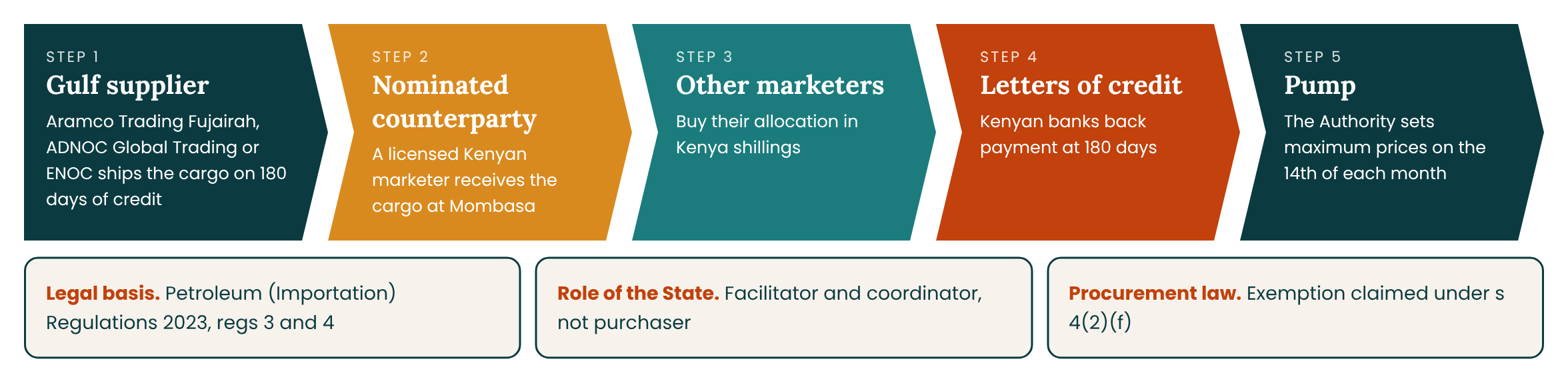
Figure 1. How a cargo moves under the government to government arrangement
II. Foundational concepts
2.1 Open tender system
Before 2023, Kenya imported refined petroleum products mainly through the open tender system. Each month, licensed oil marketing companies bid to supply the national requirement. The winner imported the cargo and sold it to other marketers at the tendered price, and every marketer paid for its share in dollars.6 The system was competitive, but it required large and frequent purchases of dollars.
2.2 Government to government arrangement
Under the arrangement adopted in 2023, the suppliers are international oil companies owned by Gulf states. They supply on credit of 180 days. They do not sell directly to the market. Instead, they nominate licensed Kenyan oil marketing companies as counterparties, which receive the cargo, sell it to other marketers in Kenya shillings, and arrange letters of credit for payment at the end of the credit period.7 The first nominated counterparties were Gulf Energy Limited, Galana Energies Limited and Oryx Energies Kenya Limited. One Petroleum Limited, Asharami Synergy Limited and BE Energy Limited were added later.8
2.3 Facilitator, not purchaser
It is important to be precise about the role of the State. Court documents filed in Mombasa indicated that the government acts as a facilitator rather than as a purchaser of the products. Its role is to give the comfort that allows marketers to pay later than oil producers would otherwise permit.9 The name of the arrangement may therefore mislead. The contracts of sale are between commercial parties, and the counterparties on the supply side are companies owned by foreign states rather than the states themselves.
III. Legal framework
3.1 Constitution
Article 227 requires a State organ or public entity that contracts for goods or services to do so in accordance with a system that is fair, equitable, transparent, competitive and cost effective.10 Article 46 protects consumers, including their right to goods of reasonable quality and to the information needed to gain full benefit from goods.11 Article 10 makes transparency, accountability and public participation national values, Article 35 gives every citizen a right of access to information held by the State, and Article 47 guarantees fair administrative action.12
3.2 Petroleum Act and Energy Act
The Petroleum Act 2019 regulates the midstream and downstream petroleum sector, including the import of petroleum products, and empowers the Cabinet Secretary to make regulations on the recommendation of the Energy and Petroleum Regulatory Authority.13 The Energy Act 2019 establishes the Authority, which licenses importers, and the Energy and Petroleum Tribunal, which has jurisdiction over appeals from the decisions of the Authority.14
3.3 Petroleum (Importation) Regulations 2023
The regulations that underpin the arrangement were made under section 101 of the Petroleum Act and published as Legal Notice 3 of 2023. They commenced on 27 January 2023 and were amended in March 2025.15 Their key provisions are set out in Table 1.
Table 1. Key provisions of the Petroleum (Importation) Regulations 2023
| Provision | Effect |
|---|---|
| Licence | No person may import the listed petroleum products except under a valid licence |
| Open tender system | The import of the listed products shall be through the open tendering system |
| Deeming provision | Imports through a government to government arrangement are deemed to have occurred through the open tendering system |
| Central coordination | Imports through the open tendering system or a government to government arrangement are centrally coordinated by the Ministry |
| Products | Super petrol, jet fuel or dual purpose kerosene, and diesel, as listed in the First Schedule |
| Strategic stocks | The regulations do not apply to the procurement of strategic stocks |
The sources for the table are the regulations themselves and contemporary reports of their content.16 The deeming provision is the heart of the arrangement. It allows the government to keep the open tender system as the legal rule while operating outside it in practice.
3.4 Public procurement law
The Public Procurement and Asset Disposal Act does not apply to procurement and asset disposal under bilateral or multilateral agreements between the Government of Kenya and any other foreign government, agency, entity or multilateral agency.17 The regulations made under the Act add safeguards. Procurement professionals from the procuring entity must be involved at the early stages of negotiating such agreements, so that the procurement interests of Kenya are considered.18
3.5 Competition and regional trade
The Competition Act prohibits restrictive trade practices and abuse of a dominant position.19 At regional level, the Treaty for the Establishment of the East African Community and the Common Market Protocol commit Kenya to the free movement of goods and to avoid barriers to trade with its partner states.20 Both regimes become relevant when an arrangement gives a small number of firms the right to import for a country that also supplies its landlocked neighbours.
IV. Disputes
4.1 Challenge by oil marketers
In March 2023, 4 petitioners went to the High Court to stop the arrangement. They argued that the regulations had been published without public participation, that the tender documents excluded other marketing companies contrary to Article 227, and that the arrangement would drive independent marketers out of business.21 The court moved the case from Kerugoya to Nairobi.22 This edition has not been able to locate a reported final decision on that petition, and it should not be assumed that the legal questions it raised have been answered.
4.2 Uganda and East African Court of Justice
Uganda decided in 2023 to import fuel through its national oil company, the Uganda National Oil Company, using the Kenyan pipeline. The company applied to the Authority for an import, export and wholesale licence. On 7 November 2023 the High Court at Machakos issued conservatory orders restraining the Authority from granting it.23 On 28 December 2023 the Attorney General of Uganda filed a reference against Kenya in the East African Court of Justice, alleging breaches of the Treaty and the Common Market Protocol.24 The Machakos case was later withdrawn by consent, and Uganda was licensed to begin imports through Mombasa from May 2024.25
The dispute is instructive. It shows that the arrangement is not purely domestic. Kenya supplies fuel to several landlocked neighbours, and any rule that controls who may import through Mombasa affects their trade as well.
4.3 Emergency cargo of 2026
In March 2026 the Ministry allowed 2 local companies to import petrol outside the arrangement, at a cost reported to be far higher than the contracted price.26 In April the Cabinet Secretary described one such cargo as imported in contravention of established procedures and ordered it withdrawn. He said that it had been priced at KSh 198,000 per metric tonne against KSh 140,000 under the arrangement.27 The importer argued that the cargo had been properly awarded, and bankers warned that the cancellation might make lenders reluctant to finance future cargoes.28 The Authority excluded the cargo from its price computation for April.29
On 2 April 2026 investigators arrested the Principal Secretary for Petroleum, the Managing Director of Kenya Pipeline Company and the Director General of the Authority. All 3 resigned on 4 April. The statement from the Office of the President said that they may have manipulated data on fuel stocks, creating a false impression of shortage that was used to justify the emergency purchase.30 These are allegations. No court has found them proved, and every person named is presumed innocent.
4.4 Calls for audit and parliamentary scrutiny
In May 2026 the Law Society of Kenya called for an immediate administrative, forensic and public audit of the arrangement, including all agreements, procurement processes, pricing mechanisms and supply allocations.31 In September 2026, after the President of Uganda spoke publicly about the use of intermediaries in fuel supplied through Kenya, the Motorists Association of Kenya called for a forensic audit of all intermediaries, commissions, contracts, pricing formulas and beneficiaries.32 The Ministry responded by defending the arrangement and publishing details of the counterparties, the banks and the reductions in supplier premiums.33 The Energy Committee of the National Assembly has also examined the arrangement.34 As at 15 October 2026, no publicly confirmed finding from an independent forensic audit had been published.35
Table 2. Reductions in supplier premiums reported by the Ministry, in US$ per metric tonne
| Product | At the start | September 2023 | March 2025 |
|---|---|---|---|
| Super petrol | 97.50 | 90 | 84 |
| Diesel | 118 | 88 | 78 |
| Jet A1 | 114.25 | 111.75 | 97 |
The figures in Table 2 are those published by the Ministry in September 2026.36 They have not been independently verified.
4.5 Regional echo
The model has spread. Uganda signed a supply arrangement with Vitol Bahrain, Rwanda announced one with an Omani state company, and South Sudan adopted a government to government arrangement with Kenya that gave one Kenyan marketer exclusive import rights. A court in Juba suspended that arrangement in 2026 after a challenge based on competition.37

Figure 2. Government to government arrangement from 2022 to 2026
V. Analysis
5.1 Deeming provision
The regulations require imports through the open tender system and then deem the government to government arrangement to be part of it. A regulation may define its own terms, but it may not do what its parent Act forbids, and it must be made with public participation and laid before Parliament.38 The question whether the deeming provision fits within section 101 of the Petroleum Act, and whether the regulations were properly made, was squarely raised in 2023.39 Until a court decides it, the provision stands, but it remains the most exposed part of the legal structure.
A rule that says one system shall be treated as another does not make them the same. It moves the argument to whether the rule was lawfully made.
5.2 Procurement exemption
The exemption in section 4(2)(f) of the procurement Act applies to agreements with a foreign government, agency, entity or multilateral agency. The counterparties here are commercial companies owned by foreign states. The word entity is wide enough to include them, and that is the reading on which the government relies. The contrary argument is that the exemption is meant for true intergovernmental arrangements, and that an agreement with commercial traders, followed by the nomination of particular local companies, is procurement in substance. Even if the exemption applies, Article 227 continues to bind the State. The regulations of 2020 also expect procurement professionals to have been involved in negotiating the agreement.40
5.3 Choice of counterparties
The Ministry has said that the choice of local counterparties was a commercial decision for the foreign suppliers, who nominated licensed firms.41 If that is right, the selection is not itself a procurement by the State. It does, however, determine who controls the import of the main fuels for Kenya and part of the region. That raises competition questions under the Competition Act, and fairness questions under Article 47 for licensed marketers who were not nominated. The South Sudan case shows that courts elsewhere are willing to examine exclusive import rights on competition grounds.42
5.4 Public money and transparency
The State does not pay for the fuel, but it gives the comfort that makes the arrangement work, and the pump price that consumers pay reflects its terms. Article 35 and the national values therefore support disclosure of the core terms, including the premiums, freight, credit costs and the role of each counterparty. Disclosure would also allow the questions raised by the calls for audit to be answered on the evidence.
5.5 Forum and remedies
A licensee aggrieved by a decision of the Authority must generally go first to the Energy and Petroleum Tribunal.43 A challenge to the validity of the regulations, or to the constitutionality of the arrangement, belongs in the High Court. A claim between commercial parties, such as a dispute over a cargo or a letter of credit, will usually go to arbitration or the commercial courts under the contracts. A claim between partner states belongs in the East African Court of Justice. Choosing the right forum is the first step in any dispute.

Figure 3. Where each kind of dispute about the arrangement is likely to be heard
Table 3. Open legal questions on the government to government arrangement
| Question | Present position |
|---|---|
| Is the deeming provision in the regulations within the power conferred by the Petroleum Act? | Raised in 2023. No reported final decision has been found |
| Does section 4(2)(f) of the procurement Act cover agreements with foreign state owned companies? | Not decided. The word entity supports the government reading |
| Does the nomination of local counterparties raise competition concerns? | Not decided in Kenya. A court in Juba has suspended an exclusive arrangement in South Sudan |
| Must the core terms be disclosed? | Not decided. Articles 10 and 35 support disclosure of terms that affect the pump price |
| What is the effect of a cargo bought outside the arrangement? | The 2026 cargo was cancelled. Criminal investigations are pending and no findings have been made |
VI. Next round
6.1 Questions every participant should answer
Table 4. Questions every participant in fuel imports should be able to answer
| Question | Why it matters |
|---|---|
| Under which instrument is each cargo imported? | Imports outside the arrangement may be cancelled, as in 2026 |
| Does the firm hold a valid import licence, and on what conditions? | A licence is required for every import under the regulations |
| Which contracts govern payment, title and risk? | Ownership and liability turn on the contracts, not on the name of the arrangement |
| What is the forum for each kind of dispute? | The Tribunal, the High Court, arbitration and the regional court each have a distinct role |
| What information can be disclosed, and to whom? | Confidentiality clauses must be read with Article 35 and the duty of transparency |
6.2 What each party should do
Table 5. Practical guidance drawn from the law and the disputes
| Party | What the law and the disputes counsel |
|---|---|
| Oil marketing companies | Keep licences current, document every allocation and price, and bring any challenge promptly in the correct forum. Do not import outside the arrangement without written authority |
| Banks issuing letters of credit | Confirm the legal basis of each cargo before issuing, and price the risk that a cargo may be disowned or cancelled |
| The Ministry and the Authority | Publish the core terms, the premiums and the criteria for nominating counterparties. Bring any change through properly made regulations with public participation |
| Parliament and the Auditor General | Exercise oversight on the full contractual chain, and publish findings |
| Consumers and their associations | Use Article 35 to request information, and the High Court for constitutional questions |
VII. Conclusion
The government to government arrangement was a response to a real crisis of foreign exchange, and the Ministry credits it with stabilising supply and the shilling. It was also built quickly, on a deeming provision in subsidiary legislation and a broad exemption from procurement law, and it gave a few firms a central place in the supply of fuel to Kenya and part of the region. Those features explain why it has generated disputes in the High Court, before a regional court and in the criminal process.
None of the central legal questions has yet been finally decided. Until they are, the arrangement rests on its regulations and its contracts. For participants, the lesson is to know which instrument governs each cargo and which forum governs each dispute. For the State, it is that an arrangement of this importance will endure best if its terms are open, its legal basis is secure, and its operation can withstand the audit that many now seek.
Benson Odiwuor is an Advocate of the High Court of Kenya based in Nairobi, whose practice focuses on dispute resolution in the regulated industries, including mining, oil and gas, banking and project finance. He is the editor of The BOLD, Benson Odiwuor’s Legal Digests, a legal newsletter on dispute strategies and legal developments in the regulated industries of Kenya. Subscribe to The BOLD here.
For inquiries, contact the author at info@bensonodiwuor.com.
References
- ‘CS Wandayi Says G-to-G Fuel Deal Eased Dollar Shortages, Secured Kenya’s Fuel Supply’ Capital FM (Nairobi, 21 September 2026) <https://www.capitalfm.africa/cs-wandayi-says-g-to-g-fuel-deal-eased-dollar-shortages-secured-kenyas-fuel-supply/>. ↩
- ‘CS Wandayi Says G-to-G Fuel Deal Eased Dollar Shortages’ (n 1). ↩
- ‘Govt Blocks Sh14 per Litre Fuel Hike, Orders Withdrawal of Illegal Consignment’ Capital FM (Nairobi, April 2026) <https://capitalfm.africa/govt-blocks-sh14-per-litre-fuel-hike-orders-withdrawal-of-illegal-consignment/>. ↩
- ‘Kenya Extends Oil Import Deal with Gulf Oil Giants through 2027’ Rigzone (Bloomberg, 5 April 2025) <https://www.rigzone.com/news/wire/kenya_extends_oil_import_deal_with_gulf_oil_giants_through_2027-05-apr-2025-180141-article/>; ‘How Fuel Moves from the Gulf Region to Your Vehicle Tank’ Citizen Digital (Nairobi, 2026) <https://citizen.digital/article/how-fuel-moves-from-the-gulf-region-to-your-vehicle-tank-n380432>. ↩
- Joseph Muia, ‘PS Liban, EPRA DG Kiptoo, Kenya Pipeline Boss Sang Resign after Arrest over Fuel Importation Saga’ Citizen Digital (Nairobi, 4 April 2026) <https://citizen.digital/article/ps-liban-epra-dg-kiptoo-kenya-pipeline-boss-sang-resign-after-arrest-over-fuel-importation-saga-n380202>; ‘LSK Demands Audit of G-to-G Fuel Deal, Questions Stalled Prosecution of Energy Officials’ Capital FM (Nairobi, 19 May 2026) <https://www.capitalfm.co.ke/news/2026/05/lsk-audit-g2g-fuel-procurement-energy-officials-matatu-strike/>; ‘Motorists Demand Audit of G-to-G Fuel Deal after Museveni’s Middlemen Remarks’ The Star (Nairobi, 19 September 2026) <https://www.the-star.co.ke/news/2026-09-19-motorists-demand-audit-of-g-to-g-fuel-deal-after-museveni-remarks>. ↩
- ‘Kenya Plan to Nationalize Oil Imports Faces Legal Hurdle’ Rigzone (Bloomberg, 10 March 2023) <https://www.rigzone.com/news/wire/kenya_plan_to_nationalize_oil_imports_faces_legal_hurdle-10-mar-2023-172255-article/>. ↩
- ‘CS Wandayi Says G-to-G Fuel Deal Eased Dollar Shortages’ (n 1); ‘Court Records Reveal Finer Details of the G-to-G Oil Imports Deal’ The Standard (Nairobi, 2023) <https://www.standardmedia.co.ke/health/national/article/2001486560/court-records-reveal-finer-details-of-the-g-to-g-oil-imports-deal>. ↩
- ‘CS Wandayi Says G-to-G Fuel Deal Eased Dollar Shortages’ (n 1). ↩
- ‘Court Records Reveal Finer Details’ (n 7). ↩
- Constitution of Kenya 2010 art 227(1). ↩
- Constitution of Kenya 2010 art 46. ↩
- Constitution of Kenya 2010 arts 10, 35 and 47. ↩
- Petroleum Act 2019 (No 2 of 2019), now Cap 308 of the Laws of Kenya s 101 <https://new.kenyalaw.org/akn/ke/act/2019/2>. ↩
- Energy Act 2019 (No 1 of 2019), now Cap 314 of the Laws of Kenya ss 9, 25 and 36. ↩
- Petroleum (Importation) Regulations 2023 (LN 3 of 2023), as amended by the Petroleum (Importation) (Amendment) Regulations 2025 (LN 60 of 2025) <https://new.kenyalaw.org/akn/ke/act/ln/2023/3/eng@2025-03-25>. ↩
- Petroleum (Importation) Regulations 2023 regs 3 and 4 and sch 1; ‘Revealed: How Three Kenyan Companies Were Exclusively Awarded Multi-Billion Shilling Tenders in New Oil Deal’ Citizen Digital (Nairobi, 2023) <https://citizen.digital/news/revealed-how-three-kenyan-companies-were-exclusively-awarded-multi-billion-shilling-tenders-in-new-oil-deal-n317891>. ↩
- Public Procurement and Asset Disposal Act 2015 (No 33 of 2015) s 4(2)(f); Bowmans, ‘Key Changes Introduced by the Recently Published Public Procurement and Asset Disposal Regulations, 2020’ (24 June 2020) <https://www.bowmanslaw.com/insights/government-contracting-and-public-sector-procurement/key-changes-introduced-by-the-recently-published-public-procurement-and-asset-disposal-regulations-2020/>. ↩
- Public Procurement and Asset Disposal Regulations 2020 (LN 69 of 2020) reg 5 <https://new.kenyalaw.org/akn/ke/act/ln/2020/69/eng@2022-12-31>; Bowmans, ‘Key Changes’ (n 17). ↩
- Competition Act 2010 (No 12 of 2010). ↩
- Treaty for the Establishment of the East African Community 1999, and Protocol on the Establishment of the East African Community Common Market 2009. ↩
- ‘Plan to Nationalize Oil Imports Faces Legal Hurdle’ (n 6); ‘Dealers Want State Deal to Import UAE Oil on Credit Blocked’ Business Daily (Nairobi, March 2023) <https://www.businessdailyafrica.com/bd/economy/dealers-want-state-deal-import-uae-oil-on-credit-blocked-4152122>; ‘Four Sue to Stop Govt-to-Govt Tenders for Oil Imports’ Daily Nation (Nairobi, March 2023) <https://nation.africa/kenya/business/four-sue-to-stop-govt-to-govt-tenders-for-oil-imports--4151908>. ↩
- ‘Plan to Nationalize Oil Imports Faces Legal Hurdle’ (n 6). ↩
- ‘Uganda Sues Kenya over Oil Importation’ The Star (Nairobi, 2 January 2024) <https://www.the-star.co.ke/news/world/2024-01-02-uganda-sues-kenya-over-oil-importation>. ↩
- Attorney General of the Republic of Uganda v Attorney General of the Republic of Kenya, Reference filed in the First Instance Division of the East African Court of Justice on 28 December 2023; ‘Uganda Sues Kenya’ (n 23). ↩
- ‘Uganda to Start Oil Imports via Mombasa from May, Ending Months-Long Dispute’ The EastAfrican (Nairobi, 2024) <https://www.theeastafrican.co.ke/tea/business-tech/kenya-ends-oil-import-feud-with-uganda-4571188>. ↩
- ‘Costly Fuel Looms as Two Local Firms Import Petrol at 3 Times Cost of G-to-G Deal’ Bizna Kenya (1 April 2026) <https://biznakenya.com/two-local-firms-import-petrol-cost-of-g-to-g-deal/>. ↩
- ‘Govt Blocks Sh14 per Litre Fuel Hike’ (n 3). ↩
- ‘New Twist as Kenya Cancels Controversial Petrol Order’ Business Daily (Nairobi, April 2026) <https://www.businessdailyafrica.com/bd/corporate/industry/new-twist-as-kenya-cancels-controversial-petrol-order-5416112>. ↩
- ‘Diesel Price Rises by Ksh40.30 per Litre, Petrol Shoots by Ksh28.69 in Latest EPRA Review’ People Daily (Nairobi, 14 April 2026) <https://peopledaily.digital/news/diesel-price-rises-by-ksh40-30-per-litre-petrol-shoots-by-ksh28-69-in-latest-epra-review/amp>. ↩
- Muia, ‘PS Liban, EPRA DG Kiptoo, Kenya Pipeline Boss Sang Resign’ (n 5); ‘Kenya’s Top Energy Officials Resign over G2G Fuel Scandal’ Kenyan Wall Street (4 April 2026) <https://kenyanwallstreet.com/kpc-epra-resign-ceo>. ↩
- ‘LSK Demands Audit of G-to-G Fuel Deal’ (n 5). ↩
- ‘Motorists Demand Audit’ (n 5). ↩
- ‘CS Wandayi Says G-to-G Fuel Deal Eased Dollar Shortages’ (n 1). ↩
- Parliament of Kenya, ‘Energy Committee Probes Ministry on the Government-to-Government Fuel Importation Deal’ <https://parliament.go.ke/node/18874>. ↩
- ‘Inside Kenya’s G-to-G Fuel Deal: Credit Terms, Pump-Price Formula and Audit Questions’ Pulse Kenya (15 October 2026) <https://www.pulse.co.ke/story/inside-kenyas-g-to-g-fuel-deal-credit-terms-pump-price-formula-and-audit-questions-2026101518281667154>. ↩
- ‘CS Wandayi Says G-to-G Fuel Deal Eased Dollar Shortages’ (n 1). ↩
- ‘Juba Moves to End Kenyan Oil Marketer’s Exclusive Fuel Deal’ Daily Nation (Nairobi, 2026) <https://nation.africa/kenya/business/juba-moves-to-end-kenyan-oil-marketer-exclusive-fuel-deal-5523030>. ↩
- Statutory Instruments Act 2013 (No 23 of 2013) ss 5 and 11. ↩
- ‘Four Sue to Stop Tenders’ (n 21). ↩
- Constitution of Kenya 2010 art 227; Public Procurement and Asset Disposal Regulations 2020 reg 5. ↩
- ‘CS Wandayi Says G-to-G Fuel Deal Eased Dollar Shortages’ (n 1). ↩
- ‘Juba Moves to End Exclusive Fuel Deal’ (n 37). ↩
- Energy Act 2019 s 36. ↩