
Exclusive Supply and Tied Petrol Stations in Kenya. Competition Law at the Forecourt
3 November 2026
A tied dealer buys from one supplier, sells one brand and may not set its own price. The law answers 3 questions about the tie. What does the agreement restrict? Does the restriction harm competition in the relevant market? Is there a remedy that the dealer or the regulator can actually use? This edition answers each of them from the law and the decided cases.
| KEY POINTS AT A GLANCE Most branded petrol stations in Kenya are tied. The dealer must buy all its fuel, and often its lubricants and other products, from the oil marketing company whose brand it carries. Agreements commonly add minimum volumes, radius restrictions and controls over the pump price. The Competition Act prohibits agreements that have as their object or effect the prevention, distortion or lessening of competition. Its list of examples includes price fixing, minimum resale price maintenance, limits on market outlets and tying of unrelated obligations. An exclusive fuel supply tie is not unlawful in itself. Its legality depends on its duration, its scope and its effect in the relevant local market. Ties on unrelated products, wide radius clauses and charges that squeeze the margins approved by the regulator are more exposed. The Competition Authority of Kenya has ordered the removal of a 20 kilometre non compete clause from dealership agreements. In 2025 the Energy and Petroleum Regulatory Authority found unapproved charges and lubricant restrictions in agreements for company owned, dealer operated stations. Abuse of dominance and abuse of buyer power provide further routes, but no oil marketing company holds a national share near the 40 per cent threshold, so dominance arguments will usually turn on local markets. Every dispute about a tie turns on 3 questions. What does the agreement restrict? Does the restriction harm competition in the relevant market? Is there a remedy that the dealer or the regulator can actually use? |
I. Introduction
A branded petrol station is valuable to an oil marketing company because it guarantees an outlet for its fuel. The guarantee is secured by contract. The dealer agrees to buy only from the company, to carry its brand, to meet volume targets and often to stock only its lubricants, gas and convenience products. The company in return supplies product, brand, equipment and support, and in a company owned station it supplies the station itself.
These arrangements are familiar across the world, and many are efficient. They also restrict competition at the point where it matters most to the consumer. A tied dealer cannot buy from a cheaper wholesaler, cannot offer a rival lubricant and may not be free to set its own pump price. When the relationship sours, the dealer often argues that the restrictions are unlawful, and the company argues that they are the price of the investment it made.
This edition of The BOLD explains how Kenyan competition law and the petroleum regulatory regime apply to these restrictions. It describes the common clauses, sets out the statutory framework, applies the framework to each type of clause, and examines the recent findings of the regulators. It closes with practical guidance. It takes no position on any matter pending before a court or a regulator.
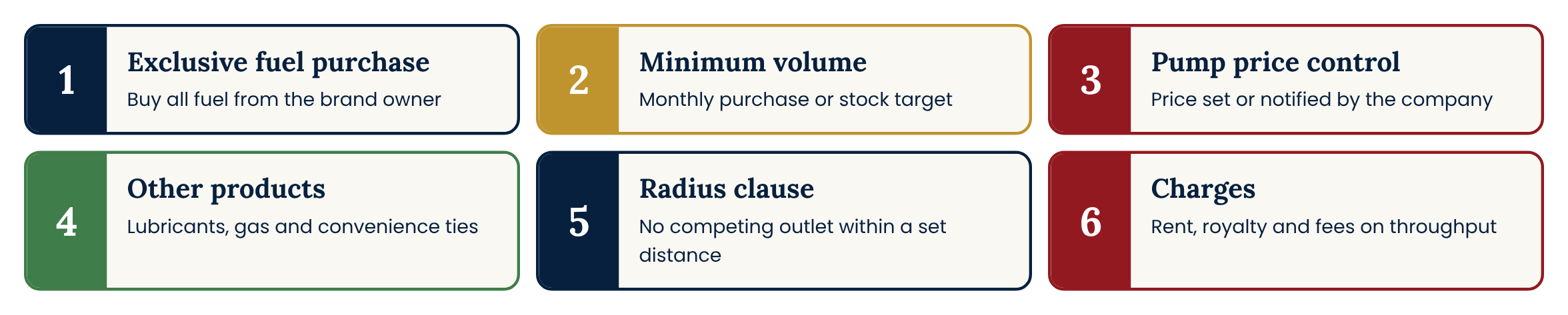
Figure 1. Common restrictions in a tied dealer agreement
II. Foundational concepts
2.1 Exclusive purchasing
An exclusive purchasing obligation, often called a tie or a solus agreement, requires the dealer to buy all its requirements of a product from a single supplier. In the Kenyan market the Competition Authority has noted that oil marketing companies prohibit dealers in both company owned and dealer owned stations from stocking competitor products.1 The tie is the defining feature of a branded station. Without it, the brand on the canopy would tell the motorist nothing about the fuel in the tank.
2.2 Minimum volumes and stock levels
Many agreements require the dealer to buy or hold a minimum volume each month. In Njane the dealer had to maintain minimum monthly stocks of 350,000 litres, made up of 250,000 litres of super petrol, 90,000 litres of diesel and 10,000 litres of kerosene.2 In Janevams the agreement set monthly sales targets, and the oil company terminated it on the ground that the targets had been missed.3 A volume obligation reinforces the tie, because a dealer that must buy a fixed quantity has little room to buy elsewhere even if it is allowed to.
2.3 Pump price control
Kenya sets maximum retail prices for super petrol, diesel and kerosene every month, and selling above the maximum is an offence.4 Within that ceiling, a dealer that owns its fuel is in principle free to charge less. Some agreements nonetheless require the dealer to sell at a price set or notified by the company. In Njane the company cut pump prices without notice to the dealer, and the High Court held that this was not a breach of contract because the offer letter contained no express notice term, although it found the conduct inconsistent with good faith and fair trading.5
2.4 Restrictions on other products
A station sells more than fuel. Lubricants, liquefied petroleum gas, car wash services and convenience retail can produce a large share of its income. Agreements often extend the tie to some or all of these products. In April 2025 the Energy and Petroleum Regulatory Authority found restrictive trading agreements that limited the right of dealers to stock alternative lubricants and ancillary product brands.6
2.5 Radius and non compete clauses
A radius clause prevents the dealer from operating a competing station within a stated distance, during or after the agreement. The Competition Authority ordered Total Kenya to remove a clause that barred dealers from operating a competitor outlet within 20 kilometres, after an investigation found the dealership agreements to contain unreasonable and anti competitive provisions.7
III. Legal framework
3.1 Restrictive agreements under section 21
Section 21(1) of the Competition Act prohibits agreements between undertakings, decisions by associations of undertakings and concerted practices that have as their object or effect the prevention, distortion or lessening of competition in trade in any goods or services in Kenya or a part of Kenya, unless they are exempted.8 Section 21(3) gives examples. They include agreements that directly or indirectly fix purchase or selling prices or other trading conditions, divide markets, involve minimum resale price maintenance, limit or control market outlets or access, apply dissimilar conditions to equivalent transactions, and make the conclusion of a contract subject to supplementary obligations that have no connection with its subject.9
The prohibition of minimum resale price maintenance does not prevent a supplier from recommending a resale price, provided it is expressly stated that the recommendation is not binding and, where the product carries a price, the words recommended price appear next to it.10 The prohibition applies to vertical agreements between a supplier and a reseller as much as to agreements between competitors.11
3.2 Abuse of dominance
Section 24 prohibits conduct that amounts to the abuse of a dominant position in a market in Kenya. Abuse includes directly or indirectly imposing unfair purchase or selling prices or other unfair trading conditions, limiting market outlets, applying dissimilar conditions to equivalent transactions and tying unrelated obligations.12 An undertaking is dominant if it produces, supplies, distributes or otherwise controls at least half of the relevant goods or services in Kenya or a substantial part of Kenya. It is also treated as dominant if it controls between 40 and 50 per cent unless it shows it lacks market power, or less than 40 per cent if it nonetheless has market power.13
3.3 Abuse of buyer power
Section 24A, introduced by the Competition (Amendment) Act 2019, prohibits conduct that amounts to abuse of buyer power in a market in Kenya or a substantial part of Kenya.14 Buyer power is the influence that an undertaking exerts in the position of a purchaser to obtain more favourable terms from a supplier, or to impose a long term cost on the supplier that is disproportionate to any cost to the buyer.15 The examples in the section include delays in payment without justification and in breach of agreed terms, and unilateral termination or threats of termination of the commercial relationship without notice or on short notice.16 The High Court has upheld a finding of abuse of buyer power against a supermarket chain, which confirmed that the Competition Authority may investigate and penalise such conduct.17
3.4 Exemptions
An undertaking may apply to the Competition Authority for an exemption of an agreement that would otherwise fall within section 21. The Authority publishes the application and may grant an exemption for a stated period, with or without conditions, where there are exceptional and compelling reasons of public policy, having regard to factors such as the promotion of exports, the improvement of production or distribution, technical or economic progress and public benefit.18 In February 2026 the Authority extended an exemption for a strategic partnership between the National Oil Corporation of Kenya and Rubis Energy Kenya from 5 to 8 years, beginning on 13 December 2024.19
3.5 Consequences
After an investigation the Competition Authority may declare that conduct is a prohibited practice, restrain it, order remedial action and impose a financial penalty of up to 10 per cent of the gross annual turnover in Kenya of the undertaking concerned for the immediately preceding year.20 Engaging in a restrictive trade practice or an abuse of buyer power is also an offence punishable by imprisonment for up to 5 years or a fine of up to KSh 10,000,000, or both.21 A court is unlikely to enforce a term that the Act prohibits, which gives a dealer a defence to an action to enforce it.22
3.6 Petroleum price regulation
The petroleum regime overlays competition law. The Authority sets monthly maximum wholesale and retail prices, which include margins for oil marketing companies and dealers.23 Selling at retail above the maximum price is an offence carrying a fine of not less than KSh 10,000,000, imprisonment for not less than 5 years, or both, and selling above the maximum wholesale price attracts the general penalty, which the Authority has said is not less than KSh 5,000,000.24 In April 2026 the Authority warned that some oil marketing companies were holding back sales to independent retailers in anticipation of a price increase, which it described as hoarding under the Act.25 In October 2026 2 associations of independent dealers accused oil marketing companies of selling above the maximum wholesale prices.26
3.7 Restraint of trade
Competition law is not the only control. A covenant that restrains a party from exercising a lawful trade is not void on that ground alone, but the High Court may declare it void if, having regard to the nature of the trade and the period and area of the restraint, it is not reasonably necessary to protect the person in whose favour it is given.27 The leading English authority on petrol ties held that a tie of about 4 years and 5 months was reasonable, while a tie of 21 years secured by a mortgage was not.28 The sixth edition in this series deals with post termination restraints.
Table 1. Common clauses and their legal exposure
| Clause | Main provision engaged | Exposure |
|---|---|---|
| Exclusive purchase of fuel | Competition Act s 21(1) and (3)(e) | Moderate. Usually defensible if limited in time and tied to investment |
| Tie on lubricants or convenience goods | s 21(3)(g) and s 24(2)(d) | Higher. Unrelated products, flagged by the regulator in 2025 |
| Minimum volume or stock | s 21(3)(e) and the contract | Moderate. Depends on whether the target is realistic |
| Fixed or minimum pump price | s 21(3)(a) and (d) | High for a minimum price. Uncertain for a price set by an agent principal |
| Radius or non compete | s 21 and Contracts in Restraint of Trade Act | High if wide, as with the 20 kilometre clause removed in 2025 |
| Unapproved fees and rent | Petroleum pricing rules and s 24(2)(a) if dominant | High. Found by the regulator in 2025 |
IV. Application to dealer agreements
4.1 Exclusive fuel supply
An exclusive purchase obligation limits the outlets available to rival suppliers, and so falls within the language of section 21(3).29 That does not make it unlawful. The question under section 21(1) is whether the agreement has the object or effect of preventing, distorting or lessening competition. A tie has a legitimate commercial purpose. It protects the investment of the company in the brand, the station and the equipment, and it allows the brand to stand for a known quality of fuel. The Competition Authority has described exclusivity as a feature of the dealer relationship without treating it as a concern in itself.30
The effect of a tie depends on the market. In its merger decisions the Competition Authority has treated retail markets as local and used a radius of about 3 kilometres to assess competition between stations.31 A tie is unlikely to harm competition where the motorist can drive a short distance to a station of another brand. It may harm competition where a single company controls most of the stations in an area and ties them for long periods, so that a rival supplier has no outlet to reach. Duration matters too. A tie that lasts as long as the investment it protects is easier to defend than a tie that outlasts it.
4.2 Ties on unrelated products
Ties on lubricants, liquefied petroleum gas and convenience goods are more exposed. Section 21(3) lists agreements that make the conclusion of a contract subject to supplementary obligations that by their nature or by commercial usage have no connection with its subject.32 A company can argue that branded lubricants are connected to branded fuel and protect the reputation of the station. A dealer can answer that a motorist buying engine oil is choosing a separate product, and that the tie is a means of extracting additional margin. The finding of the Authority in 2025 that agreements limited the right of dealers to stock alternative lubricants and ancillary brands shows that the regulator treats such ties as a matter for enforcement.33
4.3 Radius clauses
A radius clause that operates during the agreement protects the company against a dealer that diverts customers to a rival station next door. A clause that extends far beyond the catchment of the station, or that continues long after the agreement ends, protects little that is legitimate. The 20 kilometre clause removed at the instance of the Competition Authority illustrates the point. A distance of that size covers many local markets, and the Authority treated the clause as unreasonable and anti competitive.34 A clause of that kind is also open to challenge under the Contracts in Restraint of Trade Act.35
4.4 Minimum volumes
A minimum volume obligation is a commercial term, and a dealer that accepts a realistic target and fails to meet it will usually be in breach. The difficulty arises when the company controls the supply on which the dealer depends. In Njane the High Court found that supply failures were frequent even when no cheques had bounced, and that the guarantee held by the company gave it security against default.36 A company that does not supply cannot complain that the dealer did not sell. Where a target is set unrealistically high and used as a ground for termination, it may also support an argument that the obligation is an unfair trading condition imposed by a party with market power.37
4.5 Pump prices
Minimum resale price maintenance is prohibited outright by section 21(3), subject to the proviso on recommended prices.38 A clause that forbids a dealer who owns its fuel from selling below a price set by the company is therefore at serious risk. A clause that requires the dealer to sell at a fixed price, neither higher nor lower, raises the same concern, because it necessarily sets a floor.
The position is less clear where the company owns the fuel and the dealer sells it as agent for a commission. In that case the company is setting its own selling price, and the dealer is not a reseller. Kenyan law has no decided case on whether a genuine agency takes the arrangement outside section 21. The answer will depend on who bears the commercial risks of the fuel, which links the competition question to the ownership question examined in the first edition of this series. A company that wishes to control the pump price should choose the agency structure deliberately and document it accurately, rather than imposing price control on a dealer that buys and owns its stock.
Maximum price controls by the supplier are less troubling, because the Authority already sets a statutory ceiling. A company that requires its dealers to pass on a reduction in the maximum price is in effect requiring compliance with the law.
4.6 Charges and margin squeeze
The maximum price is built from approved costs and margins.39 Where a company imposes rent, royalties or fees on a dealer that exceed what the dealer margin can bear, the dealer is under pressure either to make a loss or to breach the price ceiling. The Authority made exactly this point in 2025 when it found margin squeezing through additional unapproved charges and overcharging of rent, and noted that dealers in remote areas might breach the price caps in order to recover them.40 If the company is dominant in the relevant market, such charges may also amount to unfair trading conditions under section 24.41
4.7 Supply to independents
Ties bind dealers within a network. A separate issue arises when an oil marketing company refuses to supply, or supplies above the maximum wholesale price, to independent stations outside its network. The April 2026 warning on hoarding and the October 2026 complaint by independent dealers both concerned this conduct.42 The primary remedy lies in the petroleum regime, but a refusal to supply by an undertaking with market power can also engage section 24.43
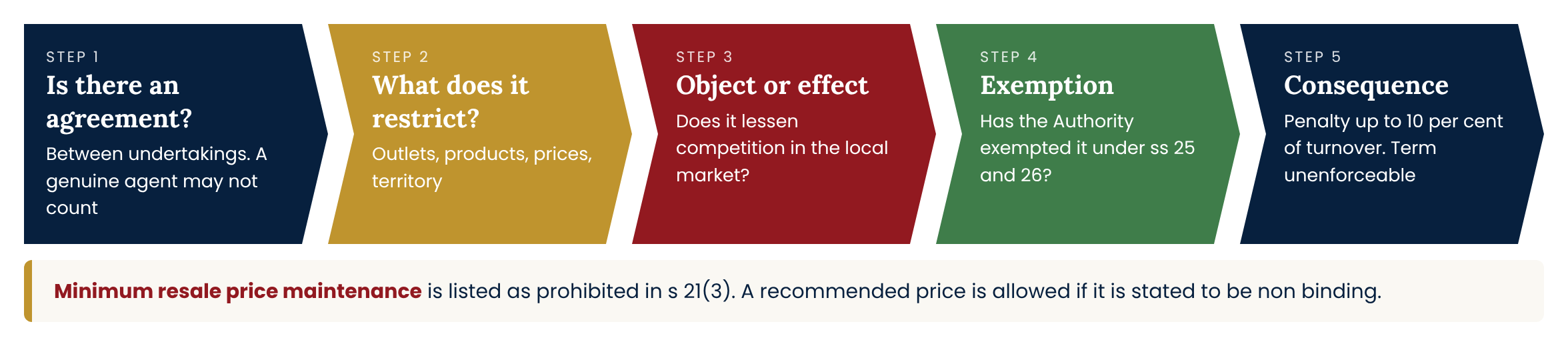
Figure 2. How a tie is tested under the Competition Act
V. Market structure and dominance
National market shares in Kenyan petroleum retail are moderate. When it approved the acquisition of Gulf Energy by KenolKobil in 2020, the Competition Authority found that the merged entity would hold 21.2 per cent and would be the market leader but not dominant.44 At that time industry data showed 96 oil marketing companies operating more than 3,000 stations, with more than half owned by independent players.45 Vivo Energy Kenya was reported to hold 22.79 per cent of the market at the end of 2022, with 286 stations.46 No company is near the 40 per cent level at which section 23 begins to presume dominance.47
Dominance arguments will therefore usually depend on local markets. The 3 kilometre radius used by the Competition Authority suggests that a company may hold a high share in a town or along a corridor even where its national share is modest.48 A dealer that wishes to rely on section 24 must define that local market with evidence of station locations, volumes and switching by motorists. That is expensive, and it is a reason why most dealer complaints are framed as restrictive agreements under section 21 or as regulatory breaches, which do not require proof of dominance.
VI. Open legal questions
6.1 Agency and single economic units
The first question is whether an agreement between an oil company and a dealer that sells as its agent is an agreement between undertakings at all. Other jurisdictions treat a genuine agent that bears no material commercial risk as part of the principal for this purpose. The Competition Act does not address the point, and no Kenyan court has decided it.49
6.2 Buyer power and dealers
The second question is whether section 24A protects dealers. The section protects suppliers against powerful buyers.50 A dealer that buys fuel from an oil company is a buyer, not a supplier. A dealer that operates a company owned station for a fee, however, may be said to supply operating services to the company, which buys them. If that analysis is accepted, the examples in section 24A, including unilateral termination without notice, could apply to the termination of a CODO agreement.51 The point has not been tested.
6.3 Two regulators
The third question is how the Competition Authority and the Energy and Petroleum Regulatory Authority share the field. In 2025 the Competition Authority directed the petroleum regulator to investigate CODO agreements, and the petroleum regulator then directed that agreements be submitted for review.52 The Competition Act gives the Competition Authority the power to penalise restrictive agreements. The Petroleum Act does not expressly give the petroleum regulator a power to approve dealer agreements.53 A company that faces conflicting demands from the 2 regulators may need to ask a court which power governs.

Figure 3. Routes to a remedy for a tied dealer
VII. Questions every participant should answer
What does the agreement restrict? The parties should list every restriction in the agreement, including those in schedules, operations manuals and side letters, and identify which products and which period each restriction covers.54
Does the restriction harm competition in the relevant market? The analysis should be local. It should consider the stations of other brands within about 3 kilometres, the share of the company in that area and the length of the tie.55
Is there a remedy that the dealer or the regulator can actually use? A dealer may complain to the Competition Authority, raise the invalidity of a term as a defence, complain to the petroleum regulator about charges, or apply for interim relief in the forum named in its contract.56
7.1 Practical guidance for oil marketing companies
Companies should review their templates for minimum price obligations, ties on unrelated products, wide radius clauses and charges that exceed the approved margins. Where they need control over the pump price, they should adopt a genuine agency model and accept the risks that come with it. Where a restriction is essential and its legality is uncertain, an application for exemption may be worth the cost.57
7.2 Practical guidance for dealers
Dealers should keep the agreement and every notice and invoice. They should record supply failures, price instructions and charges. A complaint to the Competition Authority does not require the dealer to prove its case before an investigation begins, and it may be made in confidence.58 A dealer that is sued on a restrictive clause should consider whether the clause is void.
7.3 Practical guidance for regulators
The regulators would help the market by publishing guidance on which restrictions they consider acceptable in dealer agreements, and by clarifying how a review of agreements by the petroleum regulator relates to the powers of the Competition Authority.
VIII. Conclusion
Ties are a normal part of fuel retailing, and Kenyan law does not condemn them as such. It condemns ties that go further than the investment they protect, extend to products the motorist chooses separately, fix prices from below, or squeeze the margins that the price regime is meant to secure. Both regulators have now shown an interest in these clauses. Oil marketing companies that draft their agreements with the 3 questions in this edition in mind, and dealers that keep the evidence those questions require, will be better placed when the next dispute arrives.
Benson Odiwuor is an Advocate of the High Court of Kenya based in Nairobi, whose practice focuses on dispute resolution in the regulated industries, including mining, oil and gas, banking and project finance. He is the editor of The BOLD, Benson Odiwuor’s Legal Digests, a legal newsletter on dispute strategies and legal developments in the regulated industries of Kenya. Subscribe to The BOLD here.
For inquiries, contact the author at info@bensonodiwuor.com.
References
- Competition Authority of Kenya, ‘Decision on the Proposed Acquisition of Control of Gulf Energy Holdings Limited by KenolKobil Plc’ (2020) para 51 <https://cak.go.ke/sites/default/files/determinations/2024-07/CAK%20Decision%20on%20Acquisition%20of%20Control%20of%20Gulf%20Energy%20Holdings%20Limited%20by%20KenolKobil%20Plc%20(1).pdf>. ↩
- Njane t/a Argwings Twin Service Station & another v Total Kenya Limited & another (Civil Case 433 of 2010) [2025] KEHC 14898 (KLR) paras 5, 33 and 92 <https://new.kenyalaw.org/akn/ke/judgment/kehc/2025/14898/eng@2025-10-24>. ↩
- Total (Kenya) Ltd (formerly Caltex Oil (Kenya) Ltd) v Janevams Ltd (Civil Appeal 178 of 2005) [2015] KECA 822 (KLR) <https://new.kenyalaw.org/akn/ke/judgment/keca/2015/822>. ↩
- Petroleum Act 2019 (No 2 of 2019), now Cap 308 of the Laws of Kenya s 99(1)(n) <https://new.kenyalaw.org/akn/ke/act/2019/2>; Petroleum (Pricing) Regulations 2022 (LN 192 of 2022) reg 3 <https://new.kenyalaw.org/akn/ke/act/ln/2022/192>. ↩
- Njane (n 2) para 100. ↩
- ‘Oil Majors Overcharging Petrol Station Owners’ Business Daily (Nairobi, 22 May 2025) <https://www.businessdailyafrica.com/bd/corporate/industry/oil-majors-overcharging-petrol-station-owners-5053294>. ↩
- ‘CAK Orders Total’s Anti-Competition Clauses Expunged’ Daily Nation (Nairobi) <https://nation.africa/kenya/business/cak-orders-total-s-anti-competition-clauses-expunged-138340>. ↩
- Competition Act 2010 (No 12 of 2010), now Cap 504 of the Laws of Kenya s 21(1). ↩
- Competition Act s 21(3). ↩
- Competition Act s 21(4); Bowmans, ‘Restrictive Trade Practices under Kenyan Law’ (10 January 2014) <https://bowmanslaw.com/insights/restrictive-trade-practices-under-kenyan-law/>. ↩
- Competition Act s 21; Bowmans, ‘Restrictive Trade Practices’ (n 10). ↩
- Competition Act s 24(1) and (2). ↩
- Competition Act s 23. ↩
- Competition Act s 24A; Competition (Amendment) Act 2019 (No 27 of 2019). ↩
- ‘The Competition Authority of Kenya Retail Trade Code of Practice’ Afronomicslaw<https://www.afronomicslaw.org/category/analysis/competition-authority-kenya-retail-trade-code-practice>. ↩
- Bowmans, ‘Kenya Competition Amendment Bill Published’ (17 July 2019) <https://bowmanslaw.com/insights/kenya-competition-amendment-bill-published/>. ↩
- Bowmans, ‘Kenya: High Court Issues Its Decision in the Abuse of Buyer Power Case against Carrefour’ (5 June 2024) <https://bowmanslaw.com/insights/kenya-high-court-dismisses-carrefours-appeal-in-abuse-of-buyer-power-case/>. ↩
- Competition Act ss 25 and 26. ↩
- ‘CAK Extends National Oil, Rubis Exemption Deal to Eight Years’ Capital Business (Nairobi, 3 February 2026) <https://www.capitalfm.co.ke/business/2026/02/cak-extends-national-oil-rubis-exemption-deal-to-eight-years/>. ↩
- Competition Act s 36. ↩
- Competition Act ss 21 and 24A; ‘Retail Trade Code of Practice’ (n 15). ↩
- Competition Act s 21. ↩
- Pricing Regulations 2022 reg 3 and sch 2. ↩
- Petroleum Act ss 99(1)(n) and 124; ‘EPRA Announces Fine for Fuel Hoarding, Warns Retailers’ Kenyans.co.ke<https://www.kenyans.co.ke/news/84184-epra-announces-fine-fuel-hoarding-warns-retailers>. ↩
- ‘EPRA Warns Oil Firms over Fuel Hoarding’ The Star (Nairobi, 8 April 2026) <https://www.the-star.co.ke/news/2026-04-08-epra-warns-oil-firms-over-fuel-hoarding>; Brian Kimani, ‘EPRA Warns Oil Marketers of Ksh.10M Fines over Fuel Hoarding, Price Hikes’ Citizen Digital (Nairobi, 8 April 2026) <https://citizen.digital/article/epra-warns-oil-marketers-of-ksh10m-fines-over-fuel-hoarding-price-hikes-n380398>; Petroleum Act s 99(1)(k). ↩
- Janeffer Katila, ‘Independent Fuel Dealers Say They Face Closure or Heavy Losses over EPRA Wholesale Pricing’ The Kenya Times (28 October 2026) <https://thekenyatimes.com/business/warning-issued-on-fuel-stations-shutdowns-countrywide/>. ↩
- Contracts in Restraint of Trade Act (Cap 24) s 2 <https://www.judy.legal/legislation/akn/ke/act/1932/40>. ↩
- Esso Petroleum Co Ltd v Harper’s Garage (Stourport) Ltd [1968] AC 269 (HL). ↩
- Competition Act s 21(3). ↩
- CAK, KenolKobil and Gulf decision (n 1) paras 51 and 52. ↩
- CAK, KenolKobil and Gulf decision (n 1) paras 40 to 45; Jackson Okoth, ‘Kenol Kobil Proposed Merger with Gulf Energy Gets Approval’ Kenyan Wall Street (25 February 2020) <https://kenyanwallstreet.com/kenol-kobil-has-received-approval-to-merge-with-gulf-energy-subject-to-set-conditions>. ↩
- Competition Act s 21(3). ↩
- ‘Oil Majors Overcharging Petrol Station Owners’ (n 6). ↩
- ‘CAK Orders Total’s Anti-Competition Clauses Expunged’ (n 7). ↩
- Contracts in Restraint of Trade Act s 2. ↩
- Njane (n 2) paras 92 to 96. ↩
- Competition Act s 24(2)(a). ↩
- Competition Act s 21(3) and (4). ↩
- Pricing Regulations 2022 sch 2. ↩
- ‘Oil Majors Overcharging Petrol Station Owners’ (n 6); ‘Oil Majors Overcharging Owners of Petrol Stations’ Daily Nation (Nairobi, 22 May 2025) <https://nation.africa/kenya/business/oil-majors-overcharging-owners-of-petrol-stations-5053362>. ↩
- Competition Act s 24(2)(a). ↩
- ‘EPRA Warns Oil Firms over Fuel Hoarding’ (n 25); Katila, ‘Independent Fuel Dealers Say They Face Closure’ (n 26). ↩
- Competition Act s 24(2); Petroleum Act s 99(1)(k). ↩
- CAK, KenolKobil and Gulf decision (n 1) paras 40 to 45. ↩
- Okoth, ‘Kenol Kobil Proposed Merger’ (n 31). ↩
- ‘Vivo Energy to Cement Dominance with Lexo Deal’ Business Daily (Nairobi, 2023) <https://www.businessdailyafrica.com/bd/corporate/companies/vivo-energy-to-cement-dominance-with-lexo-deal--4388922>. ↩
- Competition Act s 23. ↩
- Okoth, ‘Kenol Kobil Proposed Merger’ (n 31). ↩
- Competition Act s 21. ↩
- ‘Retail Trade Code of Practice’ (n 15). ↩
- Bowmans, ‘Competition Amendment Bill’ (n 16). ↩
- ‘Oil Majors Overcharging Owners of Petrol Stations’ (n 40); ‘Oil Majors Overcharging Petrol Station Owners’ (n 6). ↩
- Competition Act s 36; Petroleum (Retail Dispensing Site Construction and Licensing) (No 2) Regulations 2025 (LN 188 of 2025) regs 10 to 17 <https://epra.go.ke/extras/legal/web/uploads/6a5f3964c4b13_The%20Petroleum%20(Retail%20Dispensing%20Site%20Construction%20and%20Licensing)(No%202)%20Regulations.pdf>. ↩
- Competition Act s 21(3). ↩
- Okoth, ‘Kenol Kobil Proposed Merger’ (n 31); CAK, KenolKobil and Gulf decision (n 1) paras 40 to 45. ↩
- Competition Act s 36; Petroleum Act s 85; Njane (n 2). ↩
- Competition Act ss 25 and 26; ‘CAK Extends National Oil, Rubis Exemption Deal’ (n 19). ↩
- ‘CAK Orders Total’s Anti-Competition Clauses Expunged’ (n 7). ↩