
Dealer Credit and Stock Financing at Kenyan Petrol Stations. Credit, Security and the Monthly Price Change
3 November 2026
Fuel is expensive, prices change every month and someone must carry the risk. The law answers 3 questions about it. Who owned the stock and when? What security does the creditor hold? How are price changes and losses shared? This edition answers each of them from the law and the decided cases.
| KEY POINTS AT A GLANCE A petrol station needs stock before it can sell, and fuel is expensive. Dealers pay for it in advance, on credit secured by a bank guarantee or deposit, or under a consignment arrangement where the oil company keeps ownership until the fuel is sold. The structure decides who carries the risk. Under a sale on credit, property and risk usually pass to the dealer on delivery or discharge, and the company becomes an unsecured creditor unless it has taken security. Under consignment, the company keeps the fuel and the dealer accounts for the takings. Security for dealer credit includes bank guarantees, cash deposits, personal guarantees of directors, retention of title and security rights over inventory and receivables under the Movable Property Security Rights Act 2017. Each has its own formalities and its own weaknesses. Maximum pump prices change on the 15th of each month. A dealer that owns stock bought at the old price gains when the price rises and loses when it falls. Withholding sales before a rise is an offence, and selling above a new lower maximum is an offence, so the timing of purchases and the allocation of stock gains and losses must be agreed in advance. Oil companies recover dealer debts by calling on security, by suit with an application for summary judgment, and in the last resort by insolvency proceedings. Dealers resist by disputing short deliveries, quality and unauthorised charges, and courts encourage settlement. Every credit dispute turns on 3 questions. Who owned the stock and when? What security does the creditor hold? How are price changes and losses shared? |
I. Introduction
A medium sized petrol station may hold several hundred thousand shillings worth of fuel in its tanks on any day, and sell several million shillings worth in a month. In Njane the dealer had to keep minimum stocks of 350,000 litres a month and a working capital of KSh 12,500,000.1 Few dealers can fund that without credit. Oil marketing companies, for their part, cannot extend credit without security, and they bear the risk of a dealer that cannot pay.
Credit disputes therefore arise often. In a case filed in Mombasa, Vivo Energy sued a customer for KSh 46,900,000 that it said was owed for petroleum products supplied on credit under a supply agreement of 1 September 2020.2 In Njane the oil company recalled and collected a bank guarantee of KSh 3,500,000 but then failed to prove its counterclaim.3 Overlaid on these private disputes is the monthly change in maximum prices, which can turn a profitable stock position into a loss overnight.
This edition of The BOLD explains how dealer stock is financed and secured, how price changes affect stock, and how debts are recovered and resisted. It closes with practical guidance. It takes no position on any matter pending before a court or tribunal.
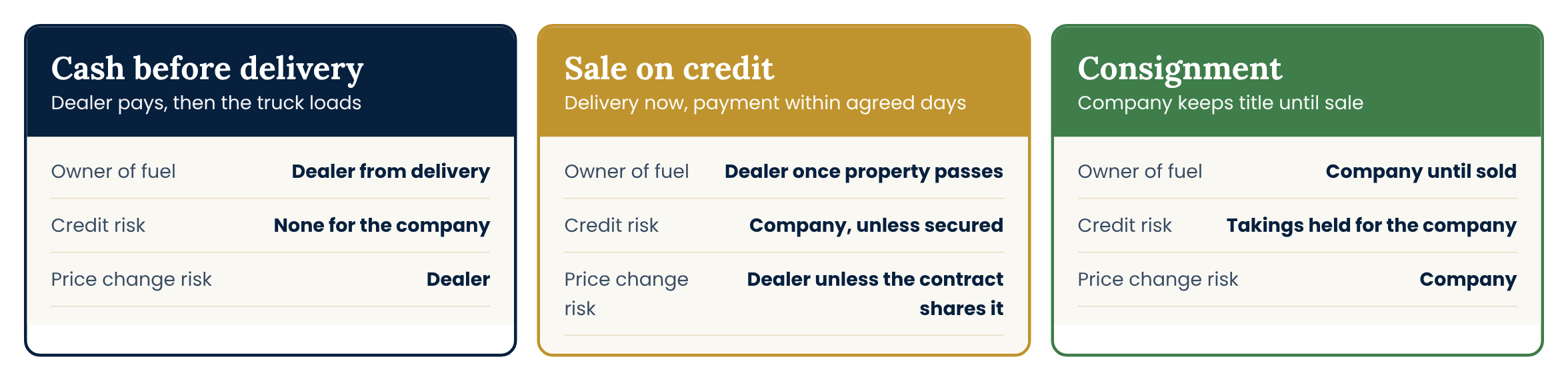
Figure 1. 3 ways to finance dealer stock
II. Foundational concepts
2.1 Cash before delivery
The simplest structure is payment before loading. The dealer pays the company, the company loads the truck, and the dealer owns the fuel from delivery. The company carries no credit risk, but the dealer needs cash for every order.
2.2 Sale on credit
Under a sale on credit, the company delivers fuel and the dealer pays within an agreed period. Property passes when the parties intend, which is usually on delivery or discharge unless the contract reserves title.4 The company becomes a creditor for the price, and its protection is whatever security it took. Vivo Energy pleaded that it had supplied products valued at KSh 48,000,000 on credit terms, that the customer had failed to pay within the stipulated timelines, and that a later payment of KSh 1,100,000 reduced the debt to KSh 46,900,000.5
2.3 Consignment
Under a consignment or agency model, the company delivers fuel to the station but keeps ownership until the fuel is sold to the motorist. The dealer sells as agent, banks the takings, deducts its commission and remits the balance. The company carries the risk of loss and of price changes, and the dealer is a fiduciary for the takings rather than a debtor for the price. The first edition in this series explains how this choice affects ownership of the fuel, and the fourth explains how it may affect the legality of price control.
2.4 Working capital and minimum stocks
Many agreements require the dealer to keep a working capital or minimum stock. These obligations protect the company and the brand, because a dry station damages both. They also increase the amount the dealer must finance, and they interact with the duty of the company to supply. In Njane the High Court held that the company could not rely on bounced cheques to excuse its supply failures at other times, particularly because it held a bank guarantee.6
III. Legal framework
3.1 Sale of Goods Act
Property in specific or ascertained goods passes when the parties intend, and the seller may reserve the right of disposal until conditions such as payment are fulfilled.7 Unless otherwise agreed, risk passes with property.8 An unpaid seller that is still in possession has a lien for the price, and may stop goods in transit if the buyer becomes insolvent.9 Once the fuel is in the tanks of the dealer and mixed with other stock, these remedies are of little use.
3.2 Movable Property Security Rights Act
The Movable Property Security Rights Act 2017 allows a security right to be created over movable assets, including inventory and receivables, and provides for registration of a notice in an electronic collateral registry. Registration makes the right effective against third parties and fixes its priority against competing creditors.10 An oil company that wants security over the stock and receivables of a dealer, or over equipment the dealer owns, can take it under the Act, but must register to protect it.
3.3 Guarantees
A bank guarantee is a separate undertaking by the bank to pay on demand in accordance with its terms. The bank is generally obliged to pay against a demand that complies with the guarantee, without inquiring into the underlying dispute, save in cases of clear fraud. The dealer that disputes the debt must usually pay first under the guarantee and argue later, as Njane illustrates.11 A personal guarantee by a director makes the guarantor liable for the debt of the dealer company if it defaults.
3.4 Pricing regime
The Authority publishes maximum wholesale and retail prices each month, and the new prices take effect on the 15th.12 A retailer that sells above the maximum commits an offence that carries a fine of not less than KSh 10,000,000, imprisonment of not less than 5 years, or both.13 Hoarding by the owner or operator of a facility is also an offence.14 The retail regulations prohibit the retail licensee from selling above the set price and from hoarding.15
3.5 Insolvency
A creditor may present a petition to liquidate a company that is unable to pay its debts, and a common way to establish inability is a statutory demand that remains unpaid.16 A secured creditor is paid from its collateral ahead of unsecured creditors, which is why the registration of security matters.17
IV. Price changes and stock
4.1 How price changes affect stock
A dealer that owns its stock bought it at a cost based on the old price. If the maximum retail price falls on the 15th, the dealer must sell from that day at or below the new maximum, even though it paid the higher price. If the price rises, it sells stock bought cheaply at the new higher price. The effect can be large. In October 2024 the Authority announced reductions of KSh 8.18 for super petrol, KSh 3.54 for diesel and KSh 6.93 for kerosene per litre, and the Ministry then warned that it would act against stations that had failed or refused to lower their prices.18
4.2 Temptations on both sides
The pricing cycle creates incentives that the law forbids. Before an expected increase, there is an incentive to hold back stock and sell it after the 15th. In April 2026 the Authority warned that some oil marketing companies were deliberately holding back sales to independent retailers in anticipation of a price increase, and described the conduct as hoarding under section 99(1)(k).19 After a decrease, there is an incentive to keep selling at the old price until old stock runs out, which is an offence under section 99(1)(n).20 A dealer cannot defend overpricing by pointing to its stock cost.
4.3 Allocating gains and losses
Because the dealer cannot lawfully pass a loss on to the motorist, the contract must decide who bears it. Under consignment, the company bears it. Under a sale, the dealer bears it unless the agreement provides a price protection credit, a stock revaluation mechanism or a rule that deliveries close to the 15th are priced at the new rate. In Njane the dealer complained that the company had cut pump prices without 30 days notice. The High Court held that this was not a breach of contract because the offer letter had no such term, although it found the conduct inconsistent with good faith and fair trading.21 The lesson is that an allocation that is not written down will not be implied.
4.4 State stabilisation
When the State has used public funds to hold prices below the cost based level, oil marketing companies have carried the cost until compensated. In 2023 Vivo Energy disclosed that the debt owed to it by the government under the stabilisation scheme had risen to KSh 21,000,000,000.22 Whether and how such compensation should flow through to dealers that bore part of the margin pressure is a matter for the dealer agreement, which rarely addresses it.
Table 1. Who bears the effect of a monthly price change
| Structure | Price falls | Price rises | Key legal limit |
|---|---|---|---|
| Cash before delivery | Dealer bears loss on old stock | Dealer gains on old stock | Must sell at or below new maximum |
| Sale on credit | Dealer bears loss unless the contract gives a credit | Dealer gains unless the contract claws it back | Must not hoard before a rise |
| Consignment | Company bears loss | Company gains | Company must price within the cap |
| Any structure | Overpricing to recover loss is an offence | Withholding sales before a rise is an offence | Petroleum Act s 99(1)(k) and (n) |
V. Security in practice
5.1 Bank guarantees and deposits
Bank guarantees and cash deposits are the most common security. They are easy to enforce, and the company can call on them without first proving the debt in court. Their weakness for the dealer is that the company may call them during a dispute, leaving the dealer to recover the money later. Their weakness for the company is that their amount is fixed, while the exposure grows with volumes and prices. In Njane the guarantee of KSh 3,500,000 was small against monthly stocks of 350,000 litres.23
5.2 Retention of title
A clause that keeps title in the company until payment can protect the company if the dealer fails while the fuel is still identifiable. Fuel is usually mixed with other fuel in the tanks and sold within days, so the clause is often of limited use in practice. A clause that extends to the proceeds of sale is more valuable but may be treated as creating a security right that must be registered to be effective against third parties.24 Kenyan courts have not settled how the Act applies to retention of title in fuel supply.
5.3 Security over inventory and receivables
A security right over the inventory and receivables of a dealer, registered under the Act, can give an oil company priority over other creditors, including banks that later lend to the dealer.25 Inventory turns over quickly, so the security agreement should cover future inventory and proceeds. A dealer that has already given security over its assets to its bank may need the consent of the bank, and the priority between the bank and the company will depend on the order of registration.
5.4 Equipment and premises
Where the company owns the station and equipment, it already has practical security, because it can repossess the site. Where the dealer owns them, a company that lends for equipment may take a security right over the equipment or a charge over the land, each with its own registration.26
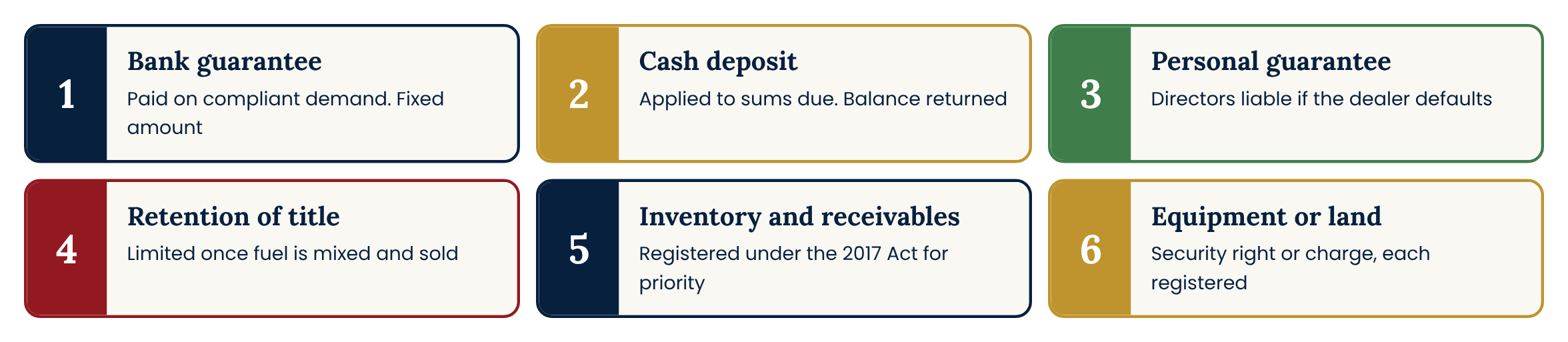
Figure 2. Security options for dealer credit
VI. Recovery and defences
6.1 Recovery
An oil company that is owed money first calls on any guarantee or deposit. For the balance, it may sue and apply for summary judgment where the defendant has no real defence.27 In the Vivo Energy case, the defendant argued in an affidavit that summary judgment is available only in clear cases where no argument is required, and the court encouraged the parties to settle and directed them to report any settlement within 21 days.28 Where the debtor is insolvent, a statutory demand and a liquidation petition are available, but an unsecured creditor may recover little.29
6.2 Defences of dealers
Dealers resist claims for the price with several defences. They dispute short deliveries, as the dealer in Njane successfully did for KSh 2,302,575.47.30 They dispute quality, relying on the conditions implied by the Sale of Goods Act.31 They dispute charges that were not agreed or that exceed the approved margins, a point strengthened by the 2025 findings of the regulator.32 They counterclaim for losses caused by supply failures or equipment breakdowns.33 And where the agreement contains an arbitration clause, they may seek a stay of the court action.34
6.3 Interest and costs
Interest on a debt depends on the contract and, where the contract is silent, on the discretion of the court. In Janevams the Court of Appeal set aside an interest rate of 35 per cent that had no evidential basis and substituted court rates.35 An agreement that provides a clear rate of interest on overdue sums avoids that argument.
VII. Open legal questions
7.1 Retention of title and registration
Whether a retention of title clause in a fuel supply agreement must be registered under the Movable Property Security Rights Act to bind a liquidator or a secured lender has not been decided by a Kenyan appellate court.36
7.2 Stock losses on price falls
Whether a dealer can recover from an oil company a loss on old stock caused by a price fall, where the company delayed delivery so that the stock arrived just before the 15th, is an open question. The answer will depend on the contract and on whether a court implies a duty to deliver within a reasonable time.
7.3 Calling security during a dispute
Whether a dealer may restrain an oil company from calling a guarantee while a genuine dispute about the debt is pending is uncertain. The general principle favours payment under the guarantee, and a court will intervene only in narrow circumstances.
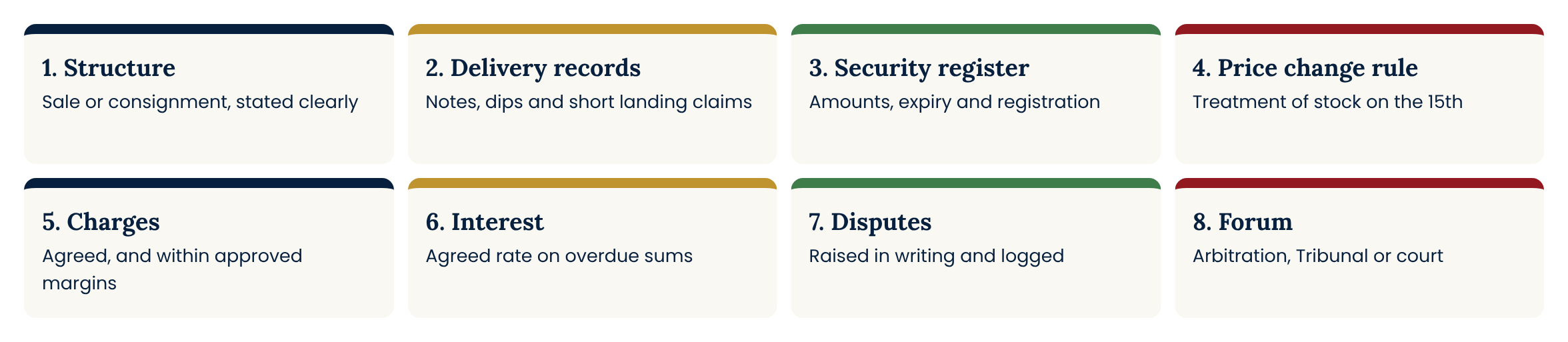
Figure 3. A credit file for every dealer
VIII. Questions every participant should answer
Who owned the stock and when? The agreement should state whether the structure is sale or consignment, when property and risk pass, and how deliveries are measured.37
What security does the creditor hold? The company should know the amount and expiry of every guarantee, whether its security rights are registered, and their priority.38
How are price changes and losses shared? The agreement should state how stock on hand on the 15th is treated when prices rise or fall, consistently with the prohibitions on hoarding and overpricing.39
8.1 Practical guidance for oil marketing companies
Companies should match the security to the exposure and review it when volumes or prices change. They should register security rights under the Act, record deliveries accurately, and ensure that their charges are consistent with the approved margins. They should write the treatment of stock on price changes into the agreement.
8.2 Practical guidance for dealers
Dealers should understand whether they own their stock, plan orders around the pricing cycle without withholding sales, and keep dip records and delivery notes for every load. They should not sell above a new lower maximum to recover a loss. If they dispute a debt, they should put the dispute in writing at once and keep the evidence.
8.3 Practical guidance for banks
Banks that lend to dealers should search the collateral registry for prior security rights of oil companies, and should consider whether a guarantee issued for the dealer may be called on short notice during a commercial dispute.
IX. Conclusion
Stock is the lifeblood of a petrol station and the main source of financial risk between a dealer and an oil company. The law of sale of goods decides who owns the fuel, the law of security decides who is paid first when things go wrong, and the pricing regime decides that neither party may pass its losses on to the motorist. Parties who answer the 3 questions in this edition in their agreement, rather than in court, will avoid most of the disputes described here.
Benson Odiwuor is an Advocate of the High Court of Kenya based in Nairobi, whose practice focuses on dispute resolution in the regulated industries, including mining, oil and gas, banking and project finance. He is the editor of The BOLD, Benson Odiwuor’s Legal Digests, a legal newsletter on dispute strategies and legal developments in the regulated industries of Kenya. Subscribe to The BOLD here.
For inquiries, contact the author at info@bensonodiwuor.com.
References
- Njane t/a Argwings Twin Service Station & another v Total Kenya Limited & another (Civil Case 433 of 2010) [2025] KEHC 14898 (KLR) paras 3, 5 and 33 <https://new.kenyalaw.org/akn/ke/judgment/kehc/2025/14898/eng@2025-10-24>. ↩
- ‘Court Allows Vivo Energy, Mombasa Firm to Negotiate Sh47 Million Debt Row’ Daily Nation (Nairobi, 2025) <https://mwananchi.co.tz/kenya/business/court-allows-vivo-energy-mombasa-firm-to-negotiate-sh47-million-debt-row--5024390>. ↩
- Njane (n 1) paras 4 and 166. ↩
- Sale of Goods Act (Cap 31) ss 19 to 21 <https://new.kenyalaw.org/akn/ke/act/1930/33/eng@1964-11-03>. ↩
- ‘Court Allows Vivo Energy, Mombasa Firm to Negotiate’ (n 2). ↩
- Njane (n 1) paras 92 to 96. ↩
- Sale of Goods Act ss 19 to 21. ↩
- Sale of Goods Act s 22. ↩
- Sale of Goods Act ss 39, 41 and 44. ↩
- Movable Property Security Rights Act 2017 (No 13 of 2017). ↩
- Njane (n 1) paras 4 and 166. ↩
- Petroleum (Pricing) Regulations 2022 (LN 192 of 2022) <https://new.kenyalaw.org/akn/ke/act/ln/2022/192>; ‘Petrol Station Dealers Face Sanctions over Illegal High Prices’ Business Daily (Nairobi, 17 October 2024) <https://www.businessdailyafrica.com/bd/corporate/industry/petrol-dealers-face-sanctions-over-illegal-high-prices-4796784>. ↩
- Petroleum Act 2019 (No 2 of 2019), now Cap 308 of the Laws of Kenya s 99(1)(n) <https://new.kenyalaw.org/akn/ke/act/2019/2>. ↩
- Petroleum Act s 99(1)(k). ↩
- Petroleum (Retail Dispensing Site Construction and Licensing) (No 2) Regulations 2025 (LN 188 of 2025) reg 15(1)(f) and (g) <https://epra.go.ke/extras/legal/web/uploads/6a5f3964c4b13_The%20Petroleum%20(Retail%20Dispensing%20Site%20Construction%20and%20Licensing)(No%202)%20Regulations.pdf>. ↩
- Insolvency Act 2015 (No 18 of 2015) s 384. ↩
- Insolvency Act; Movable Property Security Rights Act. ↩
- ‘Petrol Station Dealers Face Sanctions’ (n 12). ↩
- ‘EPRA Warns Oil Firms over Fuel Hoarding’ The Star (Nairobi, 8 April 2026) <https://www.the-star.co.ke/news/2026-04-08-epra-warns-oil-firms-over-fuel-hoarding>; Brian Kimani, ‘EPRA Warns Oil Marketers of Ksh.10M Fines over Fuel Hoarding, Price Hikes’ Citizen Digital (Nairobi, 8 April 2026) <https://citizen.digital/article/epra-warns-oil-marketers-of-ksh10m-fines-over-fuel-hoarding-price-hikes-n380398>. ↩
- Petroleum Act s 99(1)(n); ‘Petrol Station Dealers Face Sanctions’ (n 12). ↩
- Njane (n 1) paras 97 and 100. ↩
- ‘State Owes Vivo Energy Sh21 Billion Fuel Subsidy’ Business Daily (Nairobi, 2023) <https://www.businessdailyafrica.com/bd/corporate/companies/state-owes-vivo-energy-sh21-billion-fuel-subsidy--4164804>. ↩
- Njane (n 1) paras 4 and 5. ↩
- Sale of Goods Act s 21; Movable Property Security Rights Act. ↩
- Movable Property Security Rights Act. ↩
- Movable Property Security Rights Act; Land Registration Act 2012 (No 3 of 2012). ↩
- Civil Procedure Rules 2010 Order 36. ↩
- ‘Court Allows Vivo Energy, Mombasa Firm to Negotiate’ (n 2). ↩
- Insolvency Act s 384. ↩
- Njane (n 1) paras 56 and 96. ↩
- Sale of Goods Act ss 15 and 16. ↩
- ‘Oil Majors Overcharging Petrol Station Owners’ Business Daily (Nairobi, 22 May 2025) <https://www.businessdailyafrica.com/bd/corporate/industry/oil-majors-overcharging-petrol-station-owners-5053294>. ↩
- Njane (n 1) paras 92 to 96 and 110 to 111. ↩
- Arbitration Act 1995 (No 4 of 1995) s 6. ↩
- Total (Kenya) Ltd (formerly Caltex Oil (Kenya) Ltd) v Janevams Ltd (Civil Appeal 178 of 2005) [2015] KECA 822 (KLR) <https://new.kenyalaw.org/akn/ke/judgment/keca/2015/822>. ↩
- Movable Property Security Rights Act; Sale of Goods Act s 21. ↩
- Sale of Goods Act ss 19 to 22. ↩
- Movable Property Security Rights Act. ↩
- Petroleum Act s 99(1)(k) and (n). ↩