
Community Consent and Representation in Kenyan Mining. Who Speaks for the Community?
1 November 2026
Before a community can say yes or no to a mine, the law must answer 3 questions. Whose consent is required before mining on community land? Who may negotiate and agree for a community? Who may go to court on its behalf? This edition answers each of them from the law and the decided cases.
| KEY POINTS AT A GLANCE A mineral right over community land may not be granted without consent. For registered community land the consent comes from the body that administers it, and for unregistered community land the Mining Act assigns that role to the National Land Commission. The Community Land Act adds its own rules. An agreement to invest in community land must follow a free and open consultative process, may be made only between the investor and the community, and is valid only if approved by 2 thirds of the adult members at a community assembly attended by 2 thirds of them. Unregistered community land is held in trust by county governments, yet the Mining Act gives the consent role for that land to the National Land Commission. This overlap is one of the least settled questions in mining law. On 29 October 2026 the Environment and Land Court at Siaya held that a prospecting licence does not give automatic access to private land, and barred the grant of a mining licence for a gold project until consent of all affected private landowners is proved and a benefit sharing framework is concluded. Communities often act through committees, elders and representative litigants. The Constitution allows suits on behalf of a group, and the Kwale cases have been brought by representatives of up to 179 residents, but authority to speak for a community must be shown, not assumed. At the regional level, the African Court on Human and Peoples’ Rights has ordered Kenya to respect the right of the Ogiek to give or withhold free, prior and informed consent to development and investment projects on their ancestral land. |
I. Introduction
When a mining company asks a community for permission to mine, it must first answer a question that sounds simple and rarely is. Who is the community, and who may speak for it? A village may have a chief, a council of elders, an elected member of the county assembly, a self help group, a liaison committee formed for the project and a registered community land management committee. Each may claim to represent the community. Each may say something different. An agreement made with the wrong body may later be challenged as made with no one at all.
The question arises at every stage of a mining project. It arises when consent to a mineral right is sought over community land. It arises when benefits are negotiated in a community development agreement and when royalties are allocated to a host community. It arises when compensation and resettlement are agreed. And it arises in court, when a few residents bring a case on behalf of many, or when an operator argues that those before the court have no authority to speak for anyone but themselves.
This edition of The BOLD examines the law that answers those questions. It begins with the basic concepts of community and community land, and the difference between consultation and consent. It then sets out the constitutional and statutory framework under the Mining Act and the Community Land Act, including an unresolved overlap between them. With that foundation in place, it examines the decided cases on consent before mining, on who negotiates benefits, and on who may sue for a community, including the judgment of the Environment and Land Court at Siaya delivered on 29 October 2026. It closes with the regional standard of free, prior and informed consent, the questions a court will ask, and practical guidance for operators, lenders, regulators and communities.
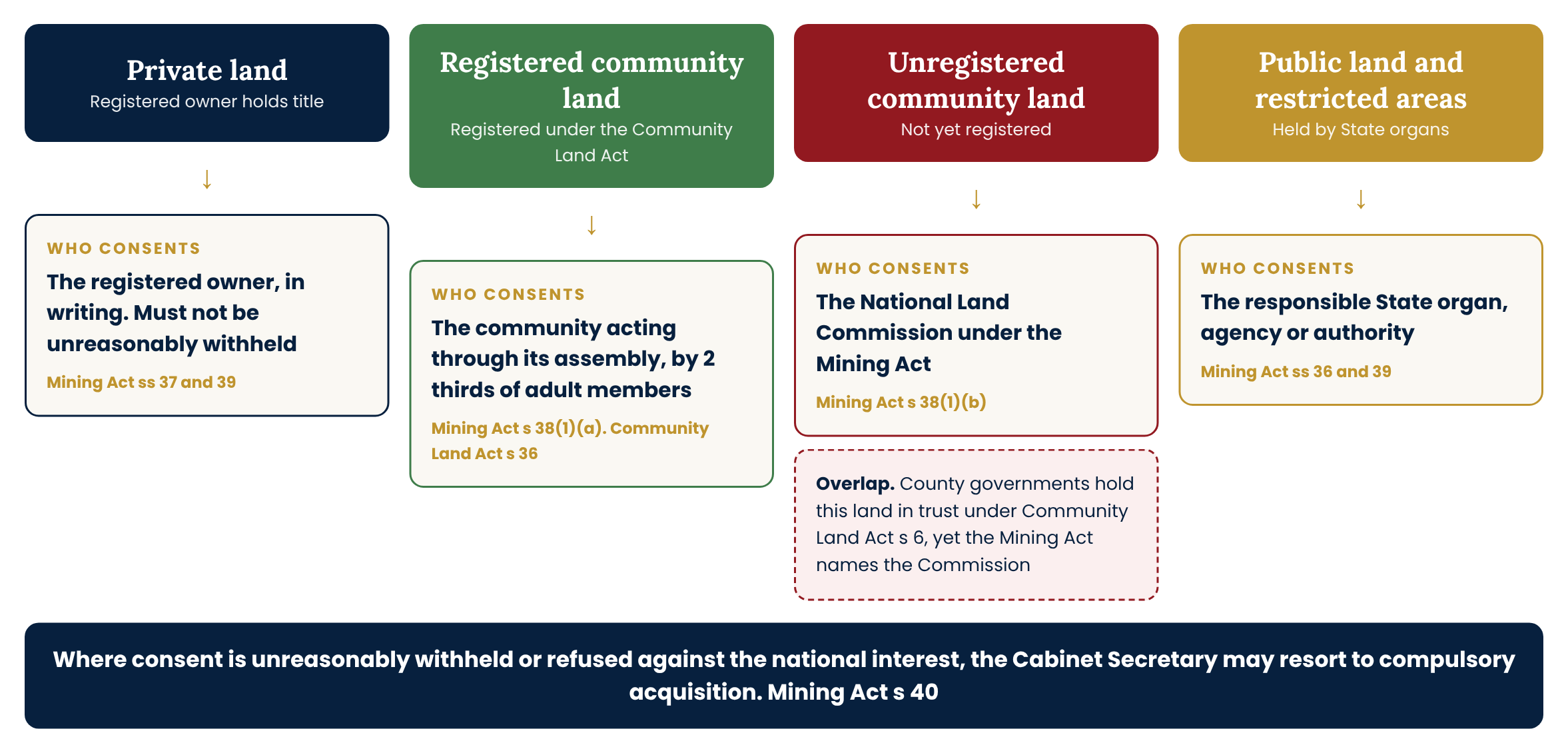
Figure 1. Whose consent is required before a mineral right is granted, by category of land
II. Foundational concepts
2.1 What the law means by community
The Constitution recognises community land as 1 of 3 categories of land, alongside public and private land, and vests it in communities identified on the basis of ethnicity, culture or similar community of interest.1 The Community Land Act gives the idea legal shape. It defines a community as a consciously distinct and organised group of users of community land who are citizens of Kenya and who share common features such as ancestry, culture or a community of interest.2 The definition matters because it requires organisation as well as identity. A group of people who share a place is not, by that fact alone, a community that can hold land or give consent under the Act.
2.2 Categories of land and sources of consent
Because all minerals belong to the people of Kenya and are held by the national government, no landowner can sell or withhold the minerals themselves. What a landowner or community can do is grant or withhold access to the surface. The Mining Act therefore requires consent according to the category of land, as Table 1 shows.
Table 1. Who gives consent to a mineral right, by category of land
| Category of land | Who gives consent | Authority |
|---|---|---|
| Private land | The registered owner, whose consent must not be unreasonably withheld | Mining Act s 37 |
| Registered community land | The authority that administers the community land under the law relating to community land | Mining Act s 38(1)(a). Community Land Act |
| Unregistered community land | The National Land Commission | Mining Act s 38(1)(b) |
| Public land and restricted areas | The responsible State organ, agency or authority | Mining Act s 36 |
Consent is deemed to have been given where the registered owners of community land have entered into a legally binding arrangement with the applicant or the Government allowing mining, or an agreement with the applicant on the payment of adequate compensation.3 Consent given before any change in ownership of the land remains valid for as long as the mineral right subsists.4
2.3 Consultation, participation and consent
These 3 ideas are often used as if they meant the same thing. They do not, and the difference is often decisive. Table 2 explains them.
Table 2. Consultation, participation and consent compared
| Concept | What it requires | Can the community say no? | Source |
|---|---|---|---|
| Public participation | A reasonable opportunity for those affected to be informed and heard, and good faith consideration of their views | No. The decision maker must consider the views but need not follow them | Constitution arts 10 and 69(1)(d). Mui Coal Basin |
| Consent under the Mining Act | The written agreement of the owner or the body that administers community land before a mineral right is granted | Yes, but consent must not be unreasonably withheld, and refusal against the national interest may lead to compulsory acquisition | Mining Act ss 37 to 40 |
| Free, prior and informed consent | Consent given freely, before the project, on full information, through the decision making processes of the community itself | Yes. The community may give or withhold consent | Ogiek (Reparations) |
III. Legal framework
3.1 Constitution
The Constitution establishes participation of the people as a national value, and it obliges the State to encourage public participation in the management, protection and conservation of the environment.5 It protects the right to property, including community property.6 It also requires that a transaction involving the grant of a right or concession for the exploitation of a natural resource be subject to ratification by Parliament where it falls within the classes prescribed by statute.7 Parliament has prescribed those classes, and the Mining Act requires mineral agreements to be submitted to the National Assembly and the Senate for ratification.8
3.2 Community Land Act
The Community Land Act governs how a registered community makes decisions. A registered community has a community assembly consisting of all its adult members. The quorum for decision making is not less than 2 thirds of the assembly. The assembly elects between 7 and 15 of its members to form the community land management committee, and a decision to dispose of or otherwise alienate community land binds the community only if it is supported by at least 2 thirds of the registered adult members.9
Section 36 deals directly with investment in community land, which includes mining. Figure 2 sets out its thresholds.
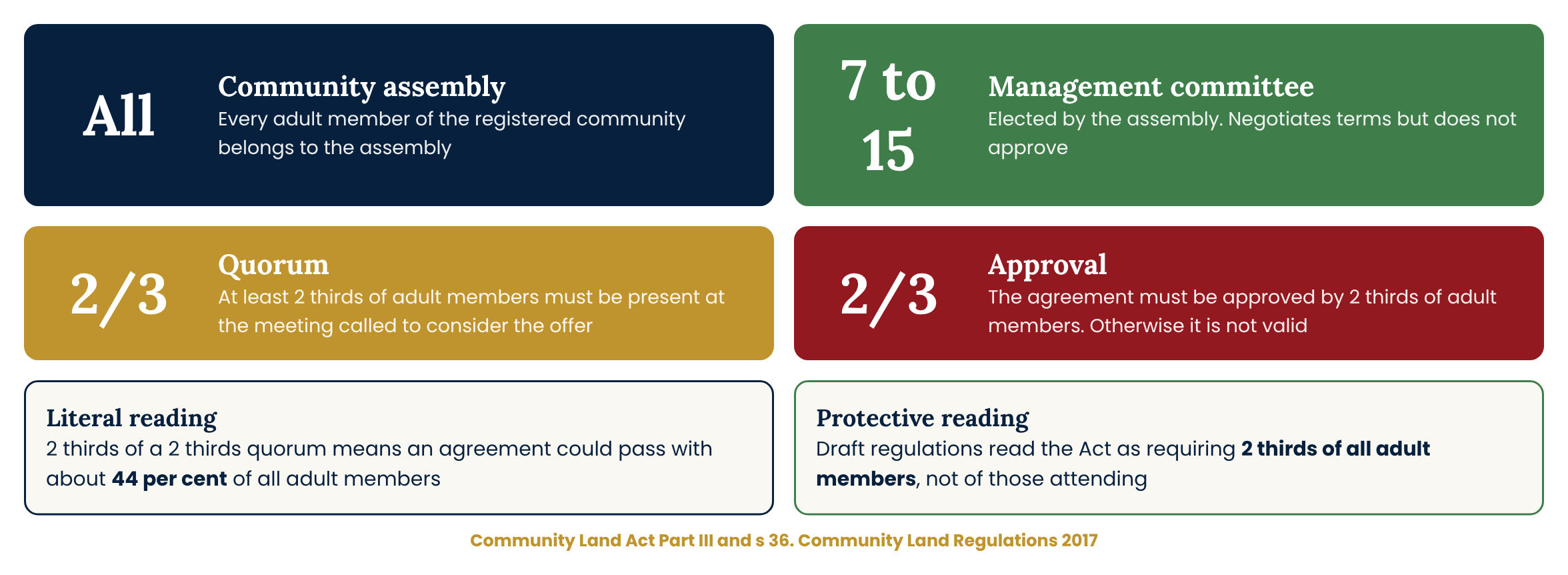
Figure 2. Decision thresholds for an investment agreement over registered community land
An agreement relating to investment in community land must be made after a free, open consultative process and must address an environmental, social, cultural and economic impact assessment, stakeholder consultation and involvement of the community, continuous monitoring of the impact of the investment, payment of compensation and royalties, rehabilitation of the land upon completion or abandonment, mitigation of negative effects, and capacity building and transfer of technology.10 The agreement may be made only between the investor and the community.11 No such agreement is valid unless it is approved by 2 thirds of the adult members at a community assembly meeting called to consider the offer, at which a quorum of 2 thirds of the adult members is present.12 Read literally, the 2 thresholds together could allow an agreement to pass with the support of about 44 per cent of all adult members, although the draft regulations were read as requiring the support of 2 thirds of all adult members rather than 2 thirds of those attending.13 The Community Land Regulations add that the management committee negotiates the terms in the best interests of the community, and that a benefit sharing plan must be approved by 2 thirds of the assembly.14
These provisions answer the question of who speaks for a registered community with unusual precision. It is not the chief, the elders, the committee or a liaison group. It is the assembly of adult members, acting at a properly convened meeting by the prescribed majority. The management committee negotiates, but it does not decide.
3.3 Unregistered community land and an unresolved overlap
Much community land in Kenya has not yet been registered under the Community Land Act. The Act provides that county governments hold all unregistered community land in trust on behalf of the communities for which it is held, that they hold in trust any compensation paid for its compulsory acquisition, that any transaction in relation to it must comply with the Act, and that a county government shall not sell, dispose of, transfer or convert it for private purposes.15 The Mining Act, however, gives the consent role for unregistered community land to the National Land Commission.16
The 2 statutes were enacted in the same year and do not cross refer on this point. An operator seeking consent over unregistered community land therefore faces a choice that the law has not clearly made for it. The prudent course is to treat the requirements as cumulative. Consent should be obtained from the National Land Commission as the Mining Act requires, the county government should be engaged as trustee under the Community Land Act, and the community itself should be consulted in a manner that would satisfy section 36 if the land were registered. An operator that relies on a single consent, from a single body, takes the risk that a court will later treat that body as having lacked authority to give it.
3.4 Mining Act after the licence
The question of who speaks for a community does not end when the mineral right is granted. The holder of a mining licence must conclude a community development agreement with the community, which the regulations require to be prepared by the holder and the representatives of the community. Where several communities are affected, a single agreement may include them all, although a community in a different county may have a separate agreement. Disputes may be referred to the Cabinet Secretary, with an appeal to the Environment and Land Court within 30 days, and approved agreements are published on the website of the Ministry.17 The regulations provide for a community contribution, which in a recent large gold project was described as 1 per cent of the value of gold produced.18
The Mining (Mineral Royalty Sharing) Regulations 2026 add a further layer. They govern the 10 per cent share of royalties payable to host communities, and they require the Ministry to identify and publish beneficiary communities within 30 days of issuing mining licences.19 Identification of the community is therefore no longer a matter of negotiation between operator and residents alone. It is a regulatory act that may itself be challenged.
IV. Consent before mining
4.1 Mui Coal Basin
The leading decision on community involvement before mining arose from the concession of coal deposits in the Mui Basin in Kitui County. Members of the local community, and a gazetted liaison committee, challenged the award of the concession on grounds that included lack of public participation, failure to involve the county government and the absence of parliamentary ratification.20 A bench of 3 judges of the High Court at Machakos dismissed the consolidated petitions on 18 September 2015.21
The judgment nevertheless made important findings. The court held that public participation is an established and justiciable right in Kenya, and it set out principles for assessing it.22 The test is reasonableness, and no single programme can be prescribed. Participation must include access to relevant information. It does not require that everyone give their views, but those most affected should have a greater say, and a programme that deliberately excludes genuine stakeholders is ineffective and unlawful. The views received must be considered in good faith, and the decision maker may not merely go through the motions.23 On the facts, barazas, the liaison committee, delegations and a stakeholder workshop attended by about 300 community representatives met the threshold, subject to continuing engagement.24 The court held that negotiation over natural resources must be done in consultation with the county government, but excused the past lapse because the county government did not exist for much of the process.25 It found that Article 71 did not yet bar the concession because the enabling legislation had not been enacted.26 It directed the State and the concessionaire to continue to engage the community and provide reasonable opportunities for participation during the environmental impact assessment and resettlement.27
Mui Coal Basin is a decision about participation, not consent. It shows that a court will examine the quality of engagement closely, but it does not give the community a veto. It also predates the Mining Act 2016, the Community Land Act 2016 and the ratification statute, each of which has since added requirements that the court did not have to apply.
4.2 Siaya judgment of October 2026
On 29 October 2026 the Environment and Land Court at Siaya delivered judgment in consolidated constitutional petitions challenging a proposed gold project in Ramula and neighbouring areas.28 As reported, the court held that a prospecting licence does not give automatic access to private property. It barred the company from entering, prospecting, drilling, clearing vegetation or excavating on private land in the affected sublocations without the express consent of the registered landowners. It barred the mining authorities from issuing a mining licence on the pending application until documentary evidence of consent from all affected private landowners is provided. It directed that objections to the application be reconsidered afresh, required that a framework agreement on benefit sharing be concluded before any licence is issued, and barred resettlement or displacement of residents except as the Mining Act allows.29 The Ministry stated that the judgment did not cancel, suspend or revoke the prospecting licence, which it said remained valid.30
The judgment applies section 37 of the Mining Act with full force at the prospecting stage, and it treats consent as a fact that must be proved by documents, landowner by landowner. It also links consent to benefit sharing, so that the community framework must be in place before the mining licence is granted. The judgment is recent and may be appealed, and this edition does not comment on the underlying dispute. Its reasoning, however, will be relied on in every similar case until an appellate court says otherwise.
4.3 Consent is not a formality
The principle that a mineral right does not override the consent of the landowner is not new. In an earlier dispute under the repealed Mining Act, involving a ranch in Taita Taveta, the Court of Appeal treated as clearly arguable the proposition that the Minister could not send prospectors onto land without the consent of the owner.31 Nearly 2 decades later, in a dispute over the same ranch, the Environment and Land Court held that the Ministry had illegally issued a mining permit that resulted in trespass and damage to the land, cancelled the permit and awarded the landowner about KSh 28 million.32 The lesson is that a permit issued over land without the required consent is vulnerable to cancellation, and that the regulator as well as the miner may be liable.
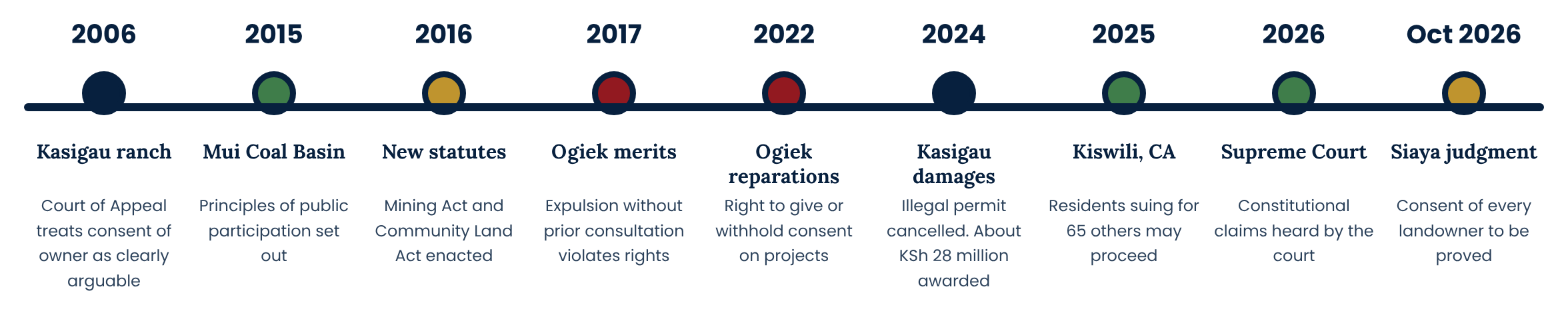
Figure 3. Community consent and representation in the courts, 2006 to 2026
V. Who negotiates for the community
5.1 Liaison committees and their limits
Mining projects commonly create liaison committees to manage relations with host communities. Such committees can be valuable channels of communication. They are not, without more, the community. In Mui Coal Basin the court held that the absence of the liaison committee from the negotiation of the benefit sharing agreement did not negate the participation that had occurred, which shows that a court will look at engagement as a whole rather than at any single body.33 In Mangeli, residents who had referred their compensation demands to a local liaison committee argued before the court that the committee was partisan and that its decisions were void.34 An operator that relies on agreements made with a committee whose mandate is contested may find those agreements reopened.
5.2 Representatives of the community
The Community Development Agreement Regulations require the agreement to be prepared by the holder and the representatives of the community, but the question of how those representatives are chosen, and how their mandate is proved, is answered most clearly by the Community Land Act for registered communities. For registered community land, the assembly decides and the management committee negotiates. For unregistered land, and for communities defined by royalty sharing regulations rather than by land, the law is less precise, and the risk that an agreement will be challenged by a rival group is correspondingly greater.
Table 3 sets out the bodies that commonly claim to speak for a community in a mining project, and the legal basis, if any, for their authority.
Table 3. Who claims to speak for a community, and on what authority
| Body | Legal basis for authority | Risk if relied on alone |
|---|---|---|
| Community assembly of a registered community | Community Land Act Part III and s 36. Decides by 2 thirds of adult members | Low, if properly convened and recorded |
| Community land management committee | Elected by the assembly. Negotiates terms in the best interests of the community | Moderate. It negotiates but does not approve investment agreements |
| County government | Trustee of unregistered community land under Community Land Act s 6 | Moderate. Cannot dispose of the land and must act for the community |
| National Land Commission | Gives consent for unregistered community land under Mining Act s 38(1)(b) | Moderate. Consent may be challenged if the community was not engaged |
| Project liaison committee | Created by the project or by administrative action | High. Mandate frequently contested |
| Chiefs, elders and political leaders | Customary or political standing | High. No statutory authority to bind the community on land |
VI. Who may sue for the community
6.1 Standing under the Constitution
The Constitution gives wide standing to enforce the Bill of Rights. Proceedings may be brought by a person acting on behalf of another who cannot act in their own name, by a person acting as a member of or in the interest of a group or class of persons, by a person acting in the public interest, or by an association acting in the interest of its members.35 Any person may also institute proceedings claiming that the Constitution has been contravened.36 Under the Civil Procedure Rules, where numerous persons have the same interest, one or more of them may, with the permission of the court, sue on behalf of all of them.37
6.2 Representative claims in the Kwale cases
The Kwale litigation shows how these provisions operate in mining disputes. The pollution petition that reached the Supreme Court in 2026 was brought by a resident on his own behalf and on behalf of 65 others.38 A later claim against the same operator was brought by a resident on behalf of 179 others.39 The Mangeli claim was brought on behalf of all owners and squatters in 3 villages affected by mining.40 Each of these forms allows a community, or part of it, to bring a claim that no single member could afford to bring alone.
6.3 Risks of representative litigation
Representative litigation carries risks for both sides. Figure 4 sets out the routes to court and the questions each raises.
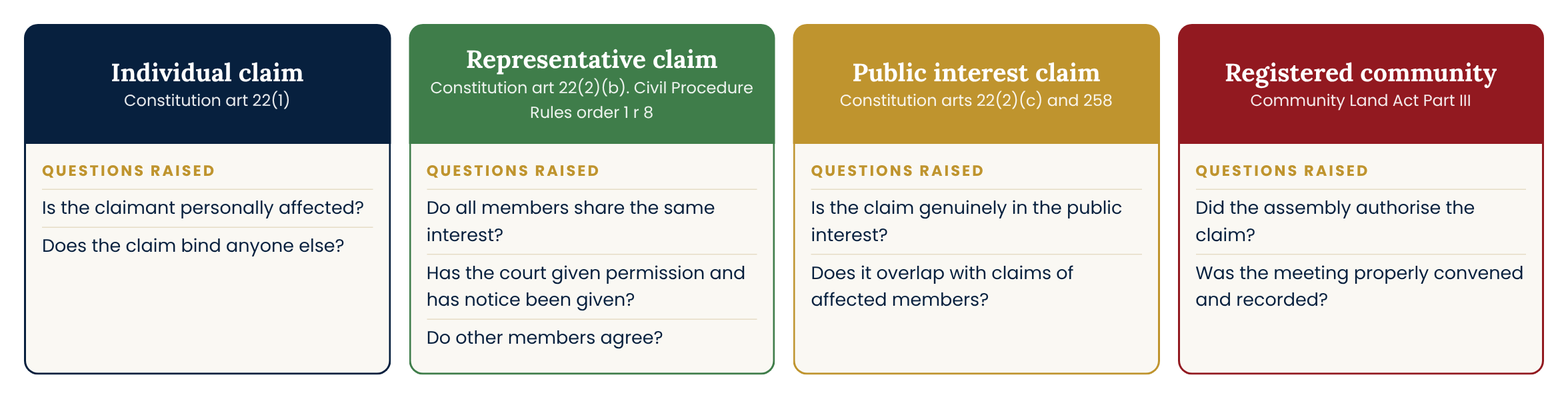
Figure 4. Routes by which a community claim reaches court, and the questions each raises
For claimants, the principal risk is a challenge to authority. An operator may argue that the named petitioners do not represent the community, that other members disagree, or that the claim has been brought without the notice that a representative suit requires. For operators, the principal risk is the opposite. A judgment or settlement in a representative claim may bind only those who were properly represented, so that other members of the community remain free to sue. In Mui Coal Basin, individual petitioners were permitted to withdraw from the consolidated proceedings while the claim continued.41 The lesson for both sides is that the authority of representatives must be established early, recorded in writing and, where the Community Land Act applies, traced to a decision of the assembly.
VII. Regional standard
7.1 Free, prior and informed consent
Kenyan statutes speak of consent and consultation, but the regional human rights system has articulated a stronger standard for indigenous peoples. In its merits judgment of 26 May 2017 the African Court on Human and Peoples’ Rights found that the expulsion of the Ogiek from the Mau Forest without prior consultation violated their rights, including the right to property.42 In its reparations judgment of 23 June 2022 the Court ordered Kenya to adopt all necessary measures to ensure that the Ogiek are effectively consulted, in accordance with their traditions, and that their right to give or withhold their free, prior and informed consent is respected in relation to any development, conservation or investment project on Ogiek ancestral land. It also ordered payment of KSh 57,850,000 for material prejudice and KSh 100,000,000 for moral prejudice into a community development fund.43
In a compliance order following a hearing on 4 June 2025, the Court found evidence that major decisions affecting the Ogiek had been taken without prior, meaningful consultation, and held that its orders on consultation and non repetition had not been fully implemented.44
7.2 Relevance to mining
The Ogiek judgments concern conservation and land, not mining, and they apply to a people recognised as indigenous. Their significance for mining lies in the standard they set. Where a mining project affects the ancestral land of a community that may claim indigenous status, the community will invoke the right to give or withhold consent, and Kenyan courts may be asked to read the Mining Act and the Community Land Act consistently with the obligations that the African Court has found binding on Kenya. Lenders that apply international performance standards will often require consent of this kind in any event.
VIII. Next round
8.1 Questions a court will ask
Large scale gold projects in western Kenya, renewed interest in rare earths and new royalty sharing rules mean that questions of community consent and representation will reach the courts with increasing frequency. Any court is likely to ask the questions in Table 4.
Table 4. Questions that any court is likely to ask about community consent and representation
| Question | What the court will look for | Authority |
|---|---|---|
| Category of land | Is the land private, registered community land or unregistered community land, and has the correct consent been obtained? | Mining Act ss 37 and 38. Community Land Act s 6 |
| Proof of consent | Is consent proved by documents, owner by owner or by a resolution of the assembly? | Siaya judgment (2026). Community Land Act s 36(3) |
| Quality of process | Was there access to information, inclusion of those most affected and good faith consideration of their views? | Constitution arts 10 and 69(1)(d). Mui Coal Basin |
| Authority of representatives | Did those who negotiated or sued have a mandate from the community? | Community Land Act Part III. Constitution art 22(2). Civil Procedure Rules order 1 r 8 |
| Benefits | Is there a community development agreement or benefit sharing framework, and were beneficiaries properly identified? | Community Development Agreement Regulations 2017. Royalty Sharing Regulations 2026 |
8.2 What each party should do
Table 5. Practical guidance drawn from the law and the decided cases
| Party | What the law and the cases counsel |
|---|---|
| Operators | Identify the category of every parcel before entering it. Obtain written consent from each private owner and, for registered community land, a resolution of the assembly passed with the required quorum and majority. For unregistered community land, obtain the consent of the National Land Commission and engage the county government and the community as well. Do not rely on liaison committees or leaders as a substitute for the decision of the community |
| Lenders and investors | Verify consent documents as part of due diligence, parcel by parcel and community by community. Ask how representatives were chosen. Where the land may be ancestral land of an indigenous community, apply the standard of free, prior and informed consent |
| Ministry, National Land Commission and county governments | Require documentary proof of consent before granting mineral rights. Coordinate the roles of the Commission and county governments over unregistered community land. Publish identification of beneficiary communities promptly and with reasons |
| Communities | Register community land where possible, so that the assembly can decide with clear authority. Keep minutes of every meeting at which a project is discussed. Choose representatives formally and record their mandate. Where a claim is brought, name representatives and give notice to those on whose behalf it is brought |
IX. Conclusion
The law has moved a long way from the assumption that a mining licence, once issued by the State, entitles its holder to enter any land within its boundaries. The Mining Act requires consent according to the category of land. The Community Land Act defines with precision how a registered community decides, and requires an investment agreement to be approved by the community itself. The courts have insisted that consent be proved, that participation be genuine, and that the authority of those who speak for a community be shown.
What remains unsettled is the position of the many communities whose land is not yet registered, where the Mining Act and the Community Land Act point to different bodies, and the extent to which the regional standard of free, prior and informed consent will shape domestic law. Until Parliament or the appellate courts resolve those questions, the safest course for every party is the same. Operators should obtain consent from every body that may have authority to give it. Communities should organise themselves so that their decisions are clear and recorded. And everyone should remember that, in law, a community speaks through its members, and not through whoever claims to speak for it.
Benson Odiwuor is an Advocate of the High Court of Kenya based in Nairobi, whose practice focuses on dispute resolution in the regulated industries, including mining, oil and gas, banking and project finance. He is the editor of The BOLD, Benson Odiwuor’s Legal Digests, a legal newsletter on dispute strategies and legal developments in the regulated industries of Kenya. Subscribe to The BOLD here.
For inquiries, contact the author at info@bensonodiwuor.com.
References
- Constitution of Kenya 2010 arts 61 and 63(1). ↩
- Community Land Act 2016 (No 27 of 2016) s 2 <https://new.kenyalaw.org/akn/ke/act/2016/27/eng@2022-12-31>. ↩
- Mining Act 2016 (No 12 of 2016), now Cap 306 of the Laws of Kenya s 38(2) <https://new.kenyalaw.org/akn/ke/act/2016/12/eng@2022-12-31>. ↩
- Mining Act 2016 s 38(3). ↩
- Constitution of Kenya 2010 arts 10(2)(a) and 69(1)(d). ↩
- Constitution of Kenya 2010 arts 40 and 63. ↩
- Constitution of Kenya 2010 art 71. ↩
- Natural Resources (Classes of Transactions Subject to Ratification) Act 2016; Mining Act 2016 s 117(5). ↩
- Community Land Act 2016 pt III. ↩
- Community Land Act 2016 s 36(1). ↩
- Community Land Act 2016 s 36(2). ↩
- Community Land Act 2016 s 36(3). ↩
- ‘The Community Land Act in Kenya: Opportunities and Challenges for Communities’ AfricanLII (9 June 2018) <https://africanlii.org/article/20180609/community-land-act-kenya-opportunities-and-challenges-communities>. ↩
- Community Land Regulations 2017 (LN 279 of 2017). ↩
- Community Land Act 2016 s 6(1), (2), (6) and (8). ↩
- Mining Act 2016 s 38(1)(b). ↩
- Mining (Community Development Agreement) Regulations 2017. ↩
- ‘Firm Discovers Sh683bn Gold in Kakamega’ The Star (Nairobi, 13 November 2025) <https://www.the-star.co.ke/news/2025-11-13-firm-discovers-sh683bn-gold-in-kakamega>. ↩
- Mining (Mineral Royalty Sharing) Regulations 2026 (LN 3 of 2026) <https://new.kenyalaw.org/akn/ke/act/ln/2026/3/eng@2026-01-29>; Tania Wanjiku, ‘MPs Challenge Mining Revenue Split as Communities Demand Bigger Share’ Radio Generation (15 April 2026) <https://radiogeneration.co.ke/news/83761/mps-challenge-mining-revenue-split-as-communities-demand-bigger-share?amp=1>. ↩
- Mui Coal Basin Local Community & 15 others v Permanent Secretary Ministry of Energy & 17 others (Constitutional Petitions 305 of 2012, 34 of 2013 and 12 of 2014, consolidated) [2015] eKLR paras 1 to 6 and 79 <https://judicialportal.informea.org/sites/default/files/court-case/In%20the%20Matter%20of%20the%20Mui%20Coal%20Basin%20Local%20Community.pdf>. ↩
- Mui Coal Basin (n 20). ↩
- Mui Coal Basin (n 20) paras 88 and 96 to 97. ↩
- Mui Coal Basin (n 20) para 97. ↩
- Mui Coal Basin (n 20) para 98. ↩
- Mui Coal Basin (n 20) paras 104 to 106. ↩
- Mui Coal Basin (n 20). ↩
- Mui Coal Basin (n 20). ↩
- Judgment of the Environment and Land Court at Siaya of 29 October 2026 in Constitutional Petitions E002 and E003 of 2025 (consolidated), concerning the Ramula and Mwibona gold project; ‘Legal Tussles Cloud Gold Exploration in Siaya and Vihiga Counties’ Business Today (Nairobi, October 2026) <https://businesstoday.co.ke/legal-tussles-cloud-gold-exploration-in-siaya-and-vihiga-counties>. ↩
- ‘Gov’t Defends Shanta Gold’s Mining Licence after Siaya Court Ruling’ Citizen Digital (Nairobi, 30 October 2026) <https://citizen.digital/article/govt-defends-shanta-golds-mining-licence-after-siaya-court-ruling-n393062>; ‘Legal Tussles Cloud Gold Exploration’ (n 28). ↩
- ‘Gov’t Defends Shanta Gold’s Mining Licence’ (n 29). ↩
- Kasigau Ranching (DA) Ltd v Kihara & 4 others [2006] KLR; J Osogo Ambani (ed), Drilling Past the Resource Curse? Essays on the Governance of Extractives in Kenya (ICJ Kenya 2018) <https://icj-kenya.org/wp-content/uploads/2018/04/Drilling-Past-the-Resource-Curse-Book.pdf>. ↩
- Kasigau Ranching (DA) Company Limited v Cabinet Secretary, Ministry of Petroleum & Mining & 3 others; Ngilorit (Interested Party) (Environment and Land Case 159 of 2019) [2024] KEELC 6336 (KLR) <https://new.kenyalaw.org/akn/ke/judgment/keelc/2024/6336/eng@2024-10-02>; ‘State, Miner to Pay a Rancher Sh28m for Damages from Illegal Mining’ Business Daily (Nairobi, 9 October 2024) <https://www.businessdailyafrica.com/bd/corporate/companies/state-miner-to-pay-rancher-sh28m-damages-from-illegal-mining-4789612>. ↩
- Mui Coal Basin (n 20) para 98. ↩
- Mangeli & 4 others v Base Titanium Limited (Land Case E003 of 2023) [2024] KEELC 3813 (KLR) para 2 <https://new.kenyalaw.org/akn/ke/judgment/keelc/2024/3813/eng@2024-04-12>. ↩
- Constitution of Kenya 2010 art 22(2). ↩
- Constitution of Kenya 2010 art 258. ↩
- Civil Procedure Rules 2010 order 1 r 8. ↩
- Base Titanium Limited v Kiswili (on behalf of 65 others) & 3 others (Civil Appeal E142 of 2022) [2025] KECA 1330 (KLR) <https://new.kenyalaw.org/akn/ke/judgment/keca/2025/1330/eng@2025-07-18>; Base Titanium Limited v Michael Kiswili & 3 others (SC Petition E040 of 2025) (Supreme Court of Kenya, 15 May 2026), Media Summary <https://supremecourt.judiciary.go.ke/wp-content/uploads/2026/06/Base-Titanium-Limited-v-Michael-Kiswili-and-3-others-SC-Petition-No.-E040-of-2025-Media-Summary-15th-May-2026-.pdf>. ↩
- Mutisya (suing on behalf of 179 others) v Base Titanium Kenya Limited (Environment and Land Case E063 of 2024) [2026] KEELC 263 (KLR) <https://new.kenyalaw.org/akn/ke/judgment/keelc/2026/263/eng@2026-01-27>. ↩
- Mangeli (n 34). ↩
- Mui Coal Basin (n 20) para 6. ↩
- African Commission on Human and Peoples’ Rights v Republic of Kenya (Merits) App No 006/2012 (African Court on Human and Peoples’ Rights, 26 May 2017). ↩
- African Commission on Human and Peoples’ Rights v Republic of Kenya (Reparations) App No 006/2012 (African Court on Human and Peoples’ Rights, 23 June 2022) <https://reparations.qub.ac.uk/assets/uploads/62babafd8d467689318212.pdf>; Kenya Human Rights Commission, ‘Push for Implementation of Ogiek Judgments’ (2024) <https://khrc.or.ke/wp-content/uploads/2024/02/Letter-2_-Push-for-Implementation-of-Ogiek-Judgments.docx.pdf>; African Court on Human and Peoples’ Rights, Order (Compliance) Summary, African Commission on Human and Peoples’ Rights v Republic of Kenya (2025) <https://www.african-court.org/cpmt/storage/app/uploads/public/693/151/357/693151357d444234883126.pdf>. ↩
- Compliance Order Summary (n 43). ↩