
Artisanal Miners and the Law in Kenya. Licensed to Dig
1 November 2026
The Mining Act 2016 made artisanal mining lawful. 10 years on, many miners still dig without permits. The law answers 3 questions. Is there a valid permit, and over what land? Who owns the land, and has consent or compensation been settled? What happens when a larger right is granted over the same ground? This edition answers each of them from the law and the disputes.
| KEY POINTS AT A GLANCE The Mining Act 2016 recognised artisanal mining expressly as a lawful activity. It created the artisanal mining permit, county mining offices and an Artisanal Mining Committee in every county. An artisanal mining permit may be granted only to a citizen of Kenya, alone or as a member of a cooperative, association or group. It lasts 3 years, may be renewed once, and may be converted into a small scale mining permit. A permit cannot be granted over land already subject to another mineral right. Outside a designated artisanal area, the application must carry the consent of the landowner. Inside a designated area, the holder must compensate the landowner. For most of the period since 2016 the system did not work in practice. A moratorium on new mineral rights ran from 2019 to October 2023, the committees were gazetted only in 2024, and many miners still work without permits. The gap between the law and practice now shows in disputes over large projects. In Kakamega, artisanal miners and a licence applicant claim the same ground. In Nandi, an artisanal permit and a mining licence covered the same land and were both suspended in 2023. Every artisanal operation turns on 3 questions. Is there a valid permit, and over what land? Who owns the land, and has the law on consent or compensation been met? What happens when a larger right is granted over the same ground? |
I. Introduction
Artisanal miners work across Kenya, in the gold and gemstone fields of Migori, Kakamega, Vihiga, Siaya, Narok, Nandi, Turkana, West Pokot, Marsabit and Taita Taveta, and in many other places where minerals lie close to the surface.1 In Migori County alone, a study published in April 2025 estimated that some 158,000 people work in artisanal and small scale gold mining.2 For most of the history of mining in Kenya, these miners worked outside the law. The repealed Mining Act made no specific provision for artisanal mining.
The Mining Act 2016 changed that. It recognised artisanal mining, created a permit for it and placed its administration in the counties. 10 years later, the promise of that reform is still being worked out. A moratorium on new mineral rights ran from 2019 until October 2023. The county committees that advise on artisanal permits were gazetted only in 2024. The government has said that artisanal mining has been decriminalised and that miners in registered cooperatives will receive permits.3 Meanwhile, the arrival of large projects in gold country has brought artisanal miners into direct conflict with licence holders, most visibly in Kakamega.4
This edition of The BOLD explains the law that governs artisanal mining from the ground up. It defines the terms, sets out the statutory framework and the regulations, and describes how the institutions have been set up in practice. It then examines the disputes that show where the system is under strain. It closes with an analysis of the gaps in formalisation and practical guidance for miners, cooperatives, licence holders, county governments and the Ministry.
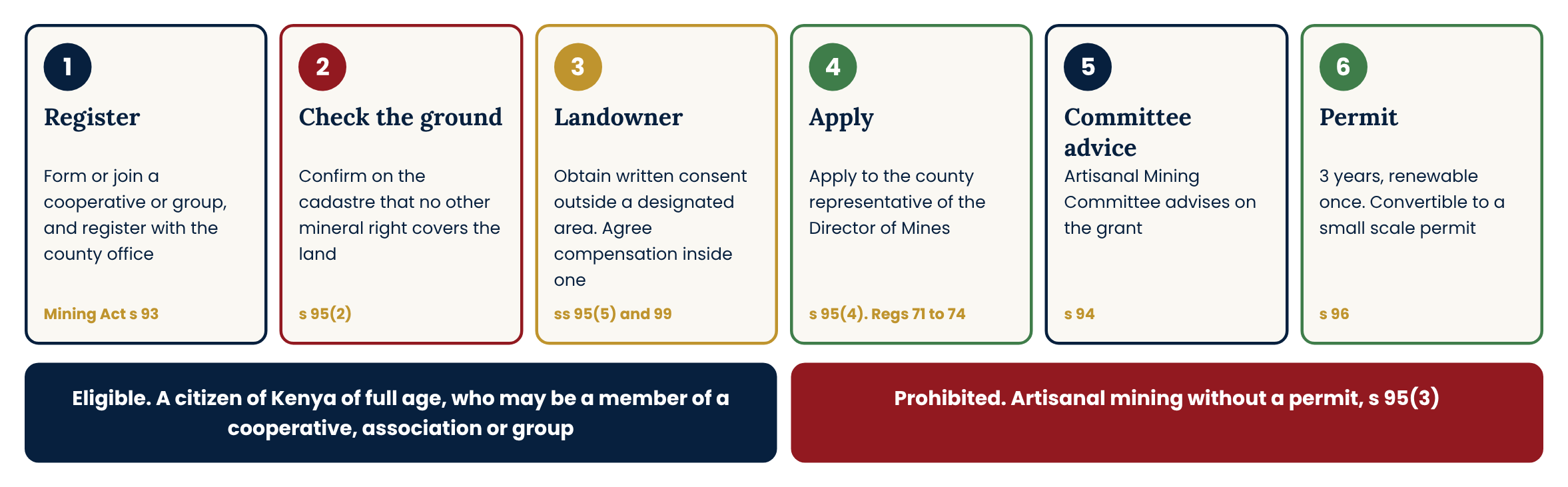
Figure 1. Path to an artisanal mining permit under the Mining Act 2016 and the Licence and Permit Regulations 2017
II. Foundational concepts
2.1 Artisanal mining
The Mining Act defines artisanal mining as traditional and customary mining operations using traditional or customary ways and means.5 The definition looks to method rather than size. An artisanal miner digs, crushes and washes by hand or with simple tools. Once mechanised equipment is used in a systematic way, the operation is better described as small scale mining, which the Act treats differently.
2.2 Artisanal and small scale mining
The Act defines a small scale operation by reference to criteria in its Second Schedule, and authorises small scale operations through a prospecting permit or a mining permit.6 An artisanal mining permit is a separate instrument. The Act lists it as a mineral right, but it is not one of the categories of large scale or small scale rights in section 32. A holder may apply to convert it into a small scale permit.7 Artisanal mining is therefore best understood as a third category, which sits below small scale mining and is designed to lead into it.
2.3 Formalisation
Formalisation, in this edition, means bringing miners who already work into the legal system, so that they hold permits, sell through lawful channels, pay royalties and observe safety and environmental rules. It is distinct from licensing a new entrant. An informal miner may have worked a site for many years before any permit system existed. The success of formalisation depends on whether the legal route is open, affordable and quick enough that miners choose it over the informal one.
III. Legal framework
3.1 Constitution
Minerals are public land and are held by the national government in trust for the people of Kenya.8 The Constitution requires the State to ensure the equitable sharing of the accruing benefits from the exploitation of natural resources.9 It also protects the right to property and the right to fair administrative action.10 Those provisions matter for artisanal miners in 2 ways. They support the inclusion of local people in the benefits of mining, and they require that permits be granted, refused and revoked through a fair process.
3.2 Mining Act
The Mining Act contains a group of provisions on artisanal miners, which apply only to them.11 Its main provisions are set out in Table 1.
Table 1. Main provisions of the Mining Act 2016 on artisanal mining
| Subject | Rule | Section |
|---|---|---|
| County office | The Cabinet Secretary may establish a county office headed by a representative of the Director of Mines. It grants, renews and revokes artisanal permits, keeps a register of artisanal miners, helps miners form associations and cooperatives, and promotes fair trade | 93 |
| Artisanal Mining Committee | A committee in every county, chaired by a representative of the Governor, with the representative of the Director of Mines as secretary. It includes 3 members elected by the association of artisanal miners in the county and representatives of the inspectorate, the National Environment Management Authority and the county land board. It advises on the grant, renewal and revocation of permits | 94 |
| Who may apply | A citizen of Kenya who has attained the age of majority, who may be a member of an artisanal mining cooperative, association or group | 95(1) |
| Land already licensed | No artisanal permit may be granted where another mineral right has been granted over the land | 95(2) |
| Mining without a permit | No person may engage in artisanal mining without a permit | 95(3) |
| Application | Made to the county representative of the Director of Mines, stating the minerals and the area and, where the land is not designated for artisanal mining, the consent of the landowner | 95(4) and (5) |
| Duration | 3 years, renewable once. The holder may apply to convert the permit to a small scale permit | 96 |
| Revocation | For breach of the terms of the permit, or conviction for smuggling or illegal dealing in minerals | 97 |
| Operations | The holder may mine and produce minerals, and must observe good mining practice, health and safety rules and protection of the environment | 98 |
| Landowner | Where a permit in a designated area is granted to a person other than the owner, the holder must compensate the owner | 99 |
| Sale | Sale of minerals by artisanal miners is governed by regulations | 100 |
Two further provisions complete the scheme. The Cabinet Secretary may designate an area as reserved exclusively for small scale and artisanal mining, where that would not be incompatible with an existing mineral right or where the required consents have been given.12 The technical and financial capacity requirements that apply to other applicants do not apply to artisanal miners.13
3.3 Regulations
The Mining (Licence and Permit) Regulations 2017 contain a Part on the artisanal mining permit. The application is made to the county representative of the Director of Mines, who decides on it on the advice of the Artisanal Mining Committee. An application to renew must be made 3 months before the permit expires, and the county representative must accept or reject it within 60 days.14 All applications for mineral rights are made through the online mining cadastre, which is meant to show at a glance which land is already subject to a right.15
3.4 Environmental and chemical controls
A permit does not exempt its holder from environmental law.16 The use of mercury is the most serious environmental and health problem in artisanal gold mining. The National Action Plan prepared under the Minamata Convention estimated that some 8,236.5 kg of mercury is used each year to produce about 6.864 tonnes of gold in the sector.17 A study in Migori found mercury in water near mining sites at levels up to 100 times the threshold for drinking water.18 Mercury and its compounds are controlled under regulations made in 2024 under environmental law.19
IV. From law to practice
4.1 Moratorium
In 2019 the government imposed a moratorium on the issue of new prospecting, mining and dealing rights, in order to audit existing rights and map the mineral resources of the country. The moratorium froze the issue of artisanal permits as well.20 It was lifted on 3 October 2023 for construction and industrial minerals.21 By then, the State Department for Mining reported that it had revoked 1,546 licences that did not meet the conditions of licensing and issued stop orders to over 3,000 illegal operations.22
4.2 Decriminalisation and cooperatives
When the moratorium was lifted, the Cabinet Secretary announced that artisanal mining had been decriminalised and that artisanal miners were directed to form marketing cooperatives, which would be considered for artisanal permits by the Artisanal Mining Committees.23 Over 200 groups were reported to be formalised and awaiting permits at that time, and the number of registered cooperatives had reached 250 by June 2024.24 In April 2024 the Principal Secretary announced that permits would be issued to miners in cooperatives on the recommendation of the new committees.25
The emphasis on cooperatives has a sound basis in the Act, which directs the county office to help miners form associations and cooperatives.26 It should be noted, however, that the Act grants a permit to a citizen, who may be a member of a cooperative. It does not make membership a condition of eligibility.27 A policy that considers only applications from cooperatives is a practical choice. It cannot narrow the class of persons that the Act makes eligible.
4.3 Artisanal Mining Committees
The committees came into being 8 years after the Act. By July 2024 the government had gazetted 29 county committees, and the committee for Migori followed in September 2024.28 Members are appointed by the Cabinet Secretary by notice in the Gazette for a term of 3 years.29 Miners in Migori welcomed the gazettement but said that they were still waiting for the delineation of areas for artisanal mining before permits could be issued.30
4.4 Pace of licensing
The licensing system as a whole has been slow to recover. By mid September 2024 the State Department had evaluated 1,162 applications for mineral rights and approved 95.31 In August 2025 the Kenya Chamber of Mines and the Artisanal and Small Scale Miners Association of Kenya said that processing remained slow and costly.32 For artisanal miners, delay has a particular consequence. A miner who cannot obtain a permit continues to work, but outside the law, and therefore outside the protection that a permit gives.

Figure 2. Artisanal mining in Kenya from the Mining Act 2016 to the disputes of 2026
V. Disputes
5.1 Chemase, Nandi County
The dispute at Chemase shows what happens when 2 rights cover the same land. Karebe Gold Mining Limited held a mining licence along the Nandi escarpment. A landowner, whose lease to the company had expired, obtained a 3 year artisanal permit, and press reports stated that both rights covered the same parcel.33 After a blast in an underground mine in January 2023, the Cabinet Secretary suspended both the mining licence and the artisanal permit for 30 days, pending investigation.34 The Environment and Land Court later quashed the suspension of the mining licence, because it had been imposed without the notice and procedure that the Act requires.35
The case illustrates 2 rules. First, section 95(2) forbids the grant of an artisanal permit over land already subject to another mineral right. If the reports are correct that both rights covered the same parcel, that rule was not observed. Secondly, an artisanal permit, like any mineral right, may be suspended or revoked only on a lawful ground and by a fair process. The safeguards discussed in the edition of this series on suspension by letter apply to artisanal permits as much as to licences.
5.2 Isulu and Bushiangala, Kakamega County
The Ikolomani area of Kakamega has been mined by artisanal miners for decades. In 2025 Shanta Gold Kenya Limited submitted an environmental impact assessment for an underground gold mine at Isulu and Bushiangala, reported to require about 337 acres and the relocation of about 800 households.36 Artisanal miners and local leaders opposed the project. The chair of the Kakamega Artisanal Mining Committee said that artisanal miners were concerned about coexistence with large scale operations and the future of the county gold refinery, which depends on artisanal supply.37 On 4 December 2025 a clash between police and miners at Isulu left 3 people dead.38
In 2026 the dispute moved into the institutions. Petitions before the Kakamega County Assembly cited the lack of artisanal mining licensing, inadequate public participation, the risk of displacement and environmental concerns, and asked for artisanal permits to be issued to local miners.39 A Senate committee examined the project, and the Principal Secretary told a meeting that the company held only a prospecting licence and could not begin mining until it had signed a community development agreement.40 The government also published a notice of intention to grant a mining licence.41 The Cabinet Secretary told residents that artisanal miners are recognised and protected by law and that the government would support them through aggregation and market centres.42 The matter remains open, and nothing in this edition comments on its merits.
The legal difficulty is structural. While a prospecting licence subsists over the area, section 95(2) prevents the grant of artisanal permits over the same land. Miners who have worked the ground for years therefore cannot be formalised there, however willing they are. Their protection must come from elsewhere, through their rights as landowners or occupiers, through the community development agreement, and through any arrangement that the licence holder and the Ministry agree for them.
A permit that cannot be granted on the ground where the miners already work does not formalise them. It only tells them they are on the wrong side of the law.
5.3 Safety
Mining accidents fall most heavily on artisanal miners. Government figures reported in December 2025 showed that Kenya recorded 60 deaths and 59 injuries at mining sites in the 5 years to 2022.43 The Act requires every permit holder to observe health and safety rules.44 In practice, those rules reach only miners who hold permits and who are visited by inspectors. Formalisation is therefore also a question of life and death.
VI. Analysis
6.1 Formalisation gap
The formalisation gap is the distance between the number of people who mine and the number who hold permits. Its causes, as this edition has traced them, are 5. A moratorium of 4 years stopped all new rights. The committees that advise on permits did not exist until 2024. The delineation of artisanal areas has lagged behind the committees. Many promising areas are already covered by prospecting or mining licences, which bar artisanal permits under section 95(2). Finally, the practical cost and time of obtaining a permit remain high for miners whose income is small and uncertain.
6.2 Decriminalisation and section 95(3)
The announcement in October 2023 that artisanal mining had been decriminalised was an important statement of policy. It cannot, however, change the statute. Section 95(3) still provides that no person shall engage in artisanal mining without a permit.45 The better reading of the announcement is that the Ministry will treat unpermitted miners as candidates for formalisation rather than as offenders, while it builds the system that will license them. That is a reasonable use of enforcement discretion. It gives miners no legal right to remain, and it depends on the permit system catching up quickly.
6.3 Coexistence with larger rights
The Act contains no general mechanism for artisanal miners already present when a larger right is granted. Section 95(2) protects the larger right. Sections 37 and 38 protect landowners and communities. Community development agreements share benefits with the community as a whole. None of these gives an artisanal miner a specific right to continue, to be relocated to another workable site, or to be compensated for the loss of a livelihood that was not licensed. The draft framework for artisanal access to Tsavo, discussed in the previous edition of this series, shows that the Ministry is willing to design such arrangements, but none yet has a firm statutory footing.46
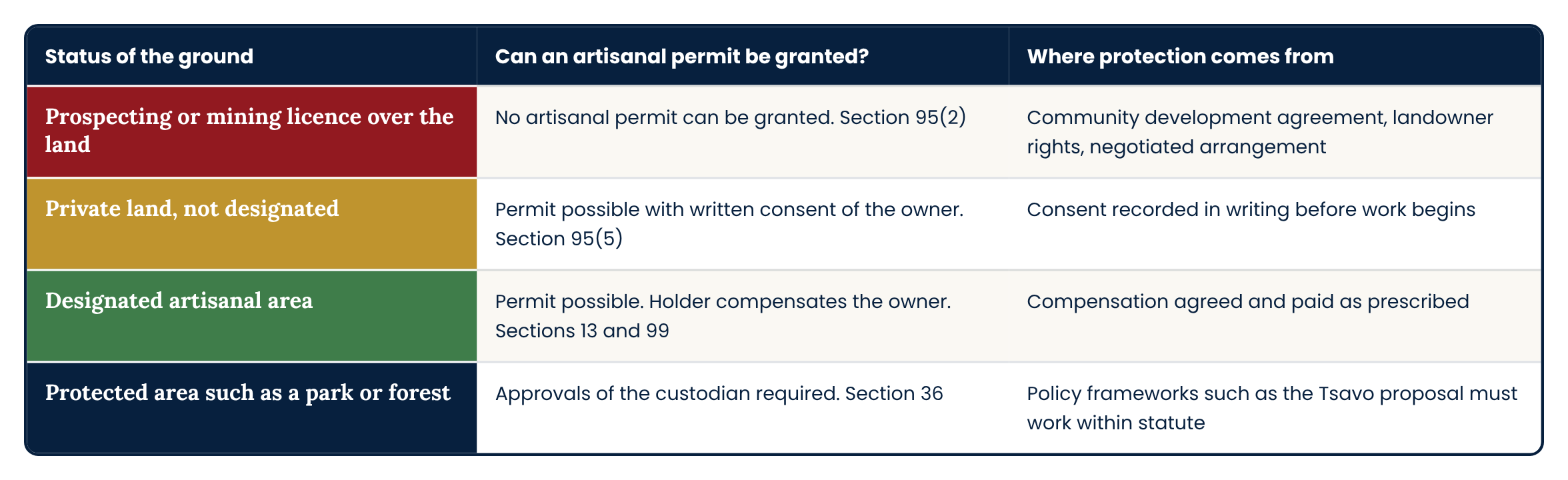
Figure 3. Where artisanal miners stand when other rights are granted over the same ground
Table 2. Gaps in the formalisation of artisanal mining and possible responses
| Gap | Effect | Possible response within the present law |
|---|---|---|
| Areas not yet delineated | Committees cannot recommend permits on undesignated land without landowner consent | Designate artisanal areas under section 13 county by county, starting where miners already work |
| Land under larger rights | Section 95(2) bars artisanal permits | Negotiate relinquishment of areas in licence conditions, or agreements between holders and miners recorded with the Ministry |
| Cooperatives only | Individuals eligible under the Act may be excluded in practice | Apply the cooperative policy as a preference, not a bar |
| Mercury | Health and environmental harm, and liability | Link permits and renewals to mercury free processing and support for it |
| Sale through brokers | Low prices and leakage of royalties | Operate the mineral trading and aggregation centres the Ministry has proposed |
VII. Next round
7.1 Questions every artisanal operation should answer
Table 3. Questions every artisanal operation should be able to answer
| Question | Why it matters |
|---|---|
| Is there a valid artisanal permit, and when does it expire? | Mining without a permit is prohibited, and renewal must be sought 3 months before expiry |
| Does the cadastre show any other mineral right over the same land? | Section 95(2) bars an artisanal permit over licensed land, as the Chemase dispute shows |
| Who owns the land, and has consent or compensation been settled in writing? | Sections 95(5) and 99 require it, and Kasigau Ranching shows the cost of mining without consent |
| Is the cooperative registered, and are its members on the county register? | The Ministry considers applications through cooperatives, and the register is the record of lawful miners |
| How are minerals sold, and are royalties paid? | Sale is regulated, and illegal dealing is a ground for revocation |
7.2 What each party should do
Table 4. Practical guidance drawn from the law and the disputes
| Party | What the law and the disputes counsel |
|---|---|
| Artisanal miners and cooperatives | Register the cooperative, apply through the county office, and keep written evidence of landowner consent. Renew in good time. Keep records of production and sales |
| Holders of larger rights | Map artisanal activity before applying. Engage miners early, and record any arrangement for them in the community development agreement or with the Ministry. Avoid self help |
| County governments | Make the Artisanal Mining Committee work by meeting regularly and publishing its recommendations. Support aggregation centres and mercury free processing |
| The Ministry | Delineate artisanal areas, publish the register of permits, decide applications within the times the regulations set, and use suspension and revocation only on lawful grounds and after a fair process |
| Lenders and buyers | Buy only from licensed sources, and require evidence of the permit and of lawful sale |
VIII. Conclusion
The Mining Act 2016 took the right first step. It recognised artisanal miners as lawful participants in the mineral economy, gave them a permit designed for their circumstances and placed its administration close to them in the counties. The years since have shown that a permit in the statute book is not the same as a permit in the hand. A long moratorium, slow institutions, undelineated areas and competing licences have left many miners where they were before 2016.
The disputes at Chemase and Ikolomani show what follows from that gap. Rights overlap, communities and investors claim the same ground, and the law has few tools to reconcile them. The present law can do more than it has. Areas can be designated, committees can meet and decide, and licence conditions and community development agreements can make room for artisanal miners. A lasting solution will need a clear rule on what happens to artisanal miners when a larger right is granted over the ground they work. Until then, the best protection for every party is the same. Know the status of the land, hold the right permit, and settle consent and compensation in writing before the first pit is dug.
Benson Odiwuor is an Advocate of the High Court of Kenya based in Nairobi, whose practice focuses on dispute resolution in the regulated industries, including mining, oil and gas, banking and project finance. He is the editor of The BOLD, Benson Odiwuor’s Legal Digests, a legal newsletter on dispute strategies and legal developments in the regulated industries of Kenya. Subscribe to The BOLD here.
For inquiries, contact the author at info@bensonodiwuor.com.
References
- Ministry of Environment and Forestry, National Action Plan for Artisanal and Small-Scale Gold Mining in Kenya (2022) <https://minamataconvention.org/sites/default/files/documents/national_action_plan/Kenya-ASGM-NAP-2022-EN.pdf>; IPEN, Mercury Trade and Supply, Use, and Impacts in the Artisanal and Small-scale Gold Mining Sector in Kenya (Status Report, 28 February 2025) <https://ipen.org/sites/default/files/documents/asgm_kenya_2025.pdf>. ↩
- ‘Alarm Raised over Toxic Toll of Mercury in Migori Mines’ People Daily (Nairobi, 22 April 2025) <https://peopledaily.digital/news/alarm-raised-over-toxic-toll-of-mercury-in-migoris-mines>. ↩
- State Department for Mining, ‘Media Brief on the Lifting of the Moratorium’ (October 2023) <https://www.nmckenya.go.ke/sites/default/files/2024-01/CS%20MEDIA%20BRIEF%20ON%20MORATORIUM%20LIFTING.pdf>; Renson Mnyamwezi, ‘State Gazettes 29 County Artisanal Mining Committees’ The Standard (Nairobi, 22 July 2024) <https://www.standardmedia.co.ke/business/business/article/2001499423/state-gazettes-29-county-artisanal-mining-committees>. ↩
- ‘Three Killed in Clash between Police and Gold-Mining Workers in Kakamega’ Daily Nation (Nairobi, December 2025) <https://beta.nation.co.ke/kenya/counties/kakamega/three-killed-in-clash-between-police-and-gold-mining-workers-in-kakamega-5287204>. ↩
- Mining Act 2016 (No 12 of 2016), now Cap 306 of the Laws of Kenya s 4 <https://new.kenyalaw.org/akn/ke/act/2016/12/eng@2022-12-31>. ↩
- Mining Act 2016 ss 4 and 32(3)(b). ↩
- Mining Act 2016 ss 4, 32 and 96; RECONCILE, ‘Summary of the Mining Act’ (2024) <https://www.reconcile-ea.org/wp-content/uploads/2024/08/Summary-of-the-Mining-Act-min.pdf>. ↩
- Constitution of Kenya 2010 art 62(1)(f) and (3). ↩
- Constitution of Kenya 2010 art 69(1)(a). ↩
- Constitution of Kenya 2010 arts 40 and 47. ↩
- Mining Act 2016 s 92. ↩
- Mining Act 2016 s 13. ↩
- Mining Act 2016 s 11(4). ↩
- Mining (Licence and Permit) Regulations 2017 (LN 87 of 2017), as amended by LN 43 of 2024 regs 71 to 76 <https://new.kenyalaw.org/akn/ke/act/ln/2017/87>. ↩
- Licence and Permit Regulations 2017 reg 4. ↩
- Mining Act 2016 s 176. ↩
- IPEN, Mercury Status Report (n 1); National Action Plan for ASGM (n 1). ↩
- ‘Alarm Raised over Toxic Toll’ (n 2). ↩
- IPEN, Mercury Status Report (n 1). ↩
- Halkano Wario, ‘Gold and Governance Provide Hope for Kenya’s Artisanal Miners’ ISS Today (20 February 2024) <https://issafrica.org/iss-today/gold-and-governance-provide-hope-for-kenyas-artisanal-miners>; ‘Credit to Mining Sector Doubles after Moratorium Lifted’ Daily Nation (Nairobi, 2024) <https://nation.africa/kenya/business/finance-and-markets/credit-to-mining-sector-doubles-after-moratorium-lifted-4880754>. ↩
- Wario, ‘Gold and Governance’ (n 20); James Wanzala, ‘Mvurya Revokes 3,000 Illegal Mining Licences as Ban is Lifted’ The Standard (Nairobi, 5 October 2023) <https://www.standardmedia.co.ke/business/amp/business/article/2001482883/mvurya-revokes-3000-illegal-mining-licences-as-ban-is-lifted>. ↩
- State Department for Mining, Media Brief (n 3). ↩
- Wanzala, ‘Mvurya Revokes 3,000’ (n 21); State Department for Mining, Media Brief (n 3). ↩
- State Department for Mining, Media Brief (n 3); ‘Artisanal Mining Committee in West Pokot County Launched’ (Kenya News Agency, 26 June 2024) <https://www.kenyanews.go.ke/artisanal-mining-committee-in-west-pokot-county-launched/>. ↩
- Benard Lusigi, ‘Miners in Cooperatives to Receive Work Permits’ The Standard (Nairobi, 21 April 2024) <https://standardmedia.co.ke/sports/amp/business/article/2001493636/www.digger.co.ke>. ↩
- Mining Act 2016 s 93. ↩
- Mining Act 2016 s 95(1). ↩
- Mnyamwezi, ‘State Gazettes 29’ (n 3); ‘Migori Miners Welcome Gazettement of Artisan Mining Committee’ The Star (Nairobi, 16 September 2024) <https://www.the-star.co.ke/news/realtime/2024-09-16-migori-miners-welcome-gazettement-of-artisan-mining-committee>. ↩
- Kenya Gazette notices of 13 and 27 September 2024 appointing members of the Artisanal Mining Committees of Bomet, Nakuru and Nandi Counties, as summarised by Vellum <https://vellum.co.ke/kenya-gazette-notice-27th-september-2024/>. ↩
- ‘Migori Miners Welcome Gazettement’ (n 28). ↩
- ‘Credit to Mining Sector Doubles’ (n 20). ↩
- Macharia Kamau, ‘Renewed Hope as Kenya Eyes Billions in Mining’ The Standard (Nairobi, 19 August 2025) <https://standardmedia.co.ke/sports/amp/financial-standard/2001527171/renewed-hope-as-kenya-eyes-billions-in-mining>. ↩
- Edward Kosut, ‘Landowner, 86, Embroiled in Land Tussle with Gold Mining Firm’ The Standard (Nairobi, 5 February 2023) <https://www.standardmedia.co.ke/business/amp/rift-valley/article/2001466549/landowner-86-embroiled-in-land-tussle-with-gold-mining-firm>. ↩
- ‘CS Mvurya Suspends Licences for Chemase Mining Firms’ The Star (Nairobi, 26 January 2023) <https://www.the-star.co.ke/news/realtime/2023-01-26-cs-mvurya-suspends-licences-for-chemase-mining-firms/>. ↩
- Republic v Mvurya, Cabinet Secretary Ministry of Mining, Blue Economy and Maritime Affairs & another; Karebe Gold Mining Limited (Ex parte Applicant) (Judicial Review Miscellaneous Application E003 of 2023) [2023] KEELC 17889 (KLR) <https://new.kenyalaw.org/akn/ke/judgment/keelc/2023/17889/eng@2023-05-25>. ↩
- Hilton Otenyo, ‘Kakamega Leaders Fault Proposed Plan by Investor to Extract Gold in Ikolomani’ The Star (Nairobi, 17 November 2025) <https://www.the-star.co.ke/counties/western/2025-11-17-leaders-raise-concerns-over-proposed-gold-mining-in-ikolomani>. ↩
- Otenyo, ‘Kakamega Leaders Fault Proposed Plan’ (n 36). ↩
- ‘Three Killed in Clash’ (n 4). ↩
- Mary Imenza, ‘Kakamega Assembly to Hear Petitions Challenging Ikolomani Gold Mining Plan’ The Standard (Nairobi, 21 April 2026) <https://www.standardmedia.co.ke/counties/article/2001545866/kakamega-assembly-to-hear-petitions-challenging-ikolomani-gold-mining-plan>. ↩
- ‘Sh683b Gold Project Faces Senate Scrutiny over Land Dispute’ The Standard (Nairobi, 2026) <https://www.standardmedia.co.ke/business/western/article/2001551875/sh683b-gold-project-faces-senate-scrutiny-over-land-dispute>. ↩
- ‘State Moves to Ease Kakamega Mining Tensions as Petition Process Begins’ People Daily (Nairobi, 2026) <https://peopledaily.digital/news/state-moves-to-ease-kakamega-mining-tensions-as-petition-process-begins/amp>. ↩
- ‘Kakamega MCAs to Decide Fate of Sh680 Billion Ikolomani Gold Project in Two Weeks’ The Standard (Nairobi, 2026) <https://www.standardmedia.co.ke/business/western/article/2001546562/kakamega-mcas-to-decide-fate-of-sh680-billion-ikolomani-gold-project-in-two-weeks>. ↩
- ‘Glitter, Grief, Death, Chaos and Arrests in Scramble for Kakamega Gold Mines’ Daily Nation (Nairobi, December 2025) <https://beta.nation.co.ke/kenya/counties/kakamega/glitter-grief-death-chaos-arrests-scramble-kakamega-gold-mines-5288572>. ↩
- Mining Act 2016 s 98. ↩
- Mining Act 2016 s 95(3). ↩
- Wagema Mwangi, ‘State Finalizing Historic Framework to Grant Kenya’s Artisanal Miners Access to Mine in National Parks’ (Kenya News Agency) <https://www.kenyanews.go.ke/state-finalizing-historic-framework-to-grant-kenyas-artisanal-miners-access-to-mine-in-national-parks/>. ↩